



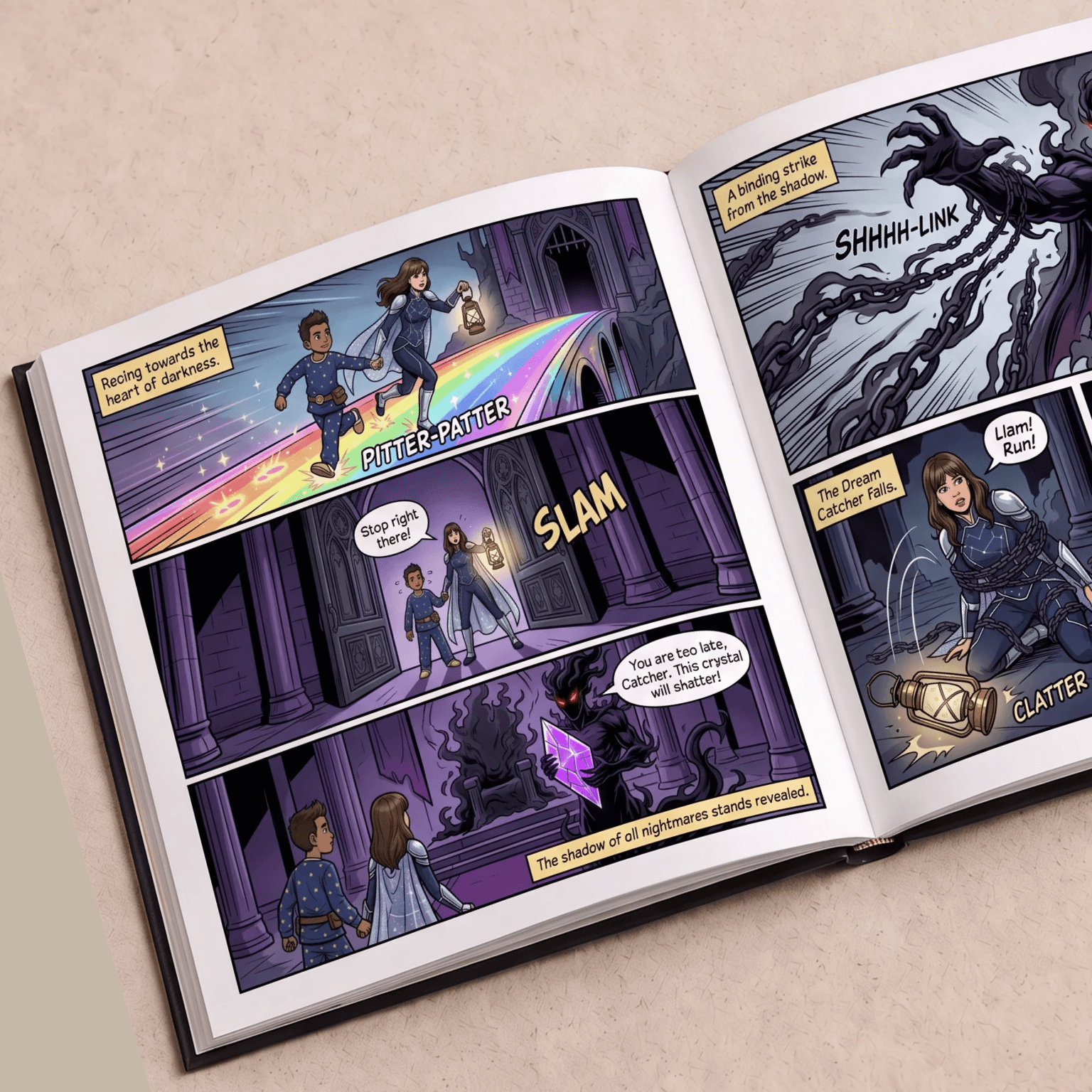
Every parent eventually runs into the same wall: a lecture that goes nowhere. You explain, calmly and clearly, why hitting a sibling is wrong, why bedtime matters, why it is not okay to grab a toy from a friend, and the child nods, and then does the exact same thing an hour later. It is not that the child is not listening. It is that a direct instruction rarely reaches the part of a child's mind where real behavior change happens. Storytelling does.
Long before parenting books and behavior charts, storytelling was the tool caregivers reached for to help children make sense of fear, jealousy, frustration, and change. A story lets a child watch a problem play out from a safe distance, through a character rather than through themselves, which makes it far easier to absorb a lesson that would feel like criticism if delivered directly. This is why storytelling remains one of the most effective, low-conflict tools available for working through everyday parenting challenges, from sibling rivalry to fear of the dark to the everyday struggle of getting a strong-willed toddler to share.
Story Spark takes this idea and makes it genuinely practical for busy parents. Rather than trying to write a custom story from scratch at nine o'clock at night, Story Spark's AI story generator lets parents build a fully personalized, illustrated storybook around their own child's name, interests, and the exact challenge they are working through, in minutes. In this guide, we will look at why storytelling works so well for parenting challenges, which challenges respond best to a story-based approach, and exactly how to build one with Story Spark.
Why Storytelling Works for Parenting Challenges
Storytelling is effective for behavior and emotional challenges for reasons that go well beyond simple entertainment.
Stories create psychological distance. A child who is struggling with jealousy toward a new sibling may become defensive the moment a parent raises the topic directly. A story about a character going through the same experience removes that defensiveness. The child can watch, relate, and process the emotion through the character, without feeling accused or singled out.
Stories model solutions, not just problems. Simply telling a child not to do something rarely gives them a replacement behavior to reach for instead. A good story shows a character facing the same struggle and finding their way through it, giving the child a concrete example of what to try next time, rather than only a rule about what not to do.
Stories make abstract feelings concrete. Young children often do not have the vocabulary to explain why they are upset, frightened, or frustrated. Watching a character experience and name a feeling, "the little fox felt a hot, tight feeling in his chest when his brother took his toy," gives children language for their own internal experience, which is often the first step toward managing it.
Stories lower the emotional stakes of a conversation. Reading a story together at bedtime is a calm, low-pressure setting, a world away from the heat of an actual tantrum or conflict. Lessons introduced in that calm setting are far more likely to be absorbed than anything said in the middle of a meltdown.
Repetition does the real work. Children often want to hear the same story again and again, and each retelling reinforces the lesson a little further. A story about sharing read once might not change behavior, but a story a child asks for every night for two weeks has a real chance of shifting how they respond the next time a toy is at stake.
Stories strengthen the parent-child bond in the process. Working through a hard topic via a shared story, rather than a scolding, tends to leave both parent and child feeling closer afterward rather than more distant, because the conversation feels collaborative rather than corrective.
It helps to understand why direct correction so often fails where a story succeeds. When a child is told bluntly that a behavior is wrong, the natural response is often defensiveness or shutdown, neither of which leaves much room for actual reflection. A story sidesteps that defensiveness entirely, because the child is not being accused of anything. They are simply watching a character, often an animal or an invented friend rather than a person, work through a familiar situation. That small shift in framing, from "you did something wrong" to "here is a character facing something you know about," is often the difference between a lesson that bounces off and one that actually sinks in.
There is also a timing advantage that is easy to overlook. Most parenting advice about addressing behavior focuses on what to say in the moment, during the tantrum, right after the sibling squabble, in the heat of the meltdown. But children are rarely capable of real reflection while they are upset. Storytelling moves the lesson to a calmer moment entirely, typically bedtime, when a child is relaxed, receptive, and not defending a decision they already made. That timing alone makes a story far more likely to land than an in-the-moment correction ever could.
Common Parenting Challenges Storytelling Can Help With
Storytelling is flexible enough to support almost any challenge a family is facing, but a handful of situations come up again and again.
Sharing and generosity. A story about a character who is reluctant to share a favorite toy, and who discovers that sharing actually deepens a friendship rather than costing them something, gives a child a gentle, memorable version of a lesson that direct instruction rarely lands well.
Sibling rivalry and jealousy. Stories that let an older sibling see a character work through complicated feelings about a new baby, without judgment, can validate a child's emotions while still modeling a kinder response.
Fear of the dark or new situations. A story where a character faces the same fear, a new bedroom, a first day at school, the dark at bedtime, and finds a way through it, gives an anxious child both companionship and a working example of courage.
Tantrums and emotional regulation. Stories that name big feelings and show a character using a simple calming strategy, taking deep breaths, asking for a hug, stepping away for a moment, give children a script they can borrow the next time their own emotions feel too big.
Focus and listening challenges. For children who struggle to stay on task or follow instructions, a story built around a character learning to focus, framed with patience rather than frustration, can reinforce the behavior without the shame that often comes with repeated correction at home or school.
Changes and transitions. Moving house, starting a new school, or welcoming a new pet are all easier for children to process when they have seen a character go through something similar first, easing anxiety by making the unfamiliar feel a little more familiar.
Confidence and self-esteem. A story where a character doubts themselves before discovering a hidden strength gives children a model for self-belief that a direct compliment, "you're so brave," rarely builds on its own.
Whatever the challenge, the shared thread is the same. A story lets a child rehearse a better response in a safe, low-stakes setting, well before they need to use it in real life.
It is worth noting that these challenges rarely arrive one at a time. A child navigating a house move might also be dealing with a new sibling and a change of school in the same season, and the emotional load of several transitions at once can show up as regression, clinginess, or uncharacteristic outbursts that seem disconnected from any single cause. Personalized storytelling is particularly useful here, because a story can be built to acknowledge several overlapping changes at once, showing a character finding steady ground amid more than one disruption, rather than addressing only a single, narrow theme. That kind of layered story often resonates more deeply than a book that treats each challenge as an isolated, unrelated topic.
How to Choose the Right Story for the Right Moment
Not every challenge calls for the same kind of story, and getting the framing right makes a meaningful difference in how well a story lands.
For fears, lead with companionship before resolution. A child who is frightened does not want to hear a story that rushes straight to "and then everything was fine." Give the character space to feel scared first, so the child feels understood rather than rushed past their own fear, before showing how the character works through it.
For behavior challenges, avoid making the lesson too on the nose. A story that ends with a character announcing "and I learned that sharing is important" tends to feel like a lecture in disguise. Stories that simply show the better outcome, the friendship that grows, the fun that follows, let a child draw their own conclusion, which tends to stick far better than a stated moral.
For transitions, use familiar characters as an anchor. When a child is facing a lot of change at once, returning to a character they already know and love from a previous story, rather than introducing a brand new one, can provide a sense of continuity that makes an unfamiliar situation feel a little more manageable.
For confidence building, let the character struggle first. A story where a character succeeds effortlessly teaches very little. A story where a character tries, struggles, nearly gives up, and then finds their footing gives a child a far more honest and useful model of what building confidence actually looks like.
Match the story's pace to your child's attention span. A three-year-old and a seven-year-old need very different pacing, length, and vocabulary, even when addressing the exact same challenge. Adjusting a story's length and complexity to fit the child, rather than using a single version for every age, keeps the lesson accessible rather than overwhelming.
Personalizing the Story for Your Child
Generic advice, and even generic storybooks, can only go so far, because every child's version of a challenge looks a little different. One child's fear of the dark is about monsters under the bed, another's is about being alone in an unfamiliar room after a house move. This is exactly where Story Spark's AI story generator earns its place over a book pulled off a shelf.
Rather than searching for an existing book that happens to match a family's exact situation, parents can build one from scratch around it. The process asks for a handful of details that make the difference between a story that lands and one that does not:
The child's name and personality. Naming the main character after the child immediately increases how closely they identify with what happens in the story.
Specific interests and hobbies. A child who loves dinosaurs will engage far more with a story about a dinosaur learning patience than with a generic human character doing the same thing.
The exact challenge at hand. Rather than a vague theme like "kindness," parents can specify the real situation, a new sibling, a fear of thunderstorms, difficulty sharing at preschool, so the story's plot reflects what the child is actually going through.
Familiar characters. Story Spark's character world lets parents choose from a growing library of characters, or create an original one, so a child can revisit a familiar face across multiple stories, building the kind of ongoing relationship with a character that makes each new story land even faster.
Because the story is generated specifically around a real challenge rather than a generic moral, it tends to resonate far more strongly, and it gives parents a natural, low-pressure way to open a conversation afterward. "Remember how the little fox felt when he had to share his blanket? How did you feel when your sister used your crayons?" turns a bedtime story into a genuine, ongoing conversation about a child's own experience.
A Worked Example: Teaching a Reluctant Sharer
To see how this works in practice, consider a common scenario: a three-year-old who refuses to share toys, particularly with a younger sibling or a friend visiting for a playdate.
Rather than another round of "you have to share," a parent could use Story Spark to build a short storybook starring a squirrel who has just found a huge pile of acorns and does not want anyone else to have any. Over the course of the story, the squirrel meets a hungry friend, hesitates, and eventually offers to share, discovering that splitting the pile actually makes the whole experience more fun, not less. The child, seeing themselves reflected in the squirrel's initial reluctance without ever being told directly "you are being selfish," gets to arrive at the lesson on their own terms.
Read once at bedtime that night, and again over the following week, the story becomes a shared reference point. The next time a real sharing conflict comes up, a parent can gently ask, "what do you think the squirrel would do?" rather than repeating the same lecture that has not worked before. That shift, from correction to shared story, is often what finally makes a stubborn behavior start to shift.
The same approach scales to almost any other challenge. A child anxious about starting a new school might meet a young fox nervously exploring a new forest den, gradually making friends with the other forest animals. A child struggling with a new baby sibling might follow an older dragon learning to be patient and gentle with a newly hatched younger dragon, discovering that being a big sibling comes with its own kind of magic. In each case, the mechanics stay the same: name the character after the child, root the setting in something the child already loves, and let the plot walk through the real challenge honestly, without rushing the character's difficult feelings or skipping straight to a tidy resolution.
Parents often find it useful to revisit the same story format for new challenges as they arise, rather than treating each one as a one-off. A family that has already used Story Spark to address a fear of the dark will find it faster and more natural to build the next story, about starting school, or welcoming a new pet, once they know what details make a story land for their particular child.
Parenting With Story Spark: How It Works
Getting started takes only a few minutes, and no writing experience is required.
Step one: describe the challenge. Head to the AI story generator and enter your child's name, interests, and the specific situation you want the story to address, whether that is sharing, fear, a big transition, or something else entirely.
Step two: choose your characters. Browse character world to select an existing character your child already loves, or create a brand new one that reflects their personality and interests.
Step three: shape the story. Story Spark's AI generates a first draft built around the chosen challenge, and parents can refine tone, pacing, and specific details using the in-editor assistant, Spark, until the story feels exactly right.
Step four: choose a format. Decide whether the finished story becomes a full storybook, a longer illustrated book, or another format entirely, depending on your child's age and attention span.
Step five: read, revisit, and reinforce. Once the book is created, read it together as often as needed, and use the character and plot as a shared reference point in everyday moments when the real-life version of the challenge comes up again.
When Storytelling Alone Is Not Enough
It is worth being honest about the limits of storytelling as a parenting tool. A personalized storybook is a genuinely effective way to open a conversation, model a behavior, and give a child language for a feeling, but it works best as one part of a broader, consistent approach, alongside clear boundaries, calm follow-through, and plenty of patience. A single story is unlikely to resolve a deeply rooted behavior pattern overnight, and children facing significant emotional or developmental challenges may need support beyond what any storybook, however personalized, can offer on its own. Storytelling is a genuinely powerful tool for everyday parenting moments, sharing, fears, transitions, sibling friction, but for concerns that feel bigger or more persistent, it is worth speaking with a pediatrician, teacher, or child psychologist alongside using stories at home.
Story Spark Pricing at a Glance
Story Spark offers a free plan for basic story creation and printing, alongside the Dreamer and Creator subscription tiers, which unlock deeper access to the AI story generator, character creation, and audio narration. Printed storybooks start from $29.99, with volume discounts available for families ordering multiple copies. Full, up to date pricing details are available on the pricing page.
Frequently Asked Questions
Why is storytelling an effective parenting tool?
Storytelling gives children psychological distance from a challenge, letting them process difficult emotions or behaviors through a character rather than feeling directly corrected. This lowers defensiveness, models a better response, and gives children language for feelings they may not yet know how to express themselves.
What parenting challenges can a personalized storybook help with?
Personalized storybooks are commonly used to help with sharing and generosity, sibling rivalry, fear of the dark or new situations, tantrums and emotional regulation, focus and listening difficulties, big life transitions, and building confidence.
How does Story Spark personalize a story for a specific challenge?
Parents describe their child's name, interests, and the specific challenge they are facing using the AI story generator, and the AI builds a plot around that exact situation rather than a generic moral, so the story reflects what the child is really going through.
Can I use the same character across multiple stories?
Yes. Character world lets parents select an existing character or create an original one that can appear across multiple personalized stories, helping children build an ongoing connection with a familiar character over time.
Will one storybook fix a difficult behavior right away?
Usually not on its own. Storytelling works best as one part of a consistent approach to a challenge, alongside calm boundaries and follow-through, rather than a single fix. Repeated reading and using the story as a reference point in everyday moments tends to produce the strongest results.
What age range is this kind of storytelling suitable for?
Personalized behavior and emotion focused storybooks generally work well from around age two through to middle childhood, with the story's length, vocabulary, and complexity adjusted to match the child's age and attention span.
How long does it take to create a personalized parenting storybook?
Most parents can generate a complete first draft in a matter of minutes using the AI story generator, with additional time available for refining the tone and details if desired.
Should I talk to a professional if storytelling does not seem to help?
For everyday challenges like sharing, mild fears, or sibling friction, storytelling is often enough on its own. For concerns that feel more persistent or significant, it is worth speaking with a pediatrician, teacher, or child psychologist in addition to using storytelling at home.
How specific should I be when describing the challenge to the AI story generator?
As specific as possible. A prompt describing the exact situation, a new baby sibling arriving next month, a fear of thunderstorms since a recent storm, difficulty taking turns at preschool, will produce a far more resonant story than a broad theme like "kindness" or "patience." The more real detail a parent provides, the more the finished story will feel like it was written specifically for their child, because it was.
Can grandparents, teachers, or caregivers use Story Spark for parenting challenges too?
Yes. While many parents use Story Spark for challenges at home, teachers building classroom stories around inclusion or patience, and grandparents or other caregivers supporting a child through a difficult transition, all use the same AI story generator to build a story around whatever situation they are supporting a child through.
What if my child does not respond to the first story I create?
Not every story lands on the first try, and that is normal. Parents can adjust the setting, character, tone, or level of detail using Story Spark's in-editor assistant, Spark, and try a different angle on the same challenge, since children often respond differently depending on how closely a story's character and setting match their own personality and interests.
Turn Tonight's Struggle Into Tomorrow's Story
Parenting challenges rarely resolve because of one perfect conversation. They shift gradually, through repetition, patience, and moments where a child genuinely understands why a different choice matters. A personalized story gives families one of the gentlest, most effective ways to create those moments, turning tonight's sharing meltdown or bedtime fear into tomorrow's bedtime story, and tomorrow's story into a lesson a child actually remembers.
Create your child's personalized story today and turn your next parenting challenge into a story worth reading again and again.
Related Reading
What Parents Want in AI Storybooks in 2026
Best AI Story Generators of 2026
The Complete AI Book Generator Comparison 2026
The Best Storybook Creator Platforms: The Complete Guide
Written by the Story Spark Team. Story Spark is an AI-powered platform for creating, illustrating, and printing your own books.