



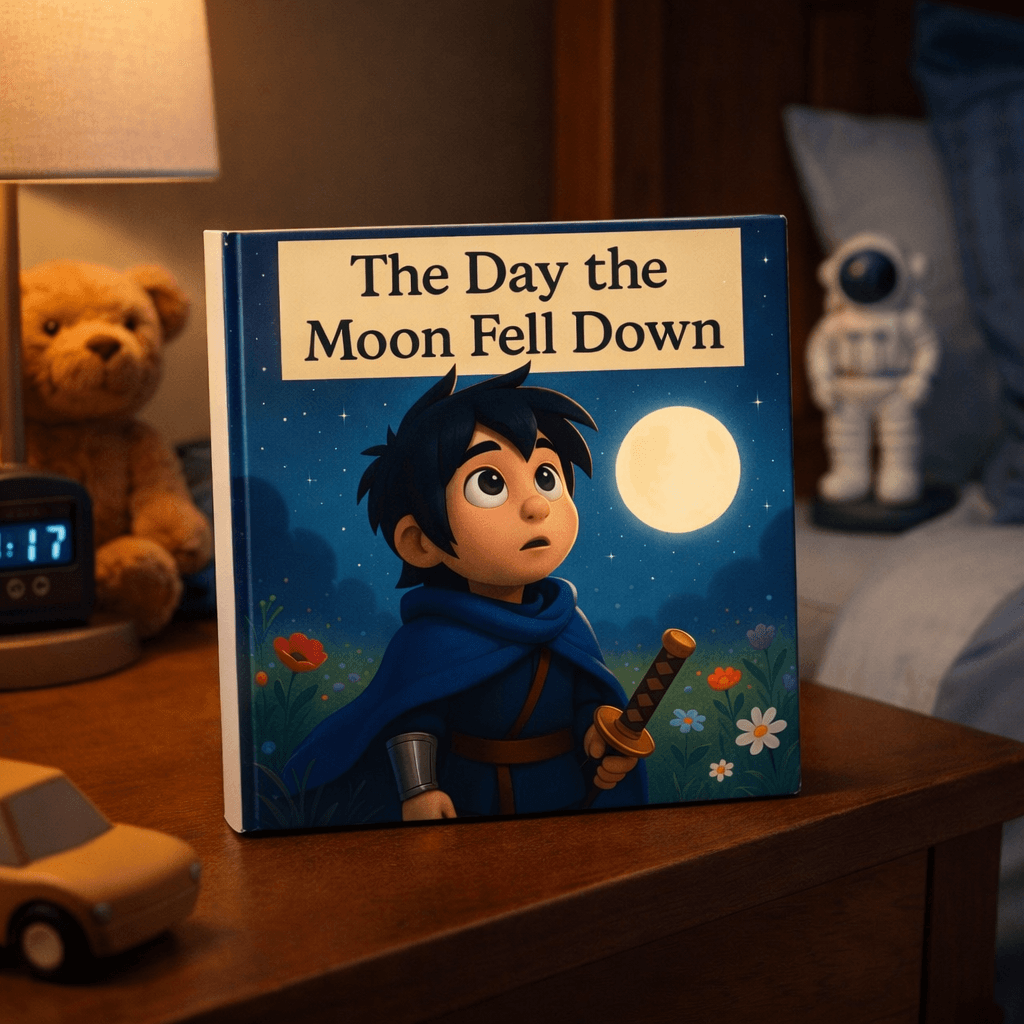
Storybooks support emotional development in kids by giving them a safe, low pressure way to meet feelings before they meet them in real life. Through relatable characters and situations, children build emotional vocabulary, practice empathy, rehearse how to handle big feelings, and learn that their own experiences are normal and manageable. Reading together also strengthens the parent-child bond, which is itself one of the strongest predictors of healthy social-emotional growth. Personalized storybooks, where a child sees themselves as the main character, take this further by making the emotional lesson feel personally relevant rather than abstract.
Books have been part of childhood for generations, and it is easy to think of them mainly as entertainment or a bedtime ritual. But for parents, teachers, and caregivers, a well-chosen story is one of the most effective tools available for teaching a child what emotions are, what to call them, and what to do with them. This guide breaks down the research behind storytelling and emotional development, shows you how to choose and read books for maximum impact at every age, and explains why personalized stories, like the ones you can create with Story Spark, tend to work even better than generic ones.
Why Storytelling Matters for Emotional Development
Young children are not born knowing how to name a feeling, let alone manage it. Emotional development is a skill, built the same way any other skill is built: through repetition, modeling, and safe practice. Stories are one of the few tools that let a child practice an emotional experience without actually having to live through the hard part first.
When a character in a book feels left out, embarrassed, jealous, or scared, a child watching from the safety of the page gets to experience that emotion at a distance. They can feel the tension of the story without being overwhelmed by it, and they get to see how the character works through it. That combination, feeling something real while staying safe, is what makes stories so effective for emotional learning.
This is not a new idea. The American Academy of Pediatrics has formally recognized reading together as a positive parenting practice that helps build the foundation for healthy social-emotional, cognitive, language, and literacy development, recommending that families read aloud with children from birth through at least kindergarten. According to the AAP's technical report, shared reading in the early years supports early relational health by embedding language-rich, story-based routines into a child's day, including at bedtime, and the practice strengthens the parent-child relationship at a developmentally critical time (American Academy of Pediatrics, Literacy Promotion policy statement).
The field of bibliotherapy, the therapeutic use of stories to support emotional growth, has studied this connection for decades. Researchers describe children's literature as a catalyst for change, giving children new perspectives and options for how to think, feel, and behave when they face a difficult situation (ERIC, Bibliotherapy: A Resource to Facilitate Emotional Healing and Growth). More recent research has extended this to specific populations. A 2024 study on parent-led bibliotherapy with children on the autism spectrum found that book-based storytelling is recognized as an effective way to teach new concepts and build social and emotional skills, particularly when a parent reads alongside the child rather than handing over a book alone (The Empathy Reading Project, Taylor & Francis).
Taken together, the research points to a simple, practical takeaway: it is not just that books exist that matters, it is what happens between the child and the caregiver while reading them.
The Science: How Stories Build Emotional Skills
Stories do several specific jobs at once when it comes to emotional development. Understanding what those jobs are makes it easier to choose books, and to read them, in a way that actually moves the needle.
They build emotional vocabulary
Before a child can manage a feeling, they need a word for it. Many children act out not because they are being difficult, but because they do not yet have the language to say "I feel left out" or "I am nervous about tomorrow." Story books introduce feeling words in context, attached to a character and a situation, which makes the words far easier for a child to remember and later use themselves.
They teach perspective-taking and empathy
When a child follows a character through a hard moment, they are practicing something psychologists call perspective-taking: imagining what it is like to be someone else. This is the foundation of empathy. Over time, and with repeated exposure to different characters and different emotional situations, children get better at recognizing what someone else might be feeling, both in books and in real life.
They offer a rehearsal space
A story lets a child rehearse a response to a difficult situation before they have to handle it for real. A character who is nervous about the first day of school and figures out a way through it gives a child a script to draw on when their own first day arrives. This rehearsal effect is one of the reasons bibliotherapy is used clinically, not just for entertainment. A meta-analysis of bibliotherapy research found consistent evidence that book-based intervention has measurable effects on children's thoughts, feelings, and behavior, especially when paired with discussion.
They normalize big feelings
One of the quiet, powerful effects of a good story is simply this: it tells a child their feeling is not strange. Seeing a relatable character feel angry, scared, jealous, or sad, and come out the other side, reassures a child that big feelings are a normal part of being human, not a sign that something is wrong with them.
They strengthen the relationship doing the reading
Shared reading is a relationship experience as much as a literacy one. The AAP's research points out that reading together stimulates early brain circuitry and helps build secure attachment, both of which are closely tied to a child's ability to self-regulate and manage emotions later on (HealthyChildren.org, Beyond Literacy). In other words, part of what makes a book "work" for emotional development is not the book itself, but the warm, focused attention a child gets while it is being read to them.
They support children processing difficult or traumatic experiences
Beyond everyday emotional learning, bibliotherapy has also been studied as a tool for children working through genuinely hard experiences, including loss, family disruption, and early trauma. Researchers who study storytelling as a counseling tool describe stories as a way to help children access and express feelings they may not yet have the vocabulary or comfort to say out loud directly, using a character as a safe stand-in for their own experience. This does not mean a storybook replaces professional support when a child needs it. It does mean that, for the everyday hard moments of childhood, a well-chosen story can do quiet, meaningful work that a direct conversation sometimes cannot.
What to Look for in a Book That Supports Emotional Development
Not every children's book is equally useful for this purpose. When choosing books, whether from a library shelf or by creating one yourself, look for these qualities:
- Age-appropriate emotional complexity. A toddler needs a simple, single emotion (mad, sad, happy). An eight-year-old can handle more nuance, like feeling proud and nervous at the same time.
- A relatable main character. Children connect fastest with characters who share something in common with them, whether that is their age, their interests, their family situation, or how they look.
- A clear emotional arc. The character feels something, faces a situation because of it, and works through it by the end. Books that skip the "working through it" part miss the point.
- Honest, non-judgmental language. Avoid books that frame emotions or differences as problems to be fixed. The goal is for a child to feel understood, not corrected.
- Room for conversation. The best books leave natural pauses for a parent to ask "what do you think they're feeling right now?" rather than explaining everything for the child.
Emotional Development Through Storybooks, Age by Age
Children's emotional needs shift dramatically between toddlerhood and the early school years. Here is a practical guide to what to look for and expect at each stage.
Ages 2 to 4: Naming feelings
At this age, the goal is simple: help your child attach a word to what they are feeling. Look for very short stories with one clear emotion per page, expressive illustrations, and repetitive, predictable language. A toddler does not need a complex plot; they need to see a character who is "mad" look mad, and hear that word said out loud, over and over, until it sticks.
Ages 4 to 6: Understanding cause and effect
Preschoolers and early school-age children are ready to understand that feelings have causes and that actions have consequences. Stories at this stage can introduce situations like sharing, waiting for a turn, or feeling left out, and show how the character's choices affect what happens next. This is also a strong age for stories about starting school, a new sibling, or other major transitions, since children this age are often facing these exact situations for the first time.
Ages 6 to 8: Perspective and empathy
By early elementary age, children can follow more than one character's point of view in the same story, which makes this an ideal age to introduce empathy-building narratives. Books that show two characters seeing the same event differently, or that explore friendship conflicts, are especially useful here. Children at this age also benefit from stories that validate more complex, mixed emotions, like being excited and nervous about the same thing.
Ages 8 to 10: Identity and resilience
Older children are starting to form a stronger sense of who they are, and stories can support that by featuring characters who face setbacks, make mistakes, and keep going. This is a good age for stories about resilience, self-confidence, and navigating friendships or family changes, since children this age are increasingly processing these experiences on their own, outside of a parent's direct view.
How to Read With Your Child for Maximum Emotional Impact
How you read matters as much as what you read. Researchers who study shared reading describe a technique often summarized by the acronym PEER: Prompt the child to say something about the story, Evaluate their response, Expand on what they said, and Repeat it back to reinforce the idea. A related set of prompts, known as CROWD, encourages caregivers to ask completion questions, recall questions, open-ended questions, "wh" questions, and questions that connect the story back to the child's own life.
In practice, this looks like pausing on a page and asking simple, open questions:
- "How do you think she's feeling right now?"
- "Has that ever happened to you? What did you do?"
- "What do you think he'll do next?"
- "Why do you think that made her feel better?"
This kind of dialogic reading, where the child is an active participant rather than a passive listener, has been shown to confer stronger cognitive and social-emotional benefits than reading straight through without pausing. It also turns a five-minute bedtime story into a genuine conversation about feelings, which is where most of the emotional learning actually happens.
Story Themes for Common Childhood Emotional Challenges
Certain life moments come with predictable emotional weight, and matching a story's theme to what your child is actually going through makes the book far more useful. A few examples:
Starting school or a new class. Stories about a character facing a new, unfamiliar place give children language for the nervousness of a first day, and a model for how to make it through.
A new sibling. Jealousy and displacement are common and rarely talked about openly. A story that names those feelings directly, rather than pretending an older sibling should only feel excited, tends to land far better with kids.
Big feelings like anger or frustration. Rather than telling a child not to feel angry, the most effective stories show a character feeling angry and finding a way to express it that does not hurt anyone, modeling regulation rather than suppression.
Fear and anxiety. Stories that name a specific fear, whether it is the dark, a doctor's visit, or a thunderstorm, and show a character coping with it, help normalize the fear and offer a coping strategy at the same time.
Family change. Moving house, a parent's new job, or a change in family structure are easier for children to process when a relatable character goes through something similar first.
Feeling different. Children who experience the world differently, whether through neurodivergence, a disability, or simply not fitting the usual mold, benefit enormously from stories where a character like them is the hero, not the problem to be solved. Story Spark's accessible and neurodivergent-friendly storybooks are built specifically around this idea, offering pacing, language, and visual choices designed for ADHD, dyslexia, autism, and other access needs, so a child sees themselves represented with warmth rather than correction.
Moving house or changing routines. Change is disorienting for young children partly because they cannot yet picture what comes next. A story that walks through a similar change, packing up a bedroom, saying goodbye to a street, arriving somewhere new, gives a child a mental rehearsal of the transition before it happens.
Grief and loss. Whether it is the death of a pet or a family member, children often lack the emotional vocabulary to process loss and may not show grief the way adults expect. Age-appropriate stories that name sadness directly, without rushing to a tidy resolution, help children understand that grief is something to be felt rather than fixed quickly.
Separation or family restructuring. When families separate or change shape, children can carry confusion or self-blame they rarely voice unprompted. A story that shows a character loved by two households, without judgment attached to either, can quietly correct assumptions a child has not said out loud.
Using storybooks in the classroom
Teachers face a similar challenge at scale: a classroom full of children who are all working through different emotional situations at once, from a new sibling at home to anxiety about a spelling test. Many educators build social-emotional learning time around a shared story, using it as a low-pressure entry point into a group discussion about feelings, since children are often more willing to talk about a character's emotions than their own. Personalized storybooks can extend this further for one-on-one reading support, classroom keepsakes, or end-of-term projects, and Story Spark's education-focused storybooks are designed with classroom use in mind, including an emotional learning track alongside academic subjects.
Why Personalized Storybooks Work Even Better
Generic storybooks are useful, but there is a reason bibliotherapy research consistently emphasizes relatability: the closer a child feels to the character on the page, the more powerful the emotional impact. A story about "a girl who feels nervous about her first day of school" is helpful. A story about your daughter, using her name, her school, her favorite stuffed animal, and a character that looks like her, is something else entirely.
This is the idea behind Story Spark's Storybook Creator. Instead of picking from a shelf of pre-written titles, parents, teachers, and caregivers can describe a situation their child is facing, whether that is starting school, welcoming a new sibling, managing frustration, or simply needing to see themselves as the hero of an adventure, and Story Spark's AI story generator writes and illustrates a story built entirely around that child. You can add up to four characters, including ones built from a photo of your own child, a sibling, a pet, or a comfort toy, using the Character World library or Story Spark's own character creation tools.
Because the emotional lesson is wrapped around a character your child already recognizes as themselves, the story does not feel like a lesson at all. It feels like their own experience, reflected back with a resolution attached. That is exactly the kind of relatable, emotionally honest storytelling that bibliotherapy research points to as most effective, and it is very difficult to achieve with an off-the-shelf book.
For children with additional needs, this personalization goes further. Story Spark's Stories That Celebrate Every Child collection lets you tailor pacing, sentence length, sensory cues, and illustration style for ADHD, dyslexia, autism, and color-blind-friendly reading, all built around the same emotional-development principles: relatable characters, honest language, and a clear arc a child can follow. For families looking to combine emotional learning with a specific subject or classroom topic, Story Spark's educational storybooks include an emotional learning track alongside subjects like math, science, and reading, so a single book can support both curiosity and emotional growth at once.
How to Create an Emotional-Development Storybook With Story Spark
Getting started takes only a few minutes:
- Start your book. Head to Create a Book and choose the storybook format.
- Describe the situation. Tell Story Spark what your child is facing, whether that is starting a new school, feeling jealous of a new sibling, managing anger, or simply needing a confidence boost. You can write this in your own words.
- Build the character. Add your child as a character, either by uploading a photo to turn them into an illustrated character or by describing them, and add up to three more characters, like a sibling, friend, or pet, from Character World.
- Choose an illustration style. Pick a style that fits your child, from softer, calming visuals to bright, energetic art.
- Review and personalize. Use the Storybook Editor and the built-in Spark Writing Assistant to adjust wording, add a dedication, and preview every page before anything is printed.
- Print and read together. Your book is printed as a premium hardcover and dispatched within 5 working days, ready to become part of your regular reading routine.
Books like these also make meaningful gifts. If you are creating one for a niece, nephew, grandchild, or student rather than your own child, Story Spark's personalized gifting collection covers occasions from birthdays to new baby arrivals, with the same personalization built in.
Frequently Asked Questions
Does reading storybooks actually improve a child's emotional development?
Yes. Research from the American Academy of Pediatrics and decades of bibliotherapy research both point to shared reading as a meaningful contributor to healthy social-emotional development, particularly when a caregiver reads with the child rather than simply handing over a book.
What age should I start using storybooks for emotional development?
The American Academy of Pediatrics recommends shared reading from birth through at least kindergarten, noting benefits for social-emotional, cognitive, and language development starting in infancy. Simple, single-emotion books work well as early as age two.
How do personalized storybooks compare to regular children's books for emotional development?
Personalized storybooks make the emotional lesson feel directly relevant to the child, since the character facing the situation is the child themselves rather than a stranger. Bibliotherapy research consistently identifies relatability as a key factor in how effective a story is at building empathy and emotional understanding.
What if my child does not like reading?
Personalization can help here too. A story built around a topic your child already loves, alongside characters and illustration styles chosen specifically for them, tends to hold attention far better than a generic title picked at random.
Can storybooks help with anxiety or fear in kids?
Yes. Stories that name a specific fear and show a character working through it give children both language for what they are feeling and a model for coping, which is a core technique used in bibliotherapy.
Are personalized storybooks suitable for neurodivergent children?
Yes. Story Spark's Stories That Celebrate Every Child collection is built specifically for ADHD, dyslexia, autism, and other access needs, with adjustable pacing, sentence structure, sensory cues, and illustration style.
How long does it take to create a personalized storybook?
Most families complete a story in a single sitting. Printed books are dispatched within 5 working days once you have reviewed and approved every page.
Key Takeaways
- Storybooks help children build emotional vocabulary, practice empathy, and rehearse coping strategies in a safe, low-pressure way.
- The American Academy of Pediatrics recommends shared reading from birth through kindergarten for its social-emotional, cognitive, and language benefits.
- How you read matters as much as what you read. Pausing to ask open questions turns a story into a real conversation about feelings.
- Matching a story's theme to what your child is actually facing, whether that is a new sibling, starting school, or managing anger, makes the book far more useful.
- Personalized storybooks, where your child is the character living the story, tend to make the emotional lesson land more deeply than a generic title.
Ready to put this into practice? Create your child's personalized storybook with Story Spark, or explore Story Spark's plans and pricing to see which option fits your family.
Written by the Story Spark Team. Story Spark is an AI-powered platform for creating, illustrating, and printing your own books.