


Reading is one of the most reliable predictors of a child's success in school and in life, yet fewer children are choosing to do it for fun. In the UK, the National Literacy Trust's 2025 survey of more than 114,000 children and young people found that only 1 in 3 (32.7%) 8 to 18 year olds said they enjoy reading in their free time, the lowest level recorded in twenty years of tracking. In the United States, federal data from the National Center for Education Statistics shows a similar pattern, with the share of 9 and 13 year olds who read for fun almost every day falling by double digits over the past decade.
The good news is that this trend is not fixed. Reading enjoyment is shaped far more by home habits, book choice, and the right first experiences than it is by any single school programme. Parents who build a handful of simple habits into everyday life can measurably shift how their child feels about books, often within a matter of weeks. Below are ten strategies backed by literacy research and everyday parenting experience, along with practical ways to put each one into action, plus guidance on which strategies tend to matter most at different ages.
Why a Love of Reading Matters More Than a Reading Level
It is worth separating two different goals: teaching a child to read, and helping a child want to read. Schools are generally well equipped to handle the first. The second, reading enjoyment, tends to fall largely to parents and caregivers, and it matters just as much. Children who read for pleasure consistently score higher on reading assessments than children who read the same amount but do not enjoy it, and researchers have found that reading enjoyment is one of the strongest predictors of a child's later academic achievement, ahead of even family income or parental education level in some studies.
Enjoyment is also what makes a reading habit durable. A child who is only ever assigned books will stop reading the moment the assignments stop. A child who associates books with comfort, curiosity, and being genuinely seen in a story is far more likely to carry that habit into adolescence and adulthood. That distinction is the thread running through every strategy below.
There is also a widening gap worth paying attention to. Data from the National Literacy Trust shows the drop in reading enjoyment has been sharpest among boys, and separate US research published in iScience found that daily reading for pleasure among American adults fell from around 28% in 2004 to about 16% in 2023, a decline of more than 40% in two decades. In other words, this is not only a children's problem being fixed as they grow up; it is a habit that, once lost in childhood, tends to stay lost into adulthood. That makes the strategies below less about short-term homework compliance and more about setting the pattern for the next several decades of a child's relationship with books.
Common Reading Roadblocks at Each Age
Not every child needs the same push. A toddler who resists sitting still and a twelve-year-old who insists reading is "for little kids" are facing very different problems, even though the underlying goal, a genuine love of books, is the same.
Ages 0 to 4: The biggest roadblock is usually attention span, not interest. Short, rhythmic board books with repetition and bright illustrations tend to hold attention far better than longer picture books at this stage. Little and often beats long and occasional.
Ages 5 to 7: This is the age where reading shifts from something done to a child to something a child starts doing themselves, and that transition is where enthusiasm most often stalls. Books that feel too hard erode confidence quickly. Matching reading level closely, and mixing independent reading with plenty of continued read-aloud time, keeps frustration from building.
Ages 8 to 11: Choice becomes the deciding factor. Children in this range who are handed books they did not choose, on topics that do not interest them, are the group most likely to disengage, according to National Literacy Trust research. This is also the age where graphic novels, series books, and non-fiction on niche interests do the most good, even if they were not the parent's first choice.
Ages 12 and up: Social proof and identity matter more than almost anything else. Tweens and teens are more likely to read something a friend recommended, something tied to a show or film they already like, or something that reflects who they are or want to be. This is also the age group where the National Literacy Trust recorded the steepest recent drop in enjoyment, which makes continued parental involvement, even in low-key forms like discussing a book together, more valuable than many parents assume.
1 Start Early, and Make Books Part of the Daily Rhythm
The earlier books enter a child's life, the more naturally reading becomes part of their world rather than a separate "school skill." Reading aloud to infants and toddlers builds vocabulary and listening comprehension long before a child can decode a single word, and it wires books into daily routines like bedtime, bath time, or the car ride to nursery.
Practical ways to start early:
- Keep board books within reach in more than one room of the house, not just the bedroom.
- Read the same favourite book on repeat. Repetition builds vocabulary and confidence, even when it feels repetitive to you.
- Narrate everyday moments the way a picture book would. Pointing at objects and naming them builds the same pre-reading skills as page-turning.
If your child is already past the toddler stage, it is not too late. The earlier the better, but the second-best time to start a reading routine is always today. What matters most is consistency rather than duration. A predictable five-minute reading moment at the same point in the day, right after bath time or right before lights out, builds a stronger habit over a school year than an occasional hour-long session that happens only when time allows.
2 Personalize Their Reading Experience
Generic books work for some children. Many others switch off the moment a story feels like it was written for someone else. Matching books to a child's actual interests, whether that is dinosaurs, football, space, or a specific cartoon character, removes the biggest barrier to engagement: relevance.
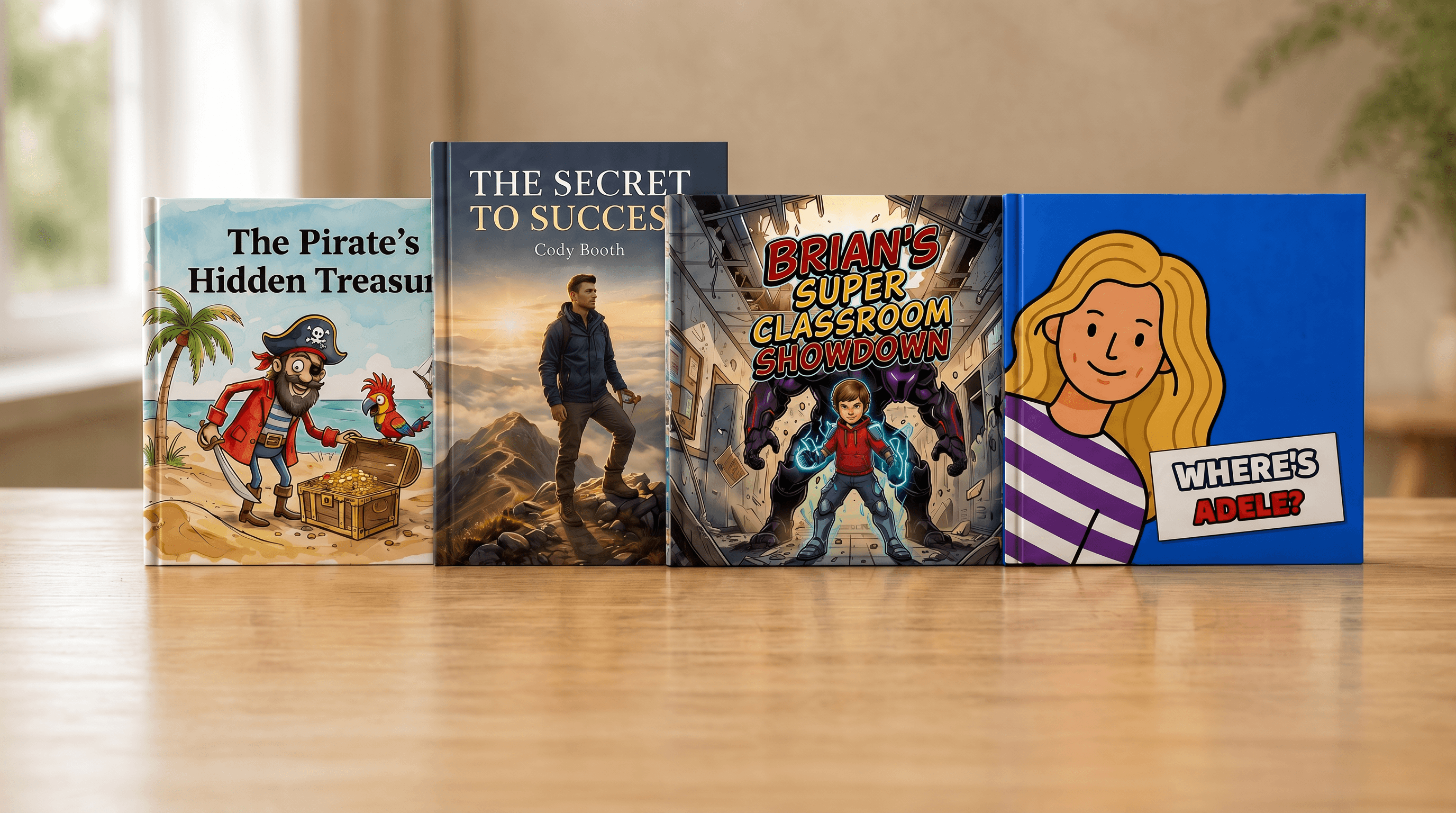
Personalization can go further than simply picking the right topic. When a child becomes the actual hero of the story, with their own name, their own illustrated likeness, and choices that reflect what they care about, reading stops being an instruction and starts being an event. This is the exact gap Story Spark's AI-powered storybook creator is built to close. Parents describe an idea or upload a photo, and Story Spark generates a fully illustrated storybook where the child is the main character, with a consistent illustrated version of them appearing on every page. For a reluctant reader, seeing their own name on the cover is often the single most effective hook available.
Personalization also solves a problem many parents run into with shelf-bought books: the story exists, but it does not quite fit. A child obsessed with a very specific combination of interests, dinosaurs who are also astronauts, or a superhero who happens to be terrified of the dark just like they are, is unlikely to find that exact book in a shop. Building the story from scratch around a child's actual world removes that compromise entirely, and it means the book can also reflect real details, a new sibling, a house move, or starting a new school, that make the story feel current and personally meaningful rather than generic.
3 Make It Fun, Not a Chore
Reading time should feel like a reward, not a task on a checklist. Turning a book into a small game, such as a scavenger hunt for objects hidden in the illustrations, a prediction guessing game before turning the page, or a mini quiz afterward, changes the emotional association a child builds with the activity.
A few low-effort ways to add play to reading time:
- Do the voices. Exaggerated character voices make story time memorable and signal that reading is entertainment, not homework.
- Let your child choose how the story ends before you get to the last page, then compare their version with the real one.
- Act out a scene together after finishing a chapter or picture book.
The goal is simple: the more fun reading time is, the more a child will ask for it themselves. Even small, silly rituals count. Some families give each book a "rating" out of five stars once finished, or keep a running family scoreboard of who has read the most books that month. None of this needs to be elaborate. The point is to attach a small amount of anticipation and play to what would otherwise be a quiet, solitary activity.
4 Read Aloud Together, for Longer Than You Think
Shared reading is one of the most studied interventions in early literacy, and its benefits extend well beyond the toddler years. Reading aloud together improves comprehension, builds vocabulary faster than independent reading alone, and strengthens the parent-child bond in a low-pressure setting. Many literacy experts recommend continuing read-aloud time well into a child's independent reading years, even after they can technically read alone, because listening comprehension develops ahead of reading comprehension for most children until around age 13.
Try alternating pages or chapters so your child gets active reading practice while you handle the more complex vocabulary. For families short on time, even ten minutes before bed most nights adds up to hours of shared reading across a school year. If evenings are already stretched thin, shared reading does not have to be confined to bedtime; a short chapter over breakfast, during a car journey, or while waiting at an appointment all count, and spreading the habit across the day can make it easier to sustain than trying to protect one long block of time each evening.
5 Set a Good Example
Children copy what they see far more than what they are told. A child who regularly sees a parent or older sibling reading for pleasure, rather than only scrolling a phone, absorbs the message that reading is something adults choose to do, not something you grow out of. Research on family reading habits consistently finds that children who see family members reading are more likely to develop positive attitudes toward books themselves.
This does not require a dramatic lifestyle change. Reading the news on paper instead of a screen at breakfast, keeping a book visible on the coffee table, or simply saying out loud "I can't wait to find out what happens next in my book" in front of your child all quietly reinforce the same lesson.
6 Encourage Independent Reading, on Their Terms
As children grow, the goal shifts from reading to them to letting them read on their own terms. That means genuine choice: letting your child pick books that interest them, even if the reading level feels a little too easy or the topic is not what you would have chosen. Graphic novels, joke books, and non-fiction about niche interests all count as real reading, and forcing "improving" books on a reluctant reader is one of the fastest ways to kill enthusiasm.
Give your child permission to abandon a book that is not working for them. The "give it 30 pages" rule used by many adult readers works well for children too, and it teaches that reading is a choice they control, not an obligation.
7 Create a Reading Environment Worth Returning To
Physical space matters more than most parents expect. A cozy reading nook, even a corner with cushions, a lamp, and a small shelf of books at a child's own height, gives reading a physical home in your house and signals that it is valued. Children are far more likely to pick up a book that is visible and easy to reach than one stored away in a cupboard.
A few environment tips that cost little to nothing:
- Store books spine-out at eye level for your child's height, not yours.
- Rotate which books are on display every few weeks to keep the shelf feeling fresh.
- Keep a small basket of books in the car, the bathroom, and the living room so a book is always within arm's reach.
8 Use Technology as a Bridge, Not a Distraction
Used well, technology can support reading rather than compete with it. Audiobooks help children access stories above their current decoding level, which keeps vocabulary growth going even before independent reading catches up. Interactive story apps and accessible digital formats can also make reading more approachable for reluctant or struggling readers.
Story Spark builds on this directly. Every storybook can include narration support, so children can listen along, follow the words on the page, or enjoy a story hands-free at bedtime. For families managing dyslexia, ADHD, or autism, Story Spark's learning-difficulties-friendly story generator adjusts sentence length, pacing, and font choice specifically to reduce the friction that often makes reading feel harder than it needs to be for neurodivergent children. Because every finished book is also printed as a real hardcover, technology becomes the on-ramp to a physical book rather than a replacement for one.
9 Turn Reading Into a Social Activity
Reading can feel like a solitary activity, which is part of what makes it a hard sell to a child who would rather be with friends. A family book club, a themed reading night, or a simple weekly chat about what everyone is currently reading turns books into a shared, social experience rather than a quiet chore done alone in a bedroom. Local libraries frequently run children's book clubs, and starting an informal one with two or three classmates can be as simple as agreeing on a book and meeting up once a month.
Story creation can be social too. Story Spark's storyteller community lets young authors and families share the stories they have written and read what others have created, turning reading and writing into something children do together rather than something imposed on them.
10 Celebrate Progress, Not Just Perfection
Recognising effort, not only achievement, keeps motivation high. That might mean a simple sticker chart for finished books, a family celebration when a child finishes their first chapter book, or turning a completed reading challenge into an occasion worth marking. The size of the celebration matters less than the consistency of it.
Milestones are also a natural moment to give a book as a gift rather than a toy. A personalized storybook made for a specific occasion, a birthday, finishing a school year, or simply "you read every night this month," reinforces reading as something worth celebrating in its own right, not just a means to an end.
How Personalization Ties These Strategies Together
Every strategy above works better when a child feels that a book was made with them in mind. That is the idea behind Story Spark. Rather than choosing from a shelf of generic titles and hoping one sticks, parents can generate a fully personalized, illustrated storybook built around their child's name, interests, and even their photo, turned into a consistent illustrated character across every page. Story Spark also supports educational storytelling that weaves subjects like maths, science, or emotional learning into an adventure rather than a worksheet, so reading and learning reinforce each other instead of competing for a child's attention.
Every book is printed as a premium hardcover and delivered to your door, which matters for the habit-building strategies above: a real, tangible book on a shelf gets picked up and reread in a way a screen rarely does. Parents who want to explore the full range of formats, from illustrated storybooks to longer novels and comic books, can see current options and pricing on the Story Spark pricing page.
For families with older or more independent readers, Story Spark's tools extend beyond a single storybook. Children who enjoy writing can illustrate a story they have already written themselves, turning reading enthusiasm into creative ownership, and families building a recurring bedtime series can save characters to reuse across multiple books, so the same illustrated version of a child can star in adventure after adventure. For more on how families are using AI-assisted storytelling to build reading habits in 2026, see Story Spark's related article on what parents want from AI storybooks.
Frequently Asked Questions
Why has children's reading for pleasure declined so much in recent years?
Literacy researchers point to several overlapping causes, including increased screen and device time, more academic pressure and testing at younger ages, and fewer children seeing the adults around them read for pleasure. The National Literacy Trust's 2025 data shows the decline has been sharpest among boys aged 11 to 16 and among primary-aged children over the past year specifically, which suggests the drop is accelerating rather than levelling off.
At what age should I start reading to my child?
As early as possible. Reading aloud to babies and toddlers builds vocabulary and listening comprehension well before they can read independently, and it establishes books as part of daily routine from the very start. There is no age that is too early to begin, and starting later still produces meaningful benefits.
My child says reading is boring. What is the fastest way to change that?
Start with relevance, not repetition. A child who finds reading boring has usually been handed books that do not reflect their interests, reading level, or sense of humour. Letting them choose the topic, format (including comics and non-fiction), and even becoming the character in a personalized story, such as those created with Story Spark's AI story generator, tends to shift attitudes faster than any amount of encouragement alone.
How much should my child be reading each day?
Consistency matters more than duration. Ten to twenty minutes of reading or being read to most days builds a habit far more effectively than an hour once a week. For pre-readers, this can be entirely read-aloud time; for independent readers, it can be a mix of reading alone and reading together.
Can personalized or AI-generated storybooks really help reluctant readers?
Yes, particularly for children who have not connected with generic books. Seeing their own name, likeness, and interests reflected on the page removes a major barrier to engagement, and personalized storytelling has been shown to increase motivation to read in children who otherwise disengage from standard titles. Story Spark was built around this idea, and the platform's approach to supporting neurodivergent readers covers this in more depth for parents of children with dyslexia, autism, or ADHD.
Does reading on a screen or listening to an audiobook count as "real" reading?
Yes. Audiobooks build vocabulary, story comprehension, and a love of narrative just as effectively as print reading, and are especially valuable for children whose listening comprehension is ahead of their decoding skills, which describes most children under thirteen. The goal is engagement with story and language, not the specific format it arrives in.
What is the single most effective strategy on this list?
There is no universal answer, because every child responds to something different, but combining just two or three strategies, such as reading aloud together, building a small reading nook, and choosing books matched to genuine interest, produces a bigger shift than any single tactic in isolation. Most literacy researchers agree that consistency and enjoyment matter more than any specific method.
Should I worry if my child only wants to reread the same book over and over?
No. Rereading a favourite book builds fluency, deepens comprehension, and gives a child a sense of mastery over the story, all of which support later reading skills. It is a normal and useful phase rather than a sign of stalled progress. Gently offering a similar new book alongside the favourite, rather than replacing it, tends to work better than insisting a child move on before they are ready.
How do I get a teenager who has stopped reading for fun to start again?
Start by lowering the stakes rather than raising the pressure. Teenagers who feel nagged about reading tend to dig in further. Offering format choices such as graphic novels, audiobooks, or short story collections, following their existing interests rather than steering them toward "improving" literature, and modelling your own reading habit without commentary all tend to work better than direct encouragement. A book tied to a show, game, or online creator they already follow is often the easiest re-entry point.
Start Building the Habit Today
A love of reading is not something a child either has or does not have. It is built, gradually, through the books they are handed, the routines around them, and whether reading feels like it was made for them specifically. Whether that means ten minutes of read-aloud time tonight, a new reading nook this weekend, or a personalized storybook that puts your child at the centre of their own adventure, every small step counts.
Written by the Story Spark Team. Story Spark is an AI-powered platform for creating, illustrating, and printing your own books.