



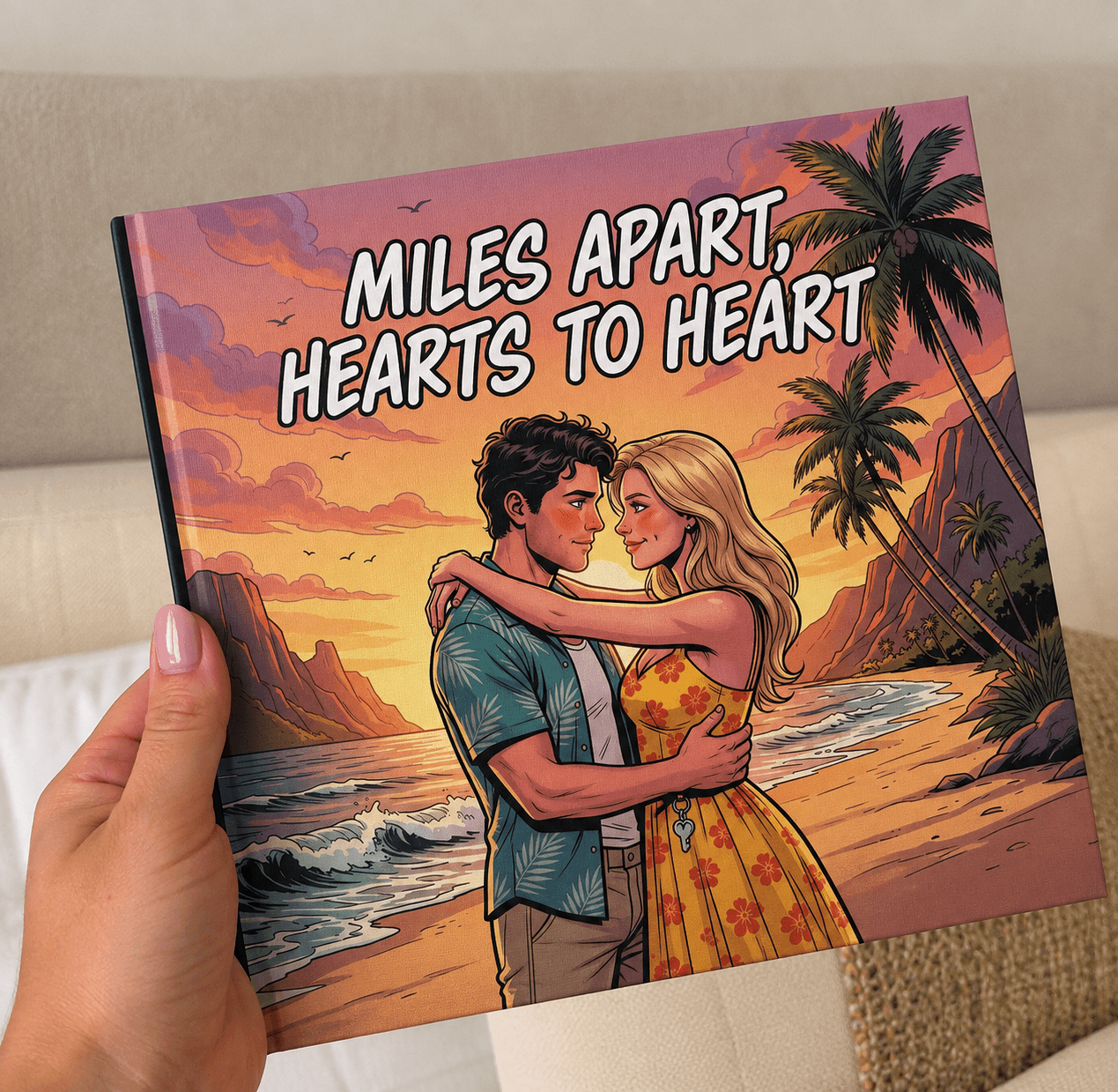
Comic books used to require a team. A writer, a penciller, an inker, a colorist, a letterer, and eventually a publisher willing to print and distribute the finished pages. That model still exists, but it is no longer the only way, or even the most common way, for a new comic to reach a reader. Today a single person can write, illustrate, and print a finished comic book without hiring anyone, using AI tools to handle the parts that used to require a full studio.
This guide walks through the entire process of publishing a comic book, from the first idea to a printed copy, in order. It covers scripting, panel layout, art style, character consistency, lettering, rights, and every realistic publishing path available in 2026, including where AI-assisted tools such as Story Spark's comic book creator fit into that process.
Quick Answers
What is the fastest way to publish a comic book? Write a short script, choose a consistent art style, generate or commission illustrations, and print through a self-publishing or print-on-demand service. Using an AI comic creator such as Story Spark can take a single-issue comic from idea to printed hardcover in under a week without hiring an artist.
Do I need to know how to draw to make a comic book? No. Many comic writers are not artists. You can collaborate with or commission an illustrator, or use an AI comic generator that produces consistent artwork from your script and character descriptions, in a range of established comic art styles.
How long should a comic book be? A single issue is typically 20 to 24 pages of story. A graphic novel or trade collection usually runs 100 to 200 pages. A personalized or gift comic is often shorter still, commonly 16 to 24 pages, since it is designed to be read in one sitting.
Do I need an ISBN to publish a comic book? Only if you plan to sell it through bookstores or major online retailers. An ISBN is not required to print a comic for personal use, gifting, direct sales at conventions, or distribution through a webcomic platform.
Can AI generate an entire comic book? AI tools can generate a full comic's artwork, including consistent characters, backgrounds, and panel compositions, from your script and character references. Most creators still write and edit the story themselves, then use AI to handle the more time-consuming illustration work.
Why Comic Book Publishing Has Changed
The biggest historical barrier to making a comic was never the writing. It was the art. A 22-page comic script might take a writer a weekend, but illustrating those same 22 pages, penciling, inking, coloring, and lettering, could take a skilled artist several months. That gap is why so many comic scripts never became finished comics.
AI illustration tools have closed most of that gap. A tool that can hold a character's face, outfit, and proportions consistent across dozens of generated panels removes the single hardest technical skill in comic art: drawing the same person the same way, from a different angle, forty times in a row. This does not replace the craft of comic art entirely, and plenty of creators still prefer to draw by hand or hire an illustrator, but it means the decision to make a comic no longer has to depend on finding or affording one.
Step 1: Decide What Kind of Comic You Are Making
Before writing anything, decide what format you are actually building, since this determines page count, pacing, and even which publishing path makes sense later.
A single issue is a short, self-contained comic, typically 20 to 24 pages, either a complete story or one chapter of a longer arc. A graphic novel or trade paperback is a longer, complete story, usually 100 to 200 pages, often released as one printed volume rather than a serialized issue. A webcomic is built for online, scrolling or page-by-page reading, and does not need to follow print page-count conventions at all. A personalized comic, where the reader or a loved one becomes the main character, is usually shorter, 16 to 24 pages, and built as a single complete story rather than part of an ongoing series.
If you are new to comics, starting with a single issue or a personalized short comic is far more achievable than committing to a 150-page graphic novel as a first project. You can always expand a successful short comic into a longer series later.
Step 2: Write Your Script
A comic script is not written like prose fiction. It needs to specify what happens on each page, and often each panel, since the artwork carries as much of the storytelling as the dialogue does.
Start with a one-sentence premise, the same way you would for any story: who wants what, and what is stopping them. Expand that into a page-by-page outline before writing full script pages, noting roughly what happens on each page in one or two lines. This step catches pacing problems early, such as an opening that takes four pages to get to anything happening, while it is still cheap to fix.
There are two common script formats. Full script format describes every panel in detail, including dialogue, action, and camera angle, before any art is made. Plot-first format, sometimes called the Marvel method, gives an artist a looser plot summary and lets them break it into panels themselves, with dialogue added afterward. If you are illustrating your own comic or using an AI tool, full script format generally works better, since it gives you, or the tool, a clear panel-by-panel structure to follow rather than requiring a separate breakdown step.
Step 3: Plan Your Panels and Pages
Panel layout is where comics diverge most from prose and picture books. A page is not just a container for images, it is a pacing tool. Wide panels slow a reader down. Small, stacked panels speed a scene up. A full-page splash panel signals that a moment matters more than anything around it.
A few practical guidelines help here. Keep most pages to four to six panels, since more than that tends to cramp both art and dialogue. Vary panel size to control pacing rather than defaulting to a uniform grid on every page. Reserve full-page or double-page spreads for genuine high points, such as a reveal or a climactic action beat, since using them too often dilutes their impact. End pages on a moment that pulls the reader to turn to the next one, sometimes called a page-turn cliffhanger, which matters even more in print than it does on a scrolling webcomic.
Step 4: Choose Your Art Style
Art style in comics is not a cosmetic choice, it shapes tone as much as the writing does. A story told in a bright, clean-lined style reads very differently from the same story told in a shadowy, high-contrast style, even with identical dialogue.
Several established comic art traditions are worth knowing before you choose. The Golden Age style, dominant from the late 1930s into the early 1950s, uses bold flat colors and thick black outlines. The Silver Age refined this into cleaner linework and more proportionate anatomy. European clear line style, originating with Hergé's Tintin, uses uniform line weight and flat color with almost no heavy shading, giving it a crisp, approachable look well suited to all-ages stories. Noir and modern styles lean on heavy shadow and restrained color, borrowed from film noir, and suit darker or more dramatic stories. Manga uses expressive eyes, dynamic speed lines, and more experimental panel layouts than most Western comics.
Story Spark's comic book art styles guide covers this history in more depth if you want to see visual examples before deciding. Practically, pick a style that matches your story's tone before you generate or commission a single page, since switching styles partway through a project means redoing earlier art to match.
Step 5: Create or Commission Your Artwork
This is the step that has changed the most in the last few years, and it is where most comic projects historically stalled.
You have three realistic paths. You can illustrate the comic yourself if you have the skill and time, which gives you total control but is the slowest option for most people. You can commission a freelance comic artist, which typically ranges from tens to hundreds of pounds per page depending on experience and complexity, meaning a full 22-page issue can become a substantial investment before it is ever printed. Or you can use an AI comic generator that produces artwork directly from your script and character descriptions, which removes both the cost of a full commission and the multi-month wait.
Whichever path you choose, character consistency is the single biggest technical challenge in comic art. A character whose face, hairstyle, or proportions shift noticeably between panels breaks reader immersion faster than almost any other visual mistake, and it is the most common failure point in amateur and early AI-generated comics alike. Story Spark's guide to character consistency explains why this is harder than it looks and how different tools attempt to solve it, from simple prompt repetition, which is weak and unreliable, through to photo-to-character generation, which anchors every generated panel to a real reference image.
Story Spark's personalized comic book creator is built around exactly this problem. You can generate up to three characters per comic from photos or written descriptions, and the tool keeps each character's appearance consistent across every page. Four art styles are available, American Classic, European Clear Line, Noir, and Modern Comics, so you can match the visual tone described above without hiring anyone. Every page can be previewed and individually edited before you order a printed copy.
Step 6: Add Dialogue, Lettering, and Sound Effects
Once your pages have artwork, lettering brings the script onto the page. Keep speech balloons and captions genuinely readable at print size. It is easy to underestimate how small a balloon looks once a full page is shrunk to fit a printed trim size, so review lettering at actual print scale, not just zoomed in on a screen.
Trim dialogue harder than feels natural. Comic panels are small and visually busy, and a balloon with three sentences in it will slow a page down more than the equivalent line would in a prose book. Sound effects, when used, should support the art rather than compete with it, and are usually most effective used sparingly, on genuinely important beats rather than every single action.
Read the finished pages in sequence, not panel by panel, before moving on. Pacing problems that are invisible looking at one panel at a time often become obvious once you flip through a full page, or a full issue, the way a reader actually will.
Step 7: Edit and Proofread
Let a finished draft sit for a few days before editing it, the same way you would with any writing. Distance makes pacing and dialogue problems far easier to spot.
Edit for story pacing first: does something meaningful change on every page, and does the comic build toward its ending rather than meandering. Edit for art consistency second, checking that characters, backgrounds, and color palette stay stable across the full issue. Proofread dialogue and lettering separately from both of these, since combining a content edit with a proofreading pass means both tend to get done less carefully. If you intend to sell the comic widely, consider a second reader, ideally someone who reads comics regularly, since pacing issues that feel fine to the creator are often the first thing an outside reader notices.
Step 8: Choose Your Publishing Path
There are more realistic paths to publishing a comic today than at almost any point in the medium's history.
Traditional comic publishing means submitting a script or finished pages to an established publisher, who handles printing and distribution in exchange for a share of rights and revenue. This route is highly competitive, often requires an agent for larger publishers, and can take well over a year from submission to print, but it carries no upfront cost and comes with existing distribution.
Self-publishing means you handle every step yourself, from script to art to printing, and keep full rights and control over your work. This is now the most common path for new comic creators, largely because AI-assisted illustration has removed the cost barrier that used to make self-publishing a comic far more expensive than self-publishing a plain text book.
Webcomic platforms let you publish digitally, page by page, building an audience over time before ever printing physical copies, and many successful print comics started this way. Anthologies and small press collections offer a lower-commitment way to get a shorter story in front of readers alongside other creators' work, often through open submission calls.
Personalized printing sits slightly outside this list, since it is not about building a public audience at all. If your goal is a comic starring yourself, your child, or a friend as the hero, built as a one-off gift or keepsake rather than something sold to strangers, a direct print service such as Story Spark's comic book creator is a simpler and faster path than any of the routes above, since there is no submission process, no audience-building, and no need to write for a general reader at all.
Step 9: Understand Rights and Ownership
Rights work differently depending on your publishing path, and it is worth understanding before you commit to one.
In traditional publishing, contracts vary widely: some genuinely creator-owned deals let you keep the underlying rights to your characters and story, while work-for-hire arrangements, common with major franchise publishers, mean the publisher owns the characters even though you wrote them. Read any publishing contract carefully, or have it reviewed, before signing, since this distinction matters enormously if the comic ever becomes successful.
In self-publishing, you generally retain full rights by default, since you are not signing them away to anyone. If you use AI tools anywhere in the process and intend to sell the finished comic, check the specific commercial usage terms of the tool. Story Spark's Creator plan, for example, is built specifically for creators who intend to publish and sell their work, and includes ownership of AI-generated content along with watermark-free exports, which matters if a comic made on the Dreamer or free tier was intended only for personal use.
An ISBN is only necessary if you plan to sell through bookstores or major online retailers. It is not required to print a comic for personal use, direct sales at conventions or markets, or gifting, so do not treat it as a mandatory step until your distribution plan actually requires one.
Step 10: Print and Format Your Comic
Format decisions affect both cost and how a finished comic feels in a reader's hands. Traditional single issues are usually printed on lighter paper stock in a saddle-stitched, staple-bound format, since they are designed to be inexpensive and disposable by design. Graphic novels and trade collections use a heavier, perfect-bound or hardcover format meant to last on a shelf. Personalized and gift comics are almost always printed as hardcovers, since durability and presentation matter more than unit cost when a comic is being given as a keepsake.
Story Spark prints personalized comics as 21cm by 21cm premium hardcovers with a matte finish, dispatched within five working days of ordering, which suits a gift or keepsake use case well. Whatever service you use, order and review a single physical proof before committing to a larger print run. Colors, panel legibility, and binding can all look different on paper than they do on a screen, and this is a far cheaper mistake to catch on one copy than on fifty.
Step 11: Launch and Share Your Comic
Plan how people will actually encounter your comic before it arrives, not after. For a self-published comic aimed at a public audience, this might mean building a small following on a webcomic platform first, sharing pages on social platforms artists already use, or bringing printed copies to a local convention or small press fair. For a personalized comic made as a gift, the "launch" is simply the moment you hand it over, but it is still worth thinking about presentation, timing, and occasion in advance.
Whichever path you take, treat your first comic as the start of a body of work rather than a single finished product. Comic readers, like readers of any serialized medium, respond to creators who keep making things, and the skills you build on a first short comic, script pacing, panel planning, working with an art style, all transfer directly to the next one.
Common Mistakes to Avoid
A handful of mistakes account for most abandoned or disappointing comic projects. Overwriting dialogue is the most frequent, since new comic writers often write panels the way they would write prose, forgetting that the art is already doing part of the storytelling work. Inconsistent character art is the second most common problem, and the one AI tools with strong character consistency are specifically built to solve. Choosing an art style that does not match the story's tone, such as a lighthearted all-ages story rendered in heavy noir shading, undercuts a comic before a reader even reaches the dialogue. Finally, committing to a large print run before testing a single proof copy remains one of the most expensive and avoidable mistakes a new self-published creator can make.
Frequently Asked Questions
What software or tools do I need to make a comic book? At minimum, a way to write your script and a way to produce artwork. Writing can be done in any text editor. For art, options range from traditional drawing software, to hiring an illustrator, to an AI comic generator such as Story Spark, which produces finished, print-ready pages directly from your script and character references.
How much does it cost to publish a comic book? Costs vary enormously by path. A commissioned artist can charge from tens to hundreds of pounds per page, meaning a full issue can run into thousands before printing. AI-assisted platforms that combine writing support, illustration, and printing, such as Story Spark, typically start under thirty pounds for a single finished, printed comic.
Can I sell a comic book I made with AI tools? Yes, provided you have the commercial rights to do so under the terms of the tool you used. Check whether your plan grants ownership of AI-generated content before selling, since some free or personal-use tiers are intended for personal projects only.
What is the difference between a comic book and a graphic novel? A comic book, or single issue, is typically a short, 20 to 24 page installment, often part of an ongoing series. A graphic novel is a longer, complete story, usually 100 to 200 pages, published as one standalone volume rather than a series of issues.
How do I keep my characters looking the same across every page? Use a consistent visual reference for each character, whether that is a model sheet you draw yourself, detailed notes for an artist, or a photo-based AI tool that anchors every generated image to the same reference. Story Spark's character consistency guide covers the different technical approaches in more detail.
Do I need to be an experienced writer to make a comic book? No. Comics are a visual medium first, and a strong, simple premise executed clearly often works better than an overly complex script. Tools like Story Spark's book creator can help generate a first-draft structure from a short description, which you then refine into your own script.
Getting Started
Publishing a comic book no longer depends on finding an artist, affording a full commission, or landing a publishing deal. It depends on a clear script, a consistent art style, and a way to turn that script into finished, print-ready pages.
If you already have a story in mind, Story Spark's personalized comic book creator lets you build your characters from photos or descriptions, choose from four distinct art styles, and preview every page before ordering a premium hardcover copy. You can compare plans on the pricing page, browse more creation guides in the Learning Centre, or check the FAQ if you have questions about rights, formats, or delivery before you start.
The gap between having a comic idea and holding a finished copy has never been smaller. What matters now is finishing the script, picking a style, and starting the first page.
Written by the Story Spark Team. Story Spark is an AI-powered platform for creating, illustrating, and printing your own books.