


The children's publishing world looks nothing like it did a decade ago. Board books and picture books now share shelf space with e-books, audiobooks, interactive apps, and a growing wave of AI-generated content. Parents have more choice than ever, yet many still describe the same frustration: it is hard to find a book that actually fits their child. Not a generic bestseller pulled off a shelf, but a story that speaks to who their child is, what they love, and how they read.
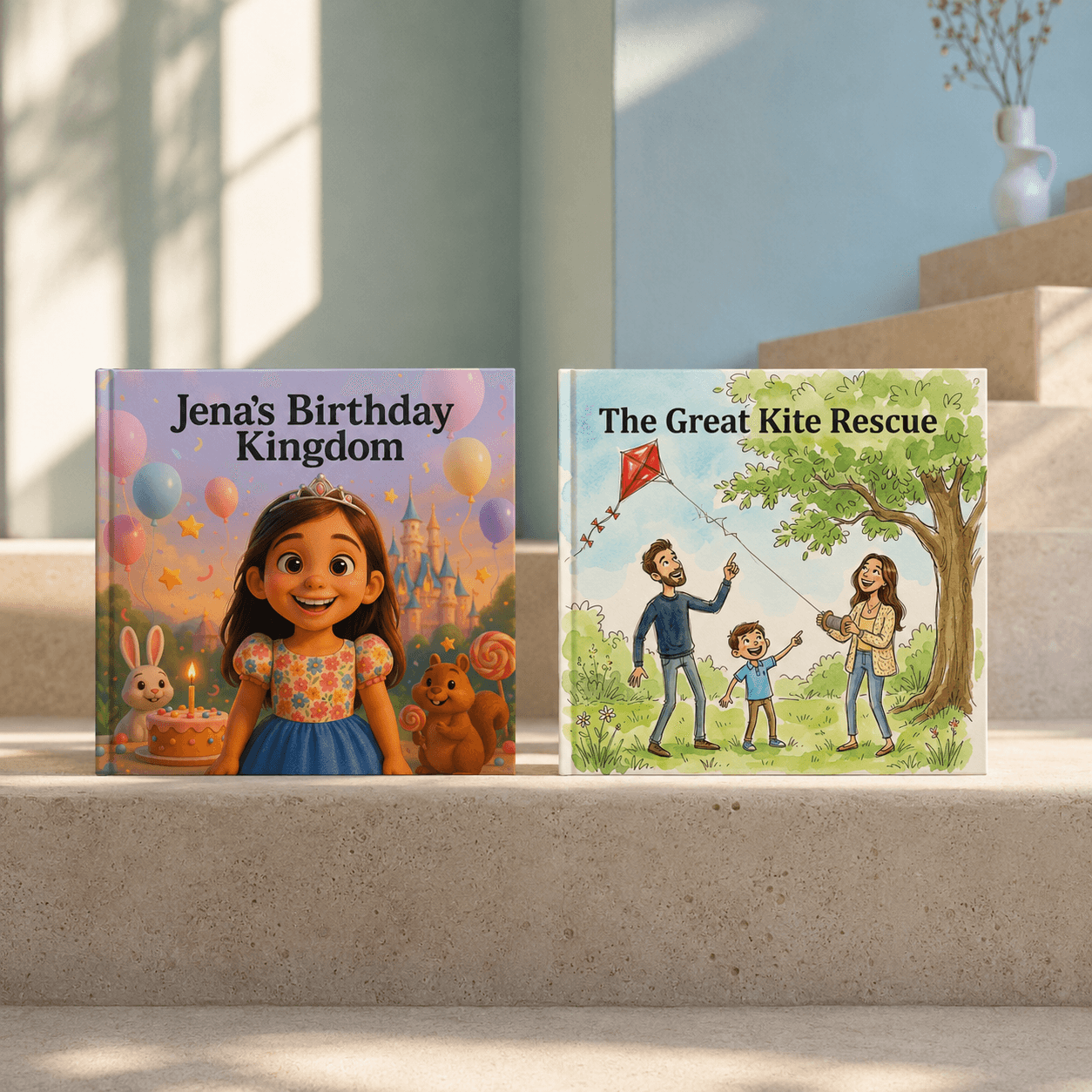
Story Spark was built to close that gap. It is an AI-powered platform that turns a short questionnaire, a few photos, and a handful of preferences into a fully illustrated, professionally printed storybook, featuring the child as the main character. In an industry crowded with mass-market titles, Story Spark is proving that personalization, not just production value, is what will define the next generation of children's storybooks.
This article looks at how Story Spark works, why personalized storybooks matter for young readers, and how the platform is reshaping the children's book market for parents, educators, gift-givers, and independent authors alike.
The Problem With Traditional Children's Storybooks
Anyone who has stood in a bookstore aisle trying to pick the "right" book for a child knows the challenge. Traditional publishing works on scale. A title has to appeal to a broad enough audience to justify a print run, which means the stories, characters, and reading levels are built for the average reader rather than the individual one.
That creates three recurring problems for parents, teachers, and gift-givers:
First, matching interest and reading level is genuinely difficult. A child who loves dinosaurs but reads below grade level often has to choose between a book that is too advanced or one that has nothing to do with dinosaurs at all. Second, representation is inconsistent. Not every child sees a character who looks like them, lives like them, or shares their name on the page. Third, generic stories struggle to hold attention. Children are naturally drawn to stories about themselves, their pets, their siblings, and their own imaginations, far more than they are drawn to an anonymous protagonist they have never met.
Educators face a parallel version of this problem in the classroom. A single reading list rarely serves a room of children with different comprehension levels, interests, and emotional needs at the same time.
Story Spark's answer is to flip the traditional model. Instead of starting with a fixed story and hoping it fits the reader, the platform starts with the reader and builds the story around them.
What Is Story Spark?
Story Spark is an AI-driven storybook and book creation platform that lets anyone, regardless of writing or illustration experience, turn an idea into a professionally printed hardcover book. Using a combination of AI story generation, AI illustration, and print-on-demand production, Story Spark helps parents, teachers, gift-givers, and independent authors create custom books and have them delivered as premium hardcover copies.
At its core, the platform is built around a simple idea: the story closest to you deserves to exist in physical form. Instead of choosing from a shelf of pre-written titles, users describe the story they want, and Story Spark's AI assistant, called Spark, helps write it, illustrate it, and lay it out for print. According to the About Us page, the platform has grown from a tool for personalized children's books into a broader creative community of over 200,000 book creators, spanning parents, teachers, novelists, and hobbyist authors.
Every book can be previewed page by page before it is printed, and finished books are shipped as matte-finish hardcovers within five working days.
How Story Spark's AI Storybook Creator Works
Creating a book with Story Spark is designed to take minutes, not months. The Storybook Creator offers three ways to build a book, depending on how much creative control a user wants.
The first option is the AI Story Generator. A user describes the story they want, for example a bedtime story about a child who is afraid of the dark, or an adventure where a child and their dog discover a hidden island, and Spark writes and illustrates the story automatically, working from a short questionnaire about the child's age, interests, and reading level.
The second option is the Storybook Illustrator. Users who already have their own text can supply it directly, and the AI generates matching illustrations in a chosen art style, giving full narrative control while removing the need for illustration skills.
The third option is the Blank Canvas, which gives complete creative control over both text and images for users who want to build a book from scratch.
Once a story exists, the built-in editor allows further refinement. Users can turn a photo of their child, a pet, or a family member into an illustrated character using the platform's photo-to-illustration tool, add up to four characters per scene, and choose from more than ten illustration styles to match the tone of the story. The Spark Writing Assistant helps polish text, and finished books can be exported as PDF, EPUB, or PNG files, or ordered as printed hardcovers.
Printed storybooks measure 21cm by 21cm, come in a matte-finish hardcover, and are available from 24 pages up to 64 pages. Anyone who wants to start immediately can head straight to Create Your Book, where the platform offers both the illustrated storybook format and a longer-form book format suited to novels and chapter books.
Personalized Storybooks for Every Occasion
While Story Spark started with children's storybooks, personalization has turned out to be useful for far more than bedtime reading. The Personalized Gifts page shows how the platform is used across birthdays, anniversaries, weddings, graduations, new babies, christenings, and holidays including Christmas, Easter, and Mother's and Father's Day.
For a birthday, that might mean a storybook where the birthday child stars as the hero of their own adventure. For a new baby, it might mean a keepsake book documenting a family's story for a child to grow up with. For a wedding or anniversary, it might mean a longer-form book capturing a couple's story in prose rather than illustrations.
What ties these use cases together is the same idea that powers the children's storybook experience: a book that could only exist for one specific person, rather than a generic title bought off a shelf. Story Spark's Spark Assistant is built to make this accessible even for users with no design experience, guiding them from a rough idea to a finished, previewable book before anything goes to print.
Story Spark for Educators and Classrooms
Teachers face a version of the personalization problem every day: how do you keep an entire classroom of children, all reading at different levels and interested in different things, engaged with the same lesson? Story Spark's education tools are built to help answer that question.
Instead of separating reading time from curriculum content, Story Spark lets teachers tell the platform the topic, skill, or unit a class is learning, whether that is fractions, the water cycle, a historical period, a new language, or a social-emotional learning theme, and generate a story shaped directly around it. Because the educational content is woven into a narrative rather than delivered as a standalone worksheet, children are more likely to stay engaged and retain what they have learned.
The platform supports one-on-one reading support for struggling or early readers, classroom-wide thematic units, social-emotional learning stories, and end-of-year keepsake books that a class can look back on. Most stories are designed to take ten to twenty minutes to read, which fits comfortably inside a standard classroom period, and teachers can preview every story before printing to confirm it is accurate and age-appropriate. Specialized classroom pricing is available for educators who want to use the tool across a full class rather than for a single child.
Self-Publishing With Story Spark
For aspiring children's book authors, one of the biggest barriers has always been the gap between having a story and getting it professionally illustrated, printed, and distributed. Story Spark's self-publishing tools are built to close that gap without requiring a traditional publishing deal.
Authors can use the AI story generator for help with narrative structure, or bring their own manuscript and use the illustration tools to bring it to life across more than ten art styles. The platform's full editing suite covers text, images, and layout, and once a book is finished, authors have several ways to bring it to readers.
Through the Storyteller Community, authors can publish books to a public creator profile and sell directly to Story Spark's audience of book creators and readers. For authors who want to distribute elsewhere, watermark-free digital exports in EPUB and PNG formats can be uploaded to other publishing platforms. And for authors who want physical copies, print-on-demand hardcovers are available in a 210mm square format, up to 60 pages, with delivery to the USA, UK, Canada, Australia, UAE, Saudi Arabia, and Portugal.
Crucially, Story Spark is explicit that authors retain commercial and copyright ownership of their work. That means a story created on the platform is not locked to Story Spark alone. It belongs to the author, who can sell it, license it, or publish it however they choose.
Beyond Storybooks: Comics, Search-and-Find Books, and More
Story Spark's personalization model extends past the traditional picture book format. The platform's Personalized Comic Books let users upload photos of themselves, their children, or even their pets and turn them into illustrated comic book characters, choosing from four distinct art styles: American Classic, European Clear Line, Noir, and Modern Comics. Users can write their own storyline or choose from suggested templates, and every comic is printed as a 21cm by 21cm hardcover.
The platform's Search-and-Find Books bring a nostalgic format into the personalization model. A user uploads a photo, chooses a costume, and becomes the hidden character scattered across an illustrated book, in either a Classic edition or an Around the World edition. It is the same seek-and-find concept many adults grew up with, rebuilt around a specific child or family member instead of an anonymous illustrated figure.
Together, these formats show that Story Spark's underlying technology, AI-assisted writing, character creation from photos, and flexible illustration styles, is a platform rather than a single product. Whether the end goal is a bedtime storybook, a comic, an activity book, or a full-length novel, the same creative tools apply.
Accessibility and Multilingual Storybooks
A story that a child cannot read comfortably is a story that will not get finished. Story Spark has built accessibility directly into its editing tools, including text settings designed for neurodivergent readers, covering dyslexia, autism, and ADHD-friendly formatting. This allows a story to be adjusted not just in content, but in how it is presented on the page, so more children can read independently and with confidence.
Language support is another area where personalization has an outsized impact. Story Spark supports most major languages, along with community translation options, meaning a family that speaks multiple languages at home, or an educator working with English language learners, can generate the same story in the language that will resonate most with a specific reader. For authors and publishers, this also opens the door to reaching audiences well beyond a single home market, since a single story concept can be adapted and printed for readers around the world.
What Makes Story Spark Different From Other AI Storybook Tools
The market for AI-generated children's content has grown quickly, and parents comparing options will find no shortage of story generators, illustration apps, and print-on-demand services. What sets Story Spark apart is that it treats personalization as the foundation of the product rather than a feature bolted on afterward.
Many AI story tools stop at a digital file: a PDF that can be downloaded and read on a screen. Story Spark treats the printed hardcover as the end goal, with the digital creation process built specifically to produce a book that looks and feels like something bought from a bookstore, not a home-printed document. The 21cm by 21cm matte hardcover format, five-day dispatch window, and page-by-page preview before ordering all reflect a print-first mindset rather than a screen-first one.
Story Spark also goes further than most competitors on character consistency and creative control. Rather than generating a single illustrated scene, the platform allows up to four characters to appear consistently across an entire book, built from real photos where relevant, and supports more than ten illustration styles so a story can be tailored visually as well as narratively. Combined with the three separate creation paths, full AI generation, bring-your-own-text illustration, and a blank canvas, users are never forced into a single workflow that does not fit how they want to create.
Finally, ownership sets Story Spark apart from many AI content platforms. Creators on paid plans retain full commercial and copyright ownership of what they make, with watermark-free exports available for use beyond the platform itself. For self-publishing authors in particular, that distinction matters: a story is not locked into one ecosystem, and can be sold, adapted, or published wherever the author chooses.
What Personalized Storybooks Mean for Child Development
The case for personalized reading material is not just anecdotal. Children are naturally more engaged with stories that reflect their own identity, interests, and experiences, and that engagement has real consequences for reading development. A child who sees themselves as the hero of a story is more likely to want to keep reading, more likely to reread a favorite book, and more likely to associate reading with enjoyment rather than obligation.
Matching a story's reading level to a child's actual ability, rather than their age or grade alone, also matters. A story that is too difficult can be discouraging, while a story that is too simple can feel unengaging. By generating text calibrated to a child's comprehension level while keeping the subject matter exciting to them specifically, personalized storybooks aim to sit in the sweet spot between challenge and enjoyment that supports steady reading growth.
There is also a quieter benefit that is easy to overlook: representation. A child who rarely sees a character who looks like them, has their name, or shares their family structure can feel like an outsider in the stories they read. Personalized storybooks put that child at the center of the page, which can support both reading confidence and a broader sense of belonging.
Repetition plays a role here too. Children famously ask to hear the same story again and again, and researchers who study early literacy often point to repeated reading as one of the strongest drivers of vocabulary growth and comprehension. A story built around a child's own name, pet, or interests gives that child a much stronger reason to return to the same book night after night than a generic title might, which turns repetition from a chore for parents into something the child actively requests. Over time, that kind of sustained, self-motivated engagement with books is one of the clearest predictors of long-term reading habits.
Parents and teachers who want to put this into practice do not need to overhaul story time entirely. Even mixing one or two personalized stories into a regular reading rotation, alongside favorite traditional titles from the Story Library, can be enough to notice a difference in how eagerly a child reaches for a book.
Story Spark Pricing
Story Spark is built to be accessible at multiple levels of commitment. Full details are available on the Pricing page, but the platform offers a Free plan that allows users to create and print their own books at no subscription cost, a Dreamer plan for users who want standard AI creation tools, character creation, and branded PDF and EPUB downloads, and a Creator plan for users who want higher AI usage limits, audio narration, full ownership of AI-generated content, and watermark-free downloads.
Printed storybooks start at $29.99 for a 24-page hardcover, with pricing increasing based on page count up to 64 pages. Longer-form books and comic books have their own pricing tiers, and volume discounts are available for users ordering multiple copies, which is particularly useful for classrooms, family gifts, or authors printing runs of their own published work.
The Story Spark Community and Free Library
Story Spark is not only a creation tool. The Storyteller Community allows creators to publish their books to a public profile, where other users can discover and read their work, turning the platform into a discovery space as well as a production tool.
For families who want to explore before creating anything themselves, the Story Library offers hundreds of free stories, complete with audio narration, spanning bedtime stories, fairy tales, educational narratives, and decodable books for early readers. The library includes options for neurodivergent readers and spans multiple reading levels and languages, making it a useful starting point for families who are still deciding what kind of story might work best for their child before committing to a personalized creation.
Together, the library and community give Story Spark a dual identity: a free resource for reading right now, and a creative platform for building something new.
Frequently Asked Questions About Story Spark
What is Story Spark? Story Spark is an AI-powered platform that helps users write, illustrate, and print personalized children's storybooks and other books, delivered as premium hardcover copies.
How does Story Spark personalize a storybook?
Users answer a short questionnaire about a child's age, interests, and reading level, and can upload photos to turn real people or pets into illustrated characters. The AI then generates a story and illustrations built around those details.
Do I need writing or design experience to use Story Spark?
No. The platform's Spark Assistant handles the writing and illustration, and the Storybook Creator can generate a full story from a short description, though users who prefer full creative control can also write and edit everything themselves.
How much does a Story Spark storybook cost?
Printed storybooks start at $29.99 for a 24-page hardcover, with pricing rising based on page count. A Free plan is available for basic creation and printing, alongside paid Dreamer and Creator subscription plans with expanded AI features. Full details are on the Pricing page.
Can teachers use Story Spark in the classroom?
Yes. Story Spark offers education-focused tools that let teachers build stories around specific curriculum topics, with classroom pricing available. More detail is on the education page.
Can I sell books I create on Story Spark?
Yes. Authors retain commercial and copyright ownership of their work and can publish through the Storyteller Community, export watermark-free files for other platforms, or order print-on-demand hardcovers to sell independently. See the self-publishing page for details.
Is Story Spark available in languages other than English?
Yes. The platform supports most major languages, with community translation options, making it possible to create the same story in multiple languages for different readers.
Does Story Spark support accessible or neurodivergent-friendly reading?
Yes. Text settings are available to support readers with dyslexia, autism, and ADHD, allowing stories to be formatted for a wider range of reading needs.
How long does it take to receive a printed book?
Books are typically dispatched within five working days of ordering, with delivery available to the USA, UK, UAE, Australia, Canada, Saudi Arabia, and Portugal, among other regions on request.
What age range is Story Spark best suited for?
Story Spark is used across a wide age range, from toddlers being read bedtime stories by a parent, through early readers building independent reading skills, up to older children and classroom groups working on curriculum-linked stories. Reading level and content are adjusted through the questionnaire used to build each story, rather than fixed to a single age band.
Can I create more than one book featuring the same character?
Yes. Characters created from photos or descriptions can be saved and reused across multiple books, which is useful for building a series around the same child, pet, or family, or for authors developing recurring characters across several titles.
Where can I find more answers?
The full FAQ page covers additional questions on printing, shipping, order tracking, and account details.
Getting Started With Story Spark
The children's storybook market has spent decades optimizing for scale: bigger print runs, wider distribution, broader appeal. Story Spark is betting on the opposite approach, using AI to make individual attention scalable instead. A story built around one specific child, written at their reading level, illustrated with characters who look like them, and printed as a real hardcover book they can hold, is a fundamentally different product than a book pulled off a shelf because it seemed like a reasonable fit.
For parents looking for a bedtime story their child will actually ask for again, for teachers trying to reach every reading level in a single classroom, for gift-givers looking for something more meaningful than another generic present, and for aspiring authors who have a story to tell but no path to traditional publishing, Story Spark offers a practical way to turn an idea into a finished, printed book.
Anyone ready to see what that looks like for their own family, classroom, or manuscript can start directly at Create Your Book, browse free stories first at the Story Library, or explore plans on the Pricing page.
The children's storybook market is changing. Story Spark is one of the platforms leading that change, one personalized story at a time.
Related Reading
How to Publish Your Book and Become an Author
AI Book Publishing: The Complete Guide
Best AI Story Generators of 2026
The Complete AI Book Generator Comparison 2026
The Best Storybook Creator Platforms: The Complete Guide
Written by the Story Spark Team. Story Spark is an AI-powered platform for creating, illustrating, and printing your own books.