


AI storybooks went from a novelty to a genuine category in the space of about two years, and parents have gone with them, cautiously. Search interest in personalized AI children's books has climbed steadily, but so has a very reasonable wave of parental scrutiny. Recent research, including Pew Research Center's 2025 study on how parents manage screen time and Deloitte's annual survey on AI in family life, shows a consistent pattern: parents are not rejecting AI outright, and they are not embracing it uncritically either. They are asking specific, practical questions before they let it anywhere near their kids.
Nearly half of parents say they worry their child relies on AI too much, according to Deloitte's most recent findings. At the same time, the large majority of parents surveyed acknowledge real potential benefits when AI is used thoughtfully, particularly for learning and connection rather than passive entertainment. Separate research into AI-generated images in children's books found that most parents are open to AI illustration, but only when it is produced with genuine care for children's literature standards, and many are far more cautious about AI writing the actual story text unsupervised.
In other words, parents in 2026 are not asking "is AI good or bad for my kid." They are asking a more useful question: what does a responsible, well-made AI storybook actually look like, and how do I tell it apart from a lazy one. This article answers that question directly, based on what parents consistently say they care about, and how Story Spark was built around those exact priorities.
Why This Question Matters More in 2026 Than It Did Before
Three things changed at roughly the same time to make this a live parenting question rather than a niche one.
First, AI story and image generation got good enough to be genuinely useful, not just a curiosity. Illustration quality, character consistency, and text coherence all improved enough that AI-made storybooks stopped looking like obvious novelties and started looking like real books.
Second, screen time fatigue among parents reached a tipping point. Pew Research's 2025 report on how parents manage screen time found that the overwhelming majority of parents actively limit and monitor their children's device use, and many describe real day-to-day tension around it. Any new AI product aimed at kids now gets evaluated first through that lens: does this add another screen, or does it do something screens have always struggled to do.
Third, AI-generated content in general became a trust issue, not just a novelty issue. Parents who are comfortable with AI helping plan a trip or draft an email are considerably more careful when the output is going to be read aloud to a five-year-old at bedtime, night after night, for years. The bar for care, accuracy, and age-appropriateness is simply higher when children are the audience.
Put together, these three shifts explain why "what parents want" has become such a specific, well-defined list rather than a vague sense of caution. Here is that list.
1 . A Real, Physical Book, Not Another Screen
This is the single most consistent thing parents say when asked about AI storybooks, and it comes through clearly in the research. Screen time is already a daily point of friction in most households, and any new AI product that adds to it starts from a position of suspicion rather than trust.
What parents actually want is the opposite: AI used to create something that gets their child off a screen, not onto one. A printed book that sits on a shelf, gets pulled down at bedtime, and gets read the old-fashioned way, aloud, together, with no notifications, no autoplay, and no algorithm deciding what comes next.
This is the reason Story Spark's entire model is built around print, not screens. Every storybook and book created on the platform can be previewed digitally, but the end product is a premium hardcover, printed and dispatched within five working days. Story Spark's own ethical AI page is direct about this: with children spending hours a day online, mostly on passive screen activity, the more useful question is whether that time can be turned into something that produces a real object, a real bedtime ritual, and a real shared experience instead of more scrolling.
2 . Content That Is Actually Age-Appropriate, Not Just Filtered
Parents do not just want AI content to avoid obviously inappropriate topics. They want it calibrated to their specific child's age and developmental stage, with tone, vocabulary, and pacing that actually fit a four-year-old differently than a nine-year-old.
This is a more demanding standard than basic content moderation, and it is where a lot of general-purpose AI tools fall short. A chatbot that avoids harmful topics is not the same as a tool that understands how to write a bedtime story for a toddler versus an early reader.
Story Spark addresses this directly by letting you select the age range a story should be written for as part of the creation process, adjusting vocabulary, sentence complexity, and story themes accordingly. Combined with content moderation built specifically to keep AI-generated stories age-appropriate, this is described in detail on Story Spark's ethical AI for children page, which explains how raw AI models are deliberately shaped and censored to be child-friendly rather than simply left to general-purpose defaults.
3 . Personalization That Feels Meaningful, Not Gimmicky
Parents have understandably grown wary of "personalization" that amounts to nothing more than swapping a name into a template. That is not what most parents mean when they say they want a personalized story. What they actually want is a story that is genuinely built around their specific child: their real name, their real interests, their real face if they choose, and a character who actually looks like them from the first page to the last.
This is where character consistency becomes a parent-facing issue, not just a technical one. A storybook where the child's illustrated character changes appearance from page to page undermines the entire point of personalization. It stops feeling like a story about your child and starts feeling like a story about several different children who happen to share a name.
Story Spark's character creator is built specifically to solve this. Parents can describe a character by name and description, or upload an actual photo of their child, and Story Spark generates a unique illustrated character that stays visually consistent across every page of the finished book. Characters are saved to the account, so the same child can be the hero of story after story, which matters enormously for families who want to build a recurring bedtime series rather than a one-off.
4 . Support for Neurodivergent and Struggling Readers
This is one of the most consistent, specific requests from parents, and it is one of the most under-served areas in mainstream children's publishing generally, let alone in AI tools. Parents of children with dyslexia, autism, or ADHD are frequently looking for reading material that is tailored to their child's needs rather than generic content they then have to adapt themselves.
Story Spark treats this as a core capability rather than an afterthought. The platform explicitly supports children with neurodivergent needs, including dyslexia, autism, and ADHD, through story pacing and structure designed with those needs in mind. The storybook creator includes text style options specifically designed for accessibility and neurodivergent readers, and Story Spark's dedicated learning difficulties friendly story generator goes further into how stories can be tailored for children who need a different kind of reading support. For families navigating this, having a tool built with this in mind from the start, rather than retrofitted, is a meaningful difference.
5 . Multiple Languages, for Real Families
Modern families are frequently multilingual, bilingual, or raising children with grandparents and relatives who speak a different first language. Parents increasingly want storybooks that reflect that reality rather than assuming English is the only language that matters.
Story Spark supports story creation in more than 30 languages, which allows a grandparent story to be printed in the language a grandparent actually speaks, or a bilingual household to build a library that reflects both languages a child is growing up with. This is a small detail in a features list, but for the families it matters to, it is often a deciding factor.
This also matters for families living outside their country of origin, who often struggle to find children's books that reflect both their home language and their child's day-to-day language. A story generated in a parent's native tongue, printed as a real hardcover, can do something a translated mass-market book rarely manages: it can sound like the parent's own voice, in the parent's own words, rather than a generic translation.
6 . Illustration Quality That Does Not Look Cheap or Uncanny
Parental skepticism toward AI-generated images in children's books is well documented, and it is not baseless. A lot of AI illustration still has an unmistakably synthetic, slightly uncanny look, and children, especially older children, notice inconsistencies quickly: a character's hand drawn wrong, an object the wrong size, a scene that does not quite make physical sense.
Research into parental attitudes toward AI-illustrated children's books found that most parents are open to AI images specifically when they are produced with real attention to children's literature standards and quality, rather than treated as a cheap shortcut. Parents are not asking for perfection. They are asking for care.
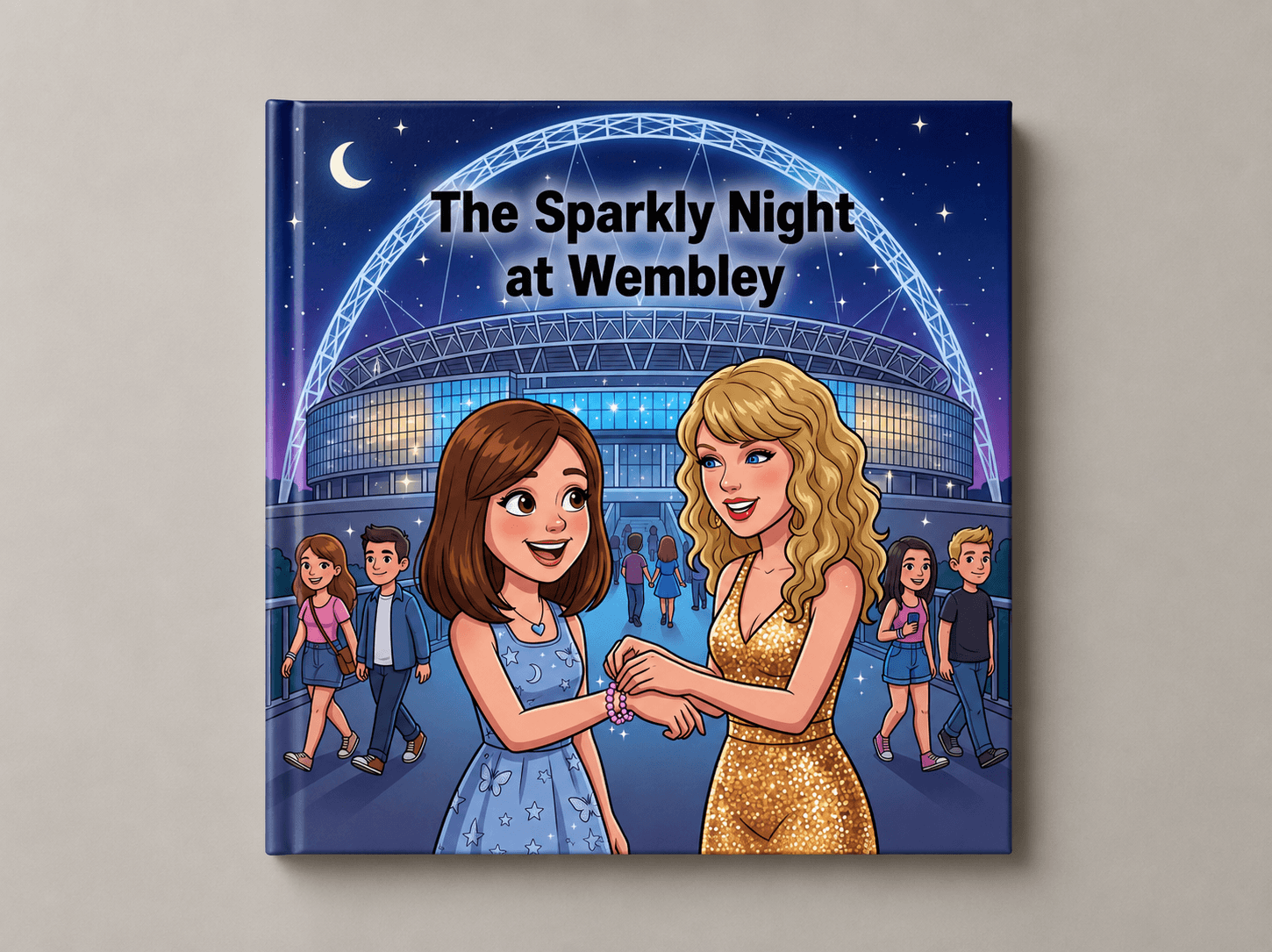
Story Spark offers multiple illustration styles, including watercolor, cartoon, and flat storybook art, so a family can choose a visual tone that actually suits the story and the child, rather than being locked into one generic AI look. Combined with the character consistency built into every page, the goal is illustration that reads as a real, considered storybook rather than a stitched-together set of AI experiments. Every book can be previewed page by page before anything is printed, so parents get to actually judge the quality themselves before committing to an order.
7 . Control and Preview Before Anything Is Final
Parents consistently want the final say before content reaches their child, and reasonably so. An AI tool that generates a finished product with no opportunity to review it first is a hard sell for anyone making something meant for a five-year-old.
This is a basic but important feature across Story Spark's platform. Every book, whether created through the guided AI story generator, illustrated from a parent's own writing, or built from a blank canvas, can be edited and previewed page by page before it is ever ordered or printed. The Spark Writing Assistant is available throughout to help refine text, but nothing is locked in without the parent's approval, and nothing gets printed until the parent is satisfied with every page.
8 . A Genuine Bonding Ritual, Not a Babysitting Tool
Perhaps the most important shift in how parents talk about AI storybooks in 2026 is this: the ones who use them successfully are not using them to occupy a child alone. They are using them to create something to do together, usually at bedtime, usually read aloud, usually repeated as a ritual over weeks or months.
This distinguishes AI storybooks sharply from the passive screen time that Pew's research shows parents are actively trying to limit. A printed personalized book read aloud at bedtime is closer, in practice, to a favorite worn paperback than it is to a tablet game. Story Spark's bedtime stories tools are built around this use case specifically, giving parents an easy way to generate a new personalized story for the nightly reading routine, starring their own child, without turning the ritual into screen time itself.
9 . Affordability and No Pressure to Commit Sight Unseen
Parents are understandably reluctant to spend money on something for their child that they have not been able to evaluate first. A free tier that lets a family actually create and preview a full book before paying anything removes a significant amount of that hesitation.
Story Spark is free to start: you can create and preview a complete book in the editor at no cost. The Dreamer subscription, which unlocks AI story generation, character creation, and AI illustration, starts from $9.99 per month, and printed storybooks start from $29.
- Full details are on the pricing page. This structure lets a cautious parent test the actual quality of a book, front to back, before deciding whether it is worth printing, rather than being asked to commit blind.
10 . Real Use Cases, Not a Single Rigid Format
Finally, parents want flexibility in how they use these tools, because the moments they are trying to capture are varied. A birthday gift is a different project than a bedtime routine, which is different again from a family memory book or a classroom resource. Parents want one platform that flexes across those needs rather than five separate apps.
Story Spark supports this range directly. Families use it to create personalized gifts for birthdays, new babies, graduations, and holidays. Teachers and parents use it to build educational storybooks tied to specific curriculum topics, complete with quizzes and activities. Aspiring authors use it to self-publish children's books with export options ready for wider distribution. And many families simply use it to build an ongoing library of bedtime stories starring their own kids. One platform, several genuinely different parenting needs.
What Parents Should Watch Out For
Given everything above, it is worth being direct about the warning signs parents should look for in any AI storybook tool, whether or not it is Story Spark.
Be cautious of tools with no age-range settings, since a story written with no developmental calibration is a story written for no one in particular.
Be cautious of tools with no content moderation specifically built for children, as opposed to general-purpose AI systems with only broad safety filters.
Be cautious of illustration tools with no character consistency, since a storybook where the hero looks different on every page undermines the personalization that is usually the whole reason a parent chose an AI storybook in the first place.
Be cautious of any tool that pushes toward more screen time rather than toward a finished, physical result, since that runs directly against what most parents say they actually want.
And be cautious of tools that ask for payment before you can preview the finished product, since a parent's ability to review content before it reaches their child is not a nice-to-have, it is a baseline expectation.
A simple way to apply this checklist in practice is to run one test story through any tool you are considering before committing to it. Give it a real age, a real interest your child has, and see what comes back. Check whether the story text actually reads like it was written for that age. Check whether the illustrated character, if there is one, still looks like themselves by the last page.
Check whether you were able to see the whole thing before being asked to pay. That single test tends to surface the gap between tools built for children and tools that were simply pointed at a children's use case as an afterthought.
How Parents Are Actually Using AI Storybooks Right Now
Looking at how families use Story Spark day to day is a useful way to see these priorities in practice rather than in the abstract. The most common pattern is a rotating bedtime library: a parent creates a handful of stories starring their child and a saved character, and reads a different one each night, occasionally adding a new one when a birthday, a new pet, or a new interest gives them something fresh to work with. The second most common pattern is gifting, where a grandparent, aunt, or family friend creates a one-off personalized storybook for a specific occasion, often as a more meaningful alternative to a toy that will be outgrown in months. A smaller but consistent group of parents use the platform for a specific developmental need, building stories around a child's individual interests and reading level to encourage a reluctant reader, or using the accessibility-minded text styles for a child who struggles with standard printed books. Across all three patterns, the constants are the same: a real book at the end, a character who stays consistent, and a story that was actually reviewed before it reached the child.
Frequently Asked Questions
Are AI storybooks safe for children?
It depends entirely on how the tool is built. General-purpose AI tools with no child-specific safeguards can produce content that is not age-appropriate. Tools built specifically for children, like Story Spark, apply age-range settings and content moderation designed to keep every story suitable for its intended reader. Details on Story Spark's approach are on its ethical AI for children page.
Do AI storybooks add to my child's screen time?
They can, if the end product is digital-only. Story Spark is built around the opposite outcome: every book is designed to become a printed, physical hardcover, so the AI is used to create something that pulls a child away from a screen for reading time, rather than adding another screen to the mix.
Can AI storybooks support children with dyslexia, autism, or ADHD?
Yes, when the tool is designed with that in mind. Story Spark specifically supports neurodivergent readers with text styles and story pacing designed for accessibility, detailed on its learning difficulties friendly story generator page.
Will my child's AI-generated character look the same throughout the book?
On Story Spark, yes. The character creator generates a consistent illustrated character, whether created from a description or a photo, and keeps that character visually consistent across every page.
Can I preview the book before I pay for it or let my child see it?
Yes. Story Spark is free to start, and lets you build and preview a complete book, page by page, before ordering a printed copy or subscribing to unlock AI generation.
Are AI storybooks available in languages other than English?
Yes. Story Spark supports story creation in more than 30 languages, useful for bilingual households and families creating gifts for relatives who speak a different language.
What age range are AI storybooks appropriate for?
This varies by tool. Story Spark lets parents select the age range a story should be written for, adjusting vocabulary and story complexity accordingly, so a book made for a toddler reads differently than one made for an eight-year-old.
The Bottom Line
Parents in 2026 are not choosing between "AI storybooks" and "no AI storybooks" as a single category decision. They are evaluating each tool against a specific, sensible checklist: does it produce something physical rather than more screen time, is it genuinely age-appropriate, does personalization actually mean something, does it support the kids who need extra care in how a story is told, and does the parent get to see the finished product before it reaches their child.
That checklist is exactly what Story Spark was built around. From the character creator that keeps a child's illustrated likeness consistent from cover to cover, to the accessibility-minded text styles built for neurodivergent readers, to the simple fact that every finished product is a real hardcover book rather than another screen, the goal has always been to give parents an AI tool they can feel genuinely good about handing to their child.
Create your child's first story, free to start, with every page previewed before you print.
Related Reading
The Complete AI Book Generator Comparison 2026
Best AI Story Generators of 2026
The Best Storybook Creator Platforms: The Complete Guide
Written by the Story Spark Team. Story Spark is an AI-powered platform for creating, illustrating, and printing your own books.