



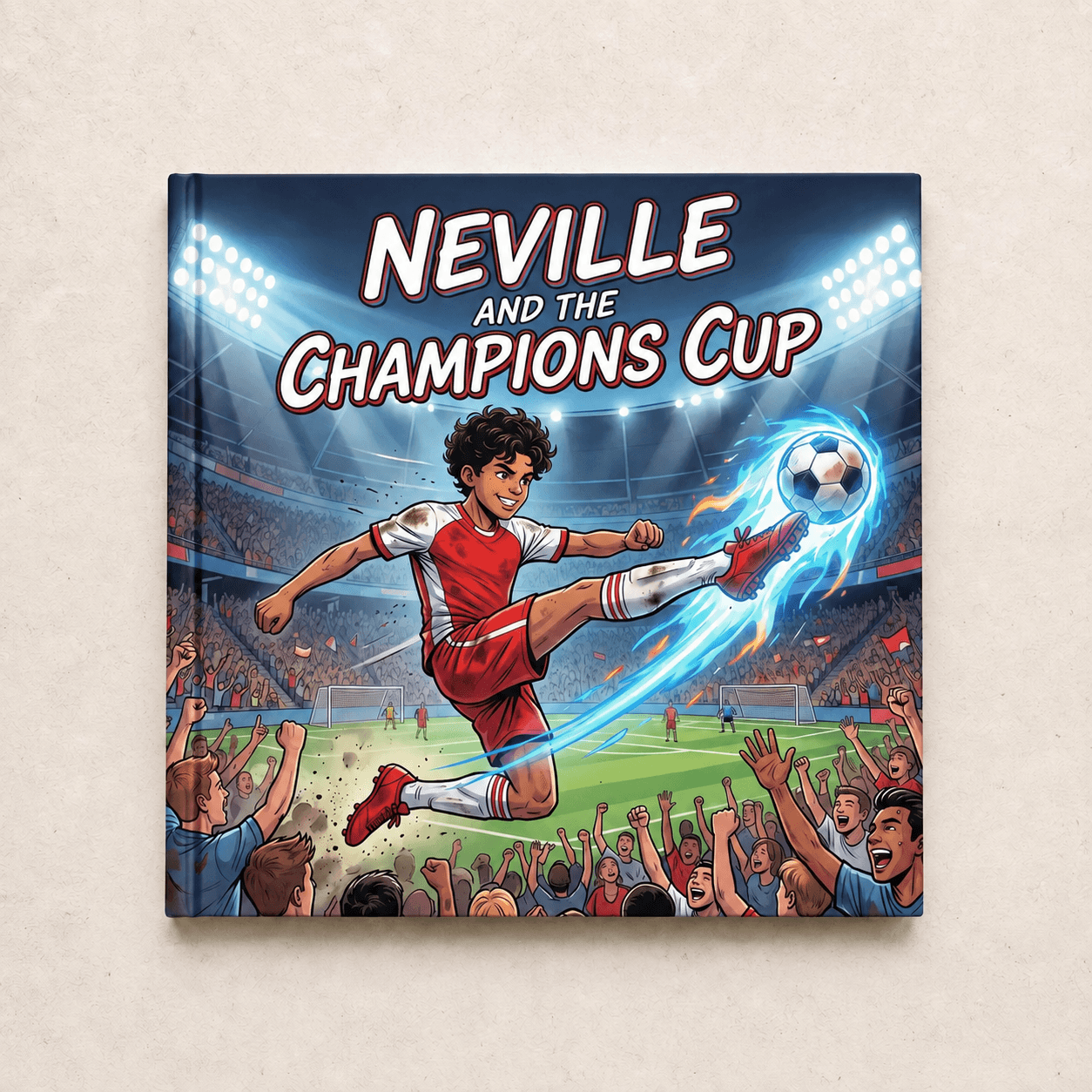
Ask any parent who has read the same bedtime story a hundred times, and they will tell you the moment a child truly comes alive is not when they are being read to. It is when they are part of the story: pointing at the page, guessing what happens next, spotting themselves in a picture, or asking to hear their own name again. That shift, from passive listener to active participant, is the entire idea behind interactive storytelling, and it turns out to be one of the most powerful tools available for helping children learn.
Traditional storybooks are wonderful, but they ask a child to sit and absorb. Interactive storytelling asks a child to engage: to make choices, to search, to listen, to recognize themselves in the page in front of them. That single shift, from watching a story happen to being part of it, changes how much a child remembers, how long they stay engaged, and how much they enjoy the process of reading in the first place.
This is exactly the gap Story Spark was built to close. Rather than treating personalization as a novelty, Story Spark is built around the idea that a child who is actively involved in a story, as its main character, as the person choosing what happens, and sometimes as the very person hidden in the illustrations, learns more and enjoys it more than a child handed a generic book off a shelf. In this guide, we will look at why interactive storytelling works so well for young learners, and exactly how Story Spark's personalized storybooks, search-and-find books, and audio narration bring that idea to life.
Why Interactive Storytelling Helps Children Learn Better
Reading comprehension research has consistently found that children retain more when they are actively engaged with a text rather than passively receiving it. This is not a small effect. Active engagement changes how information is encoded in a child's memory, how long their attention stays on a page, and how willing they are to return to a story again and again.
There are a few concrete reasons interactive storytelling outperforms passive reading for young children.
It holds attention longer. A young child's attention span is short, and a story that only asks them to sit and listen will lose that attention quickly. A story that asks them to search a page for a hidden detail, predict what a character will do, or listen for their own name read aloud keeps them anchored to the page far longer.
It builds comprehension through participation. When a child is asked to notice something, find something, or make a choice within a story, they are processing the plot far more actively than they would by simply hearing it read to them. That active processing is directly linked to stronger recall and understanding of what actually happened in the story.
It supports multiple ways of learning at once. Children absorb information differently: some respond most strongly to what they see, some to what they hear, and some to what they physically do, such as pointing, searching, or turning pages back and forth. Interactive storybooks that combine illustration, narration, and searching or choosing naturally reach more of these learning styles within a single story, rather than relying on just one.
It builds problem-solving skills. A search-and-find page, or a story where a child is asked what a character should do next, is a small exercise in observation and decision-making dressed up as entertainment. Children practice noticing detail, weighing options, and following a chain of cause and effect, all while thinking they are simply having fun.
It deepens emotional connection. A child who sees their own name, their own interests, or even their own illustrated likeness inside a story is far more emotionally invested in what happens to that character than they would be with a generic protagonist. That emotional investment is what turns a story from something a child hears once into something they ask for again and again.
This is not a new idea so much as a rediscovery of something educators have long understood: children learn best by doing. Long before screens or apps existed, the most effective teachers and caregivers already knew that a child who is asked to point, guess, search, or answer stays with a lesson far longer than one simply talked at. Interactive storytelling takes that same principle and builds it directly into the pages of a book, so the learning happens naturally, through play and curiosity, rather than through instruction.
It is also worth noting what interactive storytelling is not. It does not mean flashy, overstimulating design, and it does not mean sacrificing a good plot for the sake of gimmicks. The goal is not to add noise, but to add purpose, giving a child a genuine reason to look closer, listen harder, or think a little further ahead. Done well, interactivity strengthens a story rather than distracting from it, and a child finishes an interactive storybook not just entertained, but having actively practiced skills like observation, sequencing, and prediction along the way.
Given how much of a difference active participation makes, it is worth looking closely at what actually makes a storybook interactive, rather than merely decorated.
What Makes a Storybook Genuinely Interactive
Not everything marketed as "interactive" delivers on the promise. A story is genuinely interactive when it changes how a child engages with the page, not just how it looks.
The child is part of the story, not just an observer. The strongest form of interactivity is a child seeing themselves as the main character, whether through their name, their interests, or their actual likeness illustrated into the scenes.
The child has something to do. Whether that is searching a busy illustrated scene for a hidden detail, listening along to narration while following the words, or being asked what should happen next, genuine interactivity gives a child an active task within the story rather than a passive one.
The experience is layered, not single-note. The most engaging interactive storybooks combine more than one sense at once, such as illustration paired with audio narration, so a child is looking, listening, and often following text simultaneously.
It rewards close attention. A well-built interactive storybook gives back to a child who looks closely, whether that is spotting themselves hidden in a scene or noticing a detail that connects to the story's plot.
It still tells a good story. Interactivity should support the narrative, not distract from it. The best interactive storybooks are, first and foremost, stories worth telling, with the interactive elements woven naturally into the plot rather than bolted on.
Story Spark's product range is built directly around these principles.
How Story Spark Brings Interactive Storytelling to Life
Story Spark offers several distinct ways for children to become active participants in their own stories, rather than passive listeners.
Personalization as the First Interactive Step
Long before a child opens the finished book, the interactive experience begins with its creation. Using the storybook creator, a parent (often together with the child) chooses the story's setting, up to four characters, and the theme the story will explore. This collaborative step, asking a child what world they want to explore or what they want the story to be about, is itself a form of interactive storytelling, turning book creation into a shared activity rather than something that happens to a child after the fact.
Because the resulting story is generated around the child's own name, interests, and chosen setting, every page that follows carries a level of engagement a generic book simply cannot match. A child does not have to imagine themselves into a story. They are already in it.
Search-and-Find Books: Interactivity on Every Page
Story Spark's personalized search-and-find books are one of the clearest examples of interactive storytelling done well. A parent uploads a photo, chooses a costume, and Story Spark illustrates that child (or the gift recipient) as a hidden character tucked into busy, detailed scenes on every page. The child's task is simple and deeply engaging: find themselves.
This format turns reading into an active search rather than a passive listen. Children pore over illustrations, scan for detail, and celebrate the moment they spot themselves, all while building the same observational and attention skills that support early literacy. Available in editions like the Classic Search-and-Find and the Around the World Edition, these books are illustrated in Story Spark's signature style so the hidden character is genuinely recognizable as the child themselves.
Audio Narration: A Multisensory Layer
For families on Story Spark's Creator subscription plan, stories can be brought to life with audio narration, adding a listening layer to the illustrated page. Pairing narration with illustration means a child is engaging visually and audibly at the same time, reinforcing the story through two senses rather than one, and making the experience accessible to children who are not yet reading independently or who learn best by listening.
Built for Every Kind of Learner
Story Spark's AI story generator includes text settings optimized for children with autism, dyslexia, or ADHD, ensuring that the interactive experience of a personalized story is genuinely accessible rather than a one-size-fits-all format. Combined with audio narration, illustration, and the option to export finished stories as PDF or EPUB files for reading on a device, families can choose the combination of formats that works best for how their child actually engages with a book.
Comic Books: A Different Kind of Interactive Format
For children who respond especially well to visual, panel-by-panel storytelling, Story Spark's personalized comic books offer another interactive format, placing the child directly into a comic adventure starring themselves or a loved one. The panel structure of a comic naturally encourages children to read actively, following action across frames rather than a single continuous block of text, which can be especially engaging for reluctant or emerging readers.
Signs Your Child Would Benefit From Interactive Storytelling
Not every child needs the same kind of push toward engagement, but a few common signs suggest a family might get particularly strong results from switching to a more interactive storybook format.
Restlessness during regular reading time. A child who wanders off, fidgets, or asks to stop partway through a traditional storybook is often not disengaged from stories altogether. They may simply need a more active way to participate, such as a search-and-find page or a story built around finding themselves in the illustrations.
Strong response to hearing their own name. Many parents notice their child perks up instantly at the sound of their own name, even mid-conversation. That same effect can be put to work inside a story, where hearing their name spoken by a narrator or reading it on the page keeps attention anchored far longer than a generic character ever could.
A preference for pictures over text. Children who gravitate toward heavily illustrated books, point at pictures, or ask questions about what they see are often strong visual learners who benefit enormously from search-and-find formats and richly illustrated personalized stories.
Difficulty sitting through longer books. For children who are not yet ready for longer, text-heavy stories, formats like comics or narrated storybooks break content into smaller, more digestible, more actively engaging pieces.
Enthusiasm for being "the hero." Many children naturally enjoy pretend play where they are the main character, whether that is a superhero, an astronaut, or an explorer. Interactive, personalized storytelling channels that same instinct directly into reading, turning a child's existing imagination into a reason to pick up a book.
The Learning Benefits, in Practice
Bringing these formats together, personalized storybooks, search-and-find books, audio narration, and comics, gives parents a genuinely varied toolkit for interactive learning, rather than a single format stretched to cover every child.
Stronger retention. A child who has searched for themselves in a scene, or who has heard their own name spoken aloud through narration, remembers that story with far more clarity than one they passively heard once.
Longer, more willing engagement. Interactive formats tend to produce longer reading sessions and more requests for repeat readings, simply because the child has something active to do on every page.
Support for reluctant readers. Children who find traditional books intimidating, whether due to attention difficulties, reading level, or simple restlessness, often respond far better to a format that gives them a task, a search, a choice, a chance to hear their name, rather than asking them to sit still and absorb text.
Real accessibility, not an afterthought. Because interactivity comes in multiple forms across Story Spark's product range, from audio to visual search to accessible text settings, families can match the format to their child's specific needs rather than forcing every child into the same reading experience.
A shared activity, not a solitary one. Because the creation process itself is interactive, choosing the setting, the characters, and the theme together, interactive storytelling with Story Spark often becomes a bonding activity between parent and child well before the finished book ever arrives.
Interactive Storytelling at Home and in the Classroom
Interactive storytelling is not limited to bedtime. Story Spark's stories for education tools apply the same interactive, personalized approach to academic subjects like maths, science, history, and languages, letting teachers build stories that place a student directly inside the topic they are learning. A child who is the main character solving a maths problem within a story, rather than working through it on a worksheet, is engaging with the material far more actively, and that active engagement is precisely what makes interactive storytelling such an effective learning tool in the first place.
At home, a few simple habits help families get the most out of interactive storybooks.
Let the child help choose the setting, characters, and theme when a new story is being created, rather than deciding everything on their behalf, since that choice is itself part of the interactive experience.
Pause during search-and-find pages rather than rushing through them, giving the child time to actually search rather than simply being told where they are hidden.
Use audio narration alongside the printed book rather than instead of it, so the child is engaging visually and audibly together.
Ask questions while reading, such as what a character might do next, to extend the interactivity of the story beyond what is built into the page itself.
How to Create an Interactive Storybook With Story Spark
Getting started takes only a few minutes, and the process itself is designed to be a shared, interactive activity between a parent and child.
Step one: choose your format. Visit create a book and decide whether you want a personalized storybook, a search-and-find book, a comic book, or a full-length book.
Step two: personalize together. Enter the child's name, choose up to four characters, and pick a setting and theme, ideally with the child weighing in on the choices.
Step three: add a photo for search-and-find or comic formats. Upload a clear photo so Story Spark can illustrate the child as a recognizable character within the scenes.
Step four: refine with Spark. Use Story Spark's in-editor AI assistant to adjust tone, pacing, and detail until the story feels right.
Step five: add audio narration. Creator plan subscribers can add narration to bring an additional interactive, listening layer to the finished story.
Step six: preview and print. Review the complete book before ordering, then receive it as a premium hardcover, typically within five working days for storybooks and around three to five business days for search-and-find editions.
Story Spark Pricing at a Glance
Story Spark offers a free plan for basic book creation and printing, alongside the Dreamer and Creator subscription tiers for deeper access to the AI story generator, character creation tools, and audio narration. Printed storybooks start from $29.99, personalized search-and-find books start from $34.99, and volume discounts are available for families or classrooms ordering five copies or more. Full, up to date pricing details are available on the pricing page.
Frequently Asked Questions
What is interactive storytelling for children? Interactive storytelling is any story format that asks a child to actively participate rather than passively listen, whether that is searching for a hidden detail, hearing their own name through narration, or helping choose what a story is about. Active participation has been consistently linked to stronger retention and longer engagement than passive reading alone.
Why do children learn better with interactive storybooks than traditional ones?
Interactive storybooks ask a child to process a story actively, through searching, listening, or decision-making, rather than simply absorbing it. That active engagement strengthens memory, holds attention for longer, and supports different learning styles within a single story.
What interactive storytelling formats does Story Spark offer?
Story Spark offers personalized storybooks built around a child's name and interests, search-and-find books where the child is illustrated as a hidden character, audio narration for a listening layer, and personalized comic books for panel-by-panel visual storytelling.
Are Story Spark's storybooks suitable for children who struggle with traditional books?
Yes. Story Spark's AI story generator includes text settings optimized for children with autism, dyslexia, or ADHD, and formats like audio narration and search-and-find books give children who find sitting through traditional text difficult an active, engaging way to enjoy a story.
Can my child help create their own interactive storybook?
Yes. Choosing the setting, characters, and theme is designed to be a collaborative step, and many families create storybooks together with the child weighing in on the choices, which is itself part of the interactive experience.
Does Story Spark offer audio narration for storybooks?
Yes. Audio narration is available as part of Story Spark's Creator subscription plan, adding a listening layer alongside the illustrated pages of a personalized storybook.
How much do interactive storybooks from Story Spark cost?
Printed personalized storybooks start from $29.99, and search-and-find books start from $34.99 with a range of books available. Subscription plans for the AI story generator, character creation tools, and audio narration are outlined on the pricing page.
Are interactive storybooks good for classroom or homeschool use?
Yes. Story Spark's stories for education tools apply the same interactive, personalized approach to academic subjects, letting teachers or homeschooling parents place a child directly inside the topic being taught.
What age range is interactive storytelling best suited for?
Interactive storytelling works well across a wide age range, from toddlers who respond to audio narration and simple search-and-find pages, through to older children who enjoy more detailed personalized storybooks, comics, or academic stories built around subjects they are learning in school. Story Spark's formats are designed to flex with a child's age, attention span, and reading level.
Is interactive storytelling only useful for reluctant readers?
No. While interactive formats are especially helpful for children who find traditional books difficult to sit through, confident readers benefit as well, since active participation, searching, listening, predicting, and personalization all deepen engagement and comprehension regardless of a child's existing reading ability.
How does personalization make a storybook more interactive?
Personalization turns a child from an observer into a participant before the story even begins, since choosing the setting, characters, and theme is itself an interactive step. Once the story is finished, seeing their own name and interests reflected on the page keeps a child far more engaged than they would be with a generic, mass-produced book.
Give Your Child a Story They Can Step Into
The most memorable stories are rarely the ones a child only hears. They are the ones a child is part of: searching a page to find themselves, hearing their own name in the narration, or helping decide what happens next before the story is even written. That is what interactive storytelling really means, and it is the idea behind everything Story Spark builds.
Create your child's interactive storybook today and give them a story they will not just listen to, but genuinely step into.
Related Reading
What Parents Want in AI Storybooks in 2026
Best AI Story Generators of 2026
The Complete AI Book Generator Comparison 2026
The Best Storybook Creator Platforms: The Complete Guide
Written by the Story Spark Team. Story Spark is an AI-powered platform for creating, illustrating, and printing your own books.