


The best personalized children's books in 2026 combine a child's name, likeness, and interests with professionally illustrated artwork and a real hardcover printed finish. Story Spark is the top pick overall, offering personalized storybooks, comic books, and search-and-find books with consistent AI-generated characters, neurodivergent-friendly text settings, and print delivery to twelve countries. This guide walks through every format available in 2026, how to evaluate quality, what to expect from pricing, and how to choose the right personalized book for your child's age and personality.
Personalized children's books have moved a long way from a printed name on the cover of a generic template. In 2026, the best options use AI to generate a genuinely unique story built around a child's face, name, interests, and even their learning needs, then print it as a hardcover book that looks and feels like something from a proper bookshop shelf. If you are choosing a personalized book for a birthday, a new sibling, a reluctant reader, or simply because your child deserves to see themselves as the hero of their own story, this guide covers everything you need to know before you buy.
What Makes a Children's Book "Personalized" in 2026
Not all personalized books are created equal, and the category has expanded significantly over the past two years. A book earns the label "personalized" when it does more than swap in a name. The strongest examples in 2026 typically include:
- A story built around the child's actual name, age, and interests, not a template with blanks filled in
- Illustrated characters that resemble the child, often generated from an uploaded photo
- Consistent character appearance across every page, so the child recognizes themselves from cover to final page
- A choice of illustration styles, from watercolor to cartoon to anime-inspired art
- The option to personalize the reading level or content for a child's specific needs, including autism, dyslexia, or ADHD
- A dedication page for gifting, allowing a parent or grandparent to add a personal message
- A real, professionally printed hardcover as the end product, not just a PDF
This is the bar that separates a memorable keepsake from a novelty gift that gets read once and forgotten. Story Spark was built around this exact standard, using AI to generate both story text and matching illustrations from a photo, then printing the result as a premium hardcover.
The Main Types of Personalized Children's Books
One of the biggest shifts in 2026 is that "personalized book" no longer means one single format. Families now have several distinct products to choose from, each suited to a different age, occasion, or personality.
Illustrated Storybooks
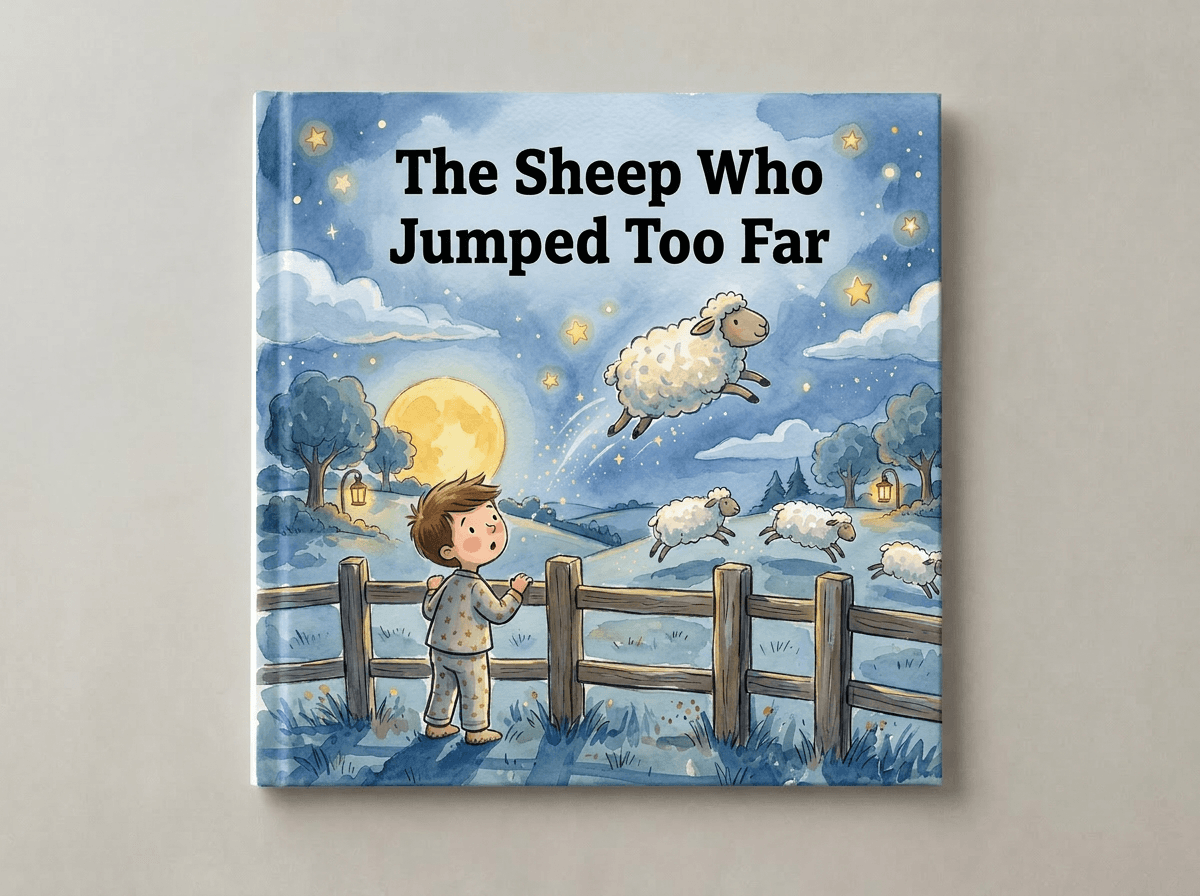
This is the format most parents picture when they think of a personalized book. A child's name, appearance, and favorite themes are woven into a fully illustrated picture book, typically running up to 60 pages. These work well for children roughly two to ten years old and are ideal for birthdays, first-day-of-school gifts, or simply building a home library of stories that feature your own child as the main character. On Story Spark, storybooks can be generated from a short description, built from a story you already have in mind, or written from a blank canvas with support from the Spark Writing Assistant.
Personalized Comic Books
Comic books are one of the fastest-growing personalized book formats in 2026, and they work for a much wider age range than picture books, including older kids, teenagers, and even adults. A photo is uploaded, the AI generates a comic book version of that person in a chosen art style, and the character then stars in a fully illustrated 24-page storyline, whether that is a superhero rescue, a space adventure, or a detective mystery. Story Spark's personalized comic book format prints as a 21cm by 21cm hardcover and is a popular choice for kids who have outgrown traditional picture books but still want to see themselves as the hero of a story.
Search-and-Find Books
Search-and-find books flip the format on its head. Instead of following a child through a linear story, the child becomes the hidden character tucked into richly illustrated scenes, and the fun is in spotting themselves on each page. This format tends to suit younger children who enjoy the "I Spy" style of book and want an activity as much as a story, and it holds up well to repeat reading since the challenge of finding the character stays engaging long after the novelty of a first read wears off.
Long-Form Personalized Books
For older children, families, or milestone gifts, some platforms now support longer personalized books, up to 200 pages, covering novels, family histories, biographies, and educational resources. These are less about a bedtime read and more about creating something closer to a real book, whether that is a personalized coming-of-age novel for a teenager or a family history book that captures a grandparent's life story for grandchildren to keep.
How AI Actually Builds a Personalized Book
It is worth understanding what happens behind the scenes, because this is where quality varies enormously between platforms. A well-built personalized book generator does three things in sequence.
First, it takes the details you provide, a child's name, age, interests, and often a photo, and uses those to generate an original story rather than inserting the name into pre-written text. Second, if a photo has been uploaded, the AI translates that photo into an illustrated character in the chosen art style, whether that is watercolor, cartoon, Studio Ghibli-inspired, or pixel art. Third, and this is the step where most cheaper tools fall down, the AI needs to keep that character looking consistent from the first page to the last. If a character's face, hair, or outfit shifts every few pages, the illusion breaks and the book stops feeling personal.
Story Spark was built specifically to solve the consistency problem, generating a character once from an uploaded photo and then maintaining that character's appearance throughout the book. You can read more about how the underlying technology works, and what separates a strong AI storybook creator from a weak one, in Story Spark's complete guide to the best storybook creator platforms.
Personalized Books for Children with Additional Needs
One area where 2026's best platforms have made real progress is accessibility. Generic personalized books rarely account for the fact that children read, process, and engage with stories differently. The strongest tools now let parents and educators adjust the story itself, not just the artwork, to support a child's specific needs.
Story Spark allows you to select settings tailored for children with autism, dyslexia, or ADHD, and the story generator then optimizes the text accordingly, adjusting sentence structure, pacing, and vocabulary so the story remains enjoyable and accessible. This matters because research from the UK's National Literacy Trust has found that children who have access to books they find personally relevant tend to read for pleasure more consistently than those given only generic materials, a point Story Spark expands on in its comparison of book creation tools. For families and educators specifically looking for a values-driven approach to AI storytelling for children, Story Spark's ethical AI for children page covers how the platform approaches child safety, content moderation, and inclusive design.
What to Look For Before You Buy
With dozens of personalized book tools competing for attention in 2026, it helps to have a short checklist before you commit to one.
Character consistency. Ask to see a sample or preview before ordering. If the character's face changes noticeably between pages, the finished book will feel disjointed rather than magical.
Print quality, not just digital preview. A beautiful on-screen preview means little if the printed hardcover arrives with muddy colors or flimsy binding. Look for platforms that specify paper stock, binding type, and dispatch times upfront.
Genuine personalization, not name insertion. The strongest test is simple: does the story change meaningfully based on the child's actual interests, or does it just print their name into a fixed template? Ask what details the platform actually uses, beyond a name.
Preview and edit before printing. You should be able to review every page of the finished book, and make edits to text or images, before it goes to print. This matters most for gifts, where a small factual error or an odd illustration can undercut an otherwise thoughtful present.
Age and reading level flexibility. A book built for a four-year-old should not read the same as one built for a ten-year-old. Look for platforms that let you set an age range and reading level, not just a single generic template.
Support for additional needs. If personalization for autism, dyslexia, or ADHD matters to your family or classroom, confirm this is an explicit setting, not an assumption.
Shipping footprint and delivery time. Check which countries a platform actually ships to and how long dispatch takes before you order for a specific date, especially around birthdays or holidays.
Data and privacy practices. Because these tools ask for a child's name, age, interests, and sometimes a photo, it is worth checking how that information is stored and used. Story Spark addresses this directly in its FAQ, noting that personal information provided for story customization is used solely for that particular story's generation.
Story Spark: A Closer Look at the 2026 Format Lineup
Story Spark has built its platform around the idea that a personalized book should be something you would actually be proud to keep on a shelf, not a novelty item. As of 2026, the platform supports three primary formats, all printed as premium hardcovers.
Illustrated storybooks print at 21cm by 21cm and run up to 60 pages, suited to personalized children's stories, gifts, and self-publishing projects. Long-form books, covering novels, biographies, family histories, and educational resources, print at 16.5cm by 24cm and run up to 200 pages. Personalized comic books print at 21cm by 21cm with 24 pages, turning a photo into a fully illustrated comic book hero. Full specifications and current pricing for each format are listed on the pricing page.
Across every format, the workflow follows the same basic steps. You describe the story or hand over one you have already written, choose an illustration style from options including watercolor, cartoon, anime, Pixar-inspired, Studio Ghibli, comic book, and pixel art, and the AI generates matching text and artwork with a consistent main character throughout. You can then review and edit every page before ordering a printed hardcover, or read the finished book online instantly.
Story Spark also supports a public Community Library, where storytellers can publish their own books, follow other authors, and browse finished stories and books before deciding on a style or format for their own project. This is a useful step if you want to see real finished examples before committing, and you can explore it on the Storyteller page.
Choosing the Right Format by Age and Occasion
Different ages and occasions call for different formats, and matching the two is one of the simplest ways to make sure a personalized book actually gets read and reread rather than shelved after one look.
For toddlers and preschoolers, roughly ages two to five, a short illustrated storybook with simple language and bright, consistent artwork tends to work best. This is also a strong age range for search-and-find style books, since the game of spotting themselves on the page holds a young child's attention even before they are reading independently.
For early readers, roughly ages five to eight, a slightly longer illustrated storybook with a clearer story arc gives children something to grow into. This is also a good age to introduce a personalized educational storybook if a child is working on a specific skill or curriculum topic, since a story built around their own interests tends to hold attention better than a generic workbook.
For older children and preteens, roughly ages nine to thirteen, personalized comic books are often the better fit. Kids in this range have usually outgrown picture books but still respond strongly to seeing themselves as the hero of a story, and the comic book format's shorter length and punchier pacing suits a slightly more independent reader.
For teenagers and adults, long-form personalized books, including novels, memoirs, and family histories, shift the format away from a children's book entirely and toward something closer to a real printed book. These work well as milestone gifts, for a grandparent's life story, or for a teenager who wants to see their own concept turned into an actual novel.
For gifting occasions specifically, whether a birthday, a new sibling announcement, a holiday, or simply a "just because" gift, most platforms allow a personal dedication to be added inside the front cover. Story Spark's gifting page covers how this works in detail, including shipping a book directly to the recipient rather than the person creating it, which is useful when the book itself is meant to be a surprise.
Why Personalization Matters for Reading, Not Just Gifting
Personalized books are often bought as gifts, but the research behind why they work goes deeper than novelty. Children are more likely to engage with a story when they can see themselves inside it, and that engagement compounds over repeat readings in a way generic books rarely manage. A child who spots their own name, their own pet, or their own face on the page is not just entertained, they are practicing reading with material that already holds their attention, which matters most for reluctant readers.
This is part of why personalized books have found a genuine foothold in classrooms as well as living rooms. A teacher working with a student who struggles to engage with standard reading material can build a story around that child's specific interests, whether that is dinosaurs, football, or a favorite pet, and use it as a bridge into reading for pleasure rather than reading as a chore. Story Spark supports this directly with an educational story option that includes a quiz and a suggested activity at the end, along with subscription plans built for schools and educational institutions, details of which are available through the FAQ page.
For families, the same principle applies at home. A personalized book about starting school, welcoming a new sibling, or working through a specific fear tends to land differently than a generic version of the same story, because the child recognizes themselves as the one going through it. This has made personalized storybooks a popular tool for parents navigating specific life transitions with younger children, not just a birthday gift category.
Trends Shaping Personalized Children's Books in 2026
A few clear shifts have defined the personalized book category this year, and they are worth knowing about if you last looked at this space a couple of years ago.
Multi-format platforms have replaced single-product tools. Where earlier personalized book services typically offered one product, a storybook with a name inserted, the leading platforms in 2026 now offer storybooks, comic books, search-and-find books, and long-form books from the same account, letting a family use one platform across a child's entire childhood rather than switching tools as needs change.
Character consistency has become the real differentiator. As AI illustration has become widely available, the gap between a good and a poor personalized book tool is no longer whether it can generate art at all, but whether that art stays consistent across every page. This is now the single biggest quality signal to check before ordering.
Accessibility settings have moved from a niche feature to an expectation. Options for children with autism, dyslexia, or ADHD have shifted from a specialist offering to something parents actively look for when comparing platforms, reflecting a broader push toward inclusive design across children's products.
Print quality has caught up with digital quality. Early personalized book tools often produced impressive on-screen previews that translated poorly to print. In 2026, the better platforms treat the printed hardcover as the actual product, with page-by-page preview and editing built in before anything goes to press, rather than treating print as an afterthought bolted onto a digital tool.
Older kids and adults have become a real market segment. Personalized comic books and long-form books have expanded the category well beyond picture books for toddlers, with teenagers, parents, and grandparents now a meaningful part of who these platforms are built for.
Common Questions Parents Ask
How long does it take to create a personalized book?
Most platforms, including Story Spark, are designed so a complete storybook can be generated from a short description in a matter of minutes, though reviewing and editing the finished pages before ordering usually adds some additional time. Printed dispatch, separate from the digital creation process, typically takes several working days once an order is placed.
Do I need writing or design skills to make one?
No. The AI handles both the story text and the illustrations based on the details you provide, whether that is a short description, a photo, or a full story you already have. If you prefer full creative control, most platforms also allow you to write the story yourself and use the AI purely for illustration, or start from a blank canvas.
Can I personalize a book for a child with autism, dyslexia, or ADHD?
Yes, on platforms built with accessibility in mind. Story Spark specifically allows parents and educators to select settings for children with autism, dyslexia, or ADHD, which adjusts the generated text to better suit that child's needs, covered in more detail on the FAQ page.
Is a personalized book actually printed, or is it just a digital file?
The strongest products in this category are printed as real hardcovers, not just downloadable PDFs, though most platforms also let you read the finished book online for free before deciding whether to order a physical copy.
What is the difference between a personalized storybook and a personalized comic book?
A storybook is typically aimed at younger children and told through classic picture book illustration styles, while a comic book uses comic panel layouts and tends to suit older children, teenagers, and adults who want a punchier, more visually dynamic format.
Can I create a personalized book as a gift for someone other than my own child?
Yes. Personalized books are a common gift for grandchildren, nieces and nephews, godchildren, and even adult friends and family members through the comic book and long-form formats. Most platforms allow the book to be shipped directly to the recipient's address.
How much does a personalized children's book cost in 2026?
Pricing varies by format, page count, and whether you subscribe to unlock additional AI creation tools. Story Spark's current pricing, including free options for browsing and previewing books before committing to a subscription or print order, is listed on its pricing page.
Getting Started
Choosing the best personalized children's book in 2026 comes down to matching the format to the child and the occasion, checking that the platform actually delivers character consistency and print quality, and confirming it supports whatever your child specifically needs, whether that is a particular reading level, an illustration style, or additional accessibility settings. Story Spark was built to cover all three formats, storybooks, comic books, and search-and-find books, from a single platform, with a free option to try before you commit to a printed order.
If you want to start building a personalized book, you can create your first story on Story Spark and preview it before deciding whether to order a printed hardcover.
Related Reading
What Parents Want in AI Storybooks in 2026
Best AI Story Generators of 2026
The Complete AI Book Generator Comparison 2026
The Best Storybook Creator Platforms: The Complete Guide
Written by the Story Spark Team. Story Spark is an AI-powered platform for creating, illustrating, and printing your own books.