



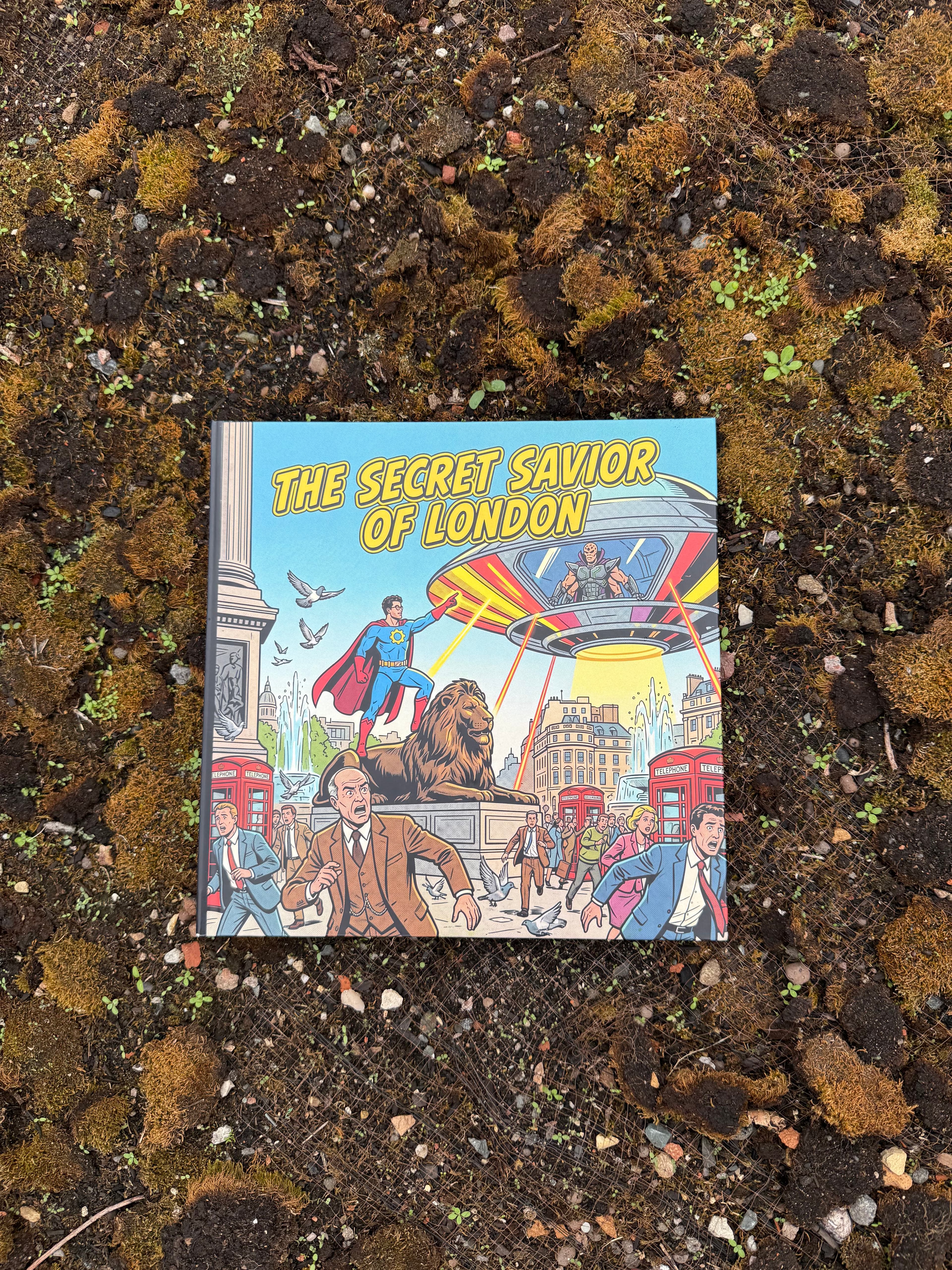
Quick Answer
The easiest way to make your own comic book is with Story Spark, an online comic book creator that writes, illustrates and prints your comic for you. You upload a photo to turn yourself or someone you love into an illustrated character, describe your storyline or pick a suggested adventure, choose one of four comic art styles, edit any page, and order a printed hardcover. Story Spark comics are 24 pages, 21cm x 21cm hardcovers with a matte finish, cost $29.99, and are printed and dispatched within five working days. No drawing, design or writing experience is needed.
The process in five steps:
- Create up to three characters from photos or descriptions.
- Describe your storyline, or choose a suggested adventure.
- Pick a style: American Classic, European Clear Line, Noir or Modern Comics.
- Edit any page, cover, speech bubble or dedication, then preview the whole comic.
- Order your hardcover, or export it as a PDF, ePub or ZIP.
Key Takeaways
- You do not need to draw. AI comic creators now illustrate a full comic from your story and a photo, with characters that stay recognisable from panel to panel.
- The hardest part of making a comic used to be the art. Today the hardest part is deciding what your story is about, and that is the fun part.
- Character consistency is what separates a real comic from a stack of unrelated pictures. Choose a tool that builds every panel from one saved character.
- Short, punchy dialogue and a clear beginning, middle and end matter more than a complicated plot.
- Always preview every page before you print, and allow time for printing and delivery if the comic is a gift.
Why Making a Comic Book Used to Be So Hard
A traditional comic is a team sport. One person writes the script, another pencils the pages, someone inks them, a colourist adds colour and a letterer places every caption and speech bubble. Even a short 24-page comic can take a skilled solo artist weeks or months.
Three problems stopped most people from ever finishing a comic:
- Drawing the same character again and again. A hero has to look like the same person in every panel, from every angle. This is the single hardest skill in comic art, and it is why so many homemade comics fall apart by page five. We explain the problem in detail in why character consistency matters.
- Layout and lettering. Panels, gutters, speech bubbles and sound effects all need to read clearly at print size.
- Printing. Most printers expect a print-ready PDF with bleed, safe margins and the right colour settings, which is a wall of jargon for a first-timer.
The easy way to make a comic today is to use a tool that removes all three problems at once.
Five Ways to Make Your Own Comic Book, Compared
There is more than one way to make a comic. The right choice depends on whether you can draw, how much time you have, and whether you want a printed book at the end.
1 An AI comic book creator (easiest)
An all-in-one AI comic creator such as Story Spark's comic book creator handles the writing support, illustration, layout, lettering and printing for you. You bring the idea and, if you like, a photo. It is the only option on this list that goes from idea to printed hardcover without any drawing or file preparation.
Best for: Anyone who wants a finished, printed comic quickly, including parents, gift-givers, teachers and first-time creators.
2 Drawing it yourself by hand
Paper, pencils and a pen still work beautifully, and drawing your own comic is a wonderful creative project, especially with children. The trade-off is time and skill, plus scanning and preparing the pages if you want them printed as a book.
Best for: Artists, art students and anyone who enjoys the drawing itself.
3 Digital drawing apps
Drawing software and tablet apps give artists layers, panel templates and digital lettering. They speed up the work for someone who already draws, but they do not draw for you.
Best for: People who can draw and want a cleaner, editable workflow.
4 Drag-and-drop comic strip makers
Template-based comic makers, popular in schools, let you drag pre-made characters, backgrounds and speech bubbles into panels. They are quick and fun for short strips, but characters are generic rather than based on real people, and most do not print books.
Best for: Classroom exercises and short online strips.
5 Commissioning a comic artist
A professional illustrator can produce a beautiful bespoke comic, but expect a significant fee per page, weeks or months of back-and-forth, and separate arrangements for layout and printing.
Best for: Professional projects with a budget and a long timeline.
If you already have finished artwork and only need printing, our guide to the most user-friendly platforms for printing custom-written comic books compares print-only services.
How to Make Your Own Comic Book With Story Spark, Step by Step
Here is the whole process, from blank page to a hardcover in your hands. Most people finish creating their comic in a single sitting.
Step 1: Start your comic
Go to the Story Spark comic book creator. You can also reach it from Create a Book, where the same account starts storybooks, search-and-find books and long-form books. The AI creation tools, including character creation, are part of the Dreamer and Creator plans on the pricing page.
Step 2: Create your heroes
Upload a clear photo of yourself, a child, a partner, a friend or even a pet, and Story Spark turns it into an illustrated comic character. You can also build a character from a written description, or mix in ready-made characters from the Story Spark Character World. Each comic can star up to three characters.
Characters are saved to your profile through the character creator, so the same hero can return in a sequel, a storybook or a Christmas special. Because every panel is drawn from one saved character, the hero on page 3 looks like the hero on page 24.
Photo tip: Use a recent, well-lit, front-facing photo with the face clearly visible. Avoid sunglasses, shadows from hat brims and group shots where the face is tiny.
Step 3: Shape your storyline
Write your own storyline in as much detail as you like, or choose a suggested adventure as a starting point. Either way, the story is built around your characters rather than a fixed template.
Specific beats generic every time. "A superhero adventure" is a start. "My sister discovers she can freeze time, but only while she is eating ice cream, and has to stop a robot from stealing the town's last sprinkles" is a story. A strong concept and two or three personal details are enough.
Step 4: Choose your comic art style
Story Spark offers four comic styles, and each one changes the feel of the whole book:
- American Classic. Bold lines, bright colours and dynamic panels in the tradition of classic superhero comics. Best for action and heroic adventures.
- European Clear Line. Clean, even linework and flat colour, inspired by classic European graphic albums. Best for adventure, travel and gentle all-ages stories.
- Noir. High-contrast shadows and moody atmosphere. Best for detective stories, mysteries and grown-up humour.
- Modern Comics. A contemporary look that blends digital art with traditional comic composition. Best for fantasy and sci-fi.
For the history behind each look and more examples, read comic book art styles explained.
Step 5: Edit every page
The comic book editor gives you full control before anything is printed. You can:
- Change the art, the text or both on any page or cover.
- Crop into part of an image to change just one detail or one speech bubble.
- Edit the title.
- Customise the back cover with a photo or character illustration.
- Pick a dedication template and write your own message.
Step 6: Preview the whole comic
Flip through every page exactly as it will print. Read the dialogue aloud, check names and spellings, and make sure each character looks right on every spread.
Step 7: Print it or export it
Order your comic as a 24-page, 21cm x 21cm hardcover with a matte finish and premium colour throughout. It is printed and dispatched within five working days, with tracking emailed when it ships. You can also export your comic as a PDF, ePub or ZIP file. On the Creator plan, downloads are watermark-free and you own the AI-generated content, which matters if you want to self-publish or sell your comic.
Want to see what others have made first? Browse the Story Spark community comic library.
How to Write a Great Comic Story (Even If You Have Never Written One)
The tool handles the art. The story is yours, and a few simple techniques make a homemade comic feel like something you would pick up in a bookshop.
Use a simple three-act structure
A 24-page comic has room for one clear adventure, not an epic saga. Think of it in three parts:
- Set-up (roughly the first quarter). Introduce your hero in their normal world, then hit them with a problem. A missing cat, a crashing spaceship, a villain who has stolen the birthday cake.
- Rising action (roughly the middle half). The hero tries to solve the problem and things get harder. Add an obstacle, a twist or a sidekick with a bad idea.
- Climax and ending (roughly the last quarter). The big showdown, the hero wins in a way that shows who they are, and a final panel that lands with a laugh or a warm moment.
Give your hero one clear goal
Every great comic hero wants something specific. "Save the day" is vague. "Get the lost puppy home before the thunderstorm" gives every page a purpose and makes the ending satisfying.
Make it personal
Personal details are what turn a fun comic into an unforgettable one. Give your hero their real nickname, their favourite food as a superpower, the family car as a getaway vehicle, or the office kettle as the villain's lair. Inside jokes are comic gold.
Keep dialogue short and punchy
Comic panels are small and busy. A speech bubble with three long sentences slows the page down and crowds the art. Aim for short lines that sound like real speech, and let the pictures do the rest. If a line would work as a caption on a photo, it will work in a speech bubble.
Let the pictures carry the action
You do not need to write "Then she jumped over the wall." Describe the moment in your storyline and the illustration will show it. Save words for what the art cannot show: what characters think, feel and say.
Use sound effects sparingly
A well-placed KABOOM or SPLASH is part of the fun of comics. Too many and they lose their punch. Save them for the biggest moments.
Match the art style to the mood
The same story feels completely different in different styles. A grandad's fishing trip as an American Classic superhero epic is hilarious. The same trip as a Noir detective story is a whodunnit about the one that got away. Pick the style that matches the reaction you want.
End with a strong final panel
The last page is what people remember. A triumphant pose, a group hug, a cheeky "To be continued..." or a callback to a joke from page one all work brilliantly.
Common mistakes to avoid
- Too many characters. Two or three heroes are easier to follow, and Story Spark comics star up to three.
- Too much text. If a page feels crowded, cut the dialogue before anything else.
- A slow start. Get to the problem within the first few pages.
- Skipping the preview. Read every page before you print, especially names and dates.
For a deeper dive into scripting, panel planning and publishing a longer comic, see our guide on how to publish a comic book.
How to Make a Comic Book With Your Kids
Making a comic together is one of the best creative projects you can do with a child, and it does not need to end in a pile of half-finished drawings. Here is a simple way to run it as a family activity.
- Brainstorm the hero together. Ask your child who the hero is, what their superpower is, and what they are scared of. Write down their answers word for word. Children's ideas are often funnier and stranger than anything an adult would invent.
- Pick the villain or the problem. A grumpy cloud that steals all the rainbows, a robot who only eats socks, a dragon who will not share the slide. The sillier the better.
- Draw a rough plan on paper. Let your child sketch six or eight boxes showing what happens. Stick figures are perfect. This is their storyboard, and it keeps them in charge of the plot.
- Build it on Story Spark. Upload a photo of your child to create their character, type in their storyline in their own words, and let them choose the art style.
- Edit together. Read each page aloud and let your child decide what to change. Children love being the editor who says "No, the dragon should be purple."
- Make the dedication theirs. Let them dictate the dedication message, then order the hardcover so they can hold their own published comic.
The result is a book they helped write, starring themselves, in a format they will want to show everyone. It is a powerful way to build reading confidence and pride in their own ideas, which is why many families end up making a whole series. For more on creating books children genuinely love, read how to make a children's book your child will actually love. If your child reads differently, Stories for All explains Story Spark's accessibility options for children with ADHD, dyslexia and autism.
How Long Does It Take to Get a Printed Comic?
Creating the comic usually takes well under an hour. Once you order, Story Spark prints your comic to order and dispatches it within five working days. Delivery time then depends on your country and the shipping speed you choose, and you see the estimate at checkout before paying.
Story Spark delivers to 14 countries: the USA, UK, Ireland, Canada, Australia, France, Germany, Italy, Spain, Portugal, the Netherlands, the UAE, Saudi Arabia and Qatar. Check timings for your country on the delivery information page.
Making a Christmas comic? Story Spark recommends ordering by 16 December to receive books before Christmas, and earlier for international orders. See personalized Christmas comic books for ideas.
Comic Book Ideas for Every Occasion and Reader
Stuck for a storyline? Here are proven ideas that work beautifully as homemade comics.
For kids
- The reluctant superhero. Your child discovers a power linked to something they love, such as dinosaurs, football or bubbles, and has to use it to save the school fete.
- The bedtime mission. A heroic quest to rescue a lost teddy before lights out. Our bedtime stories page has more ideas for comics, storybooks and audiobooks.
- The big change. A first day at school or a new sibling, reimagined as an adventure where the hero discovers how brave they are.
For gifts
- Birthdays. Cast the birthday person as the hero of a quest built around their year. See personalized birthday books.
- Valentine's Day and anniversaries. Turn your relationship into an epic, from the first date to the proposal. See personalized Valentine's Day books.
- Halloween. Trick-or-treat missions, friendly ghosts and haunted castles. See personalized Halloween comic books.
- Christmas. Your family saves Santa's workshop, in time for Christmas morning. See Christmas comics and storybooks.
- Leaving and retirement gifts. A colleague's career retold as a globe-trotting Noir adventure makes a far better send-off than a card.
For grown-ups
- The inside joke. Turn a legendary group holiday or a running family joke into a full-blown comic.
- The pet hero. Your dog or cat as a detective, superhero or space explorer. For a picture-book version, see personalized pet storybooks.
- The origin story. How a couple met, how a business started, or how Grandad became the family legend.
For classrooms and creators
Teachers use comics to make history, science and reading feel like an adventure, and volume discounts make class sets affordable. See Story Spark for education. If your comic is the start of a series, the self-publishing page explains how to own, export and sell your work.
For more gifting inspiration, read the personalized comic book gift guide or browse all personalized gifts.
Frequently Asked Questions
How can I make my own comic book easily?
The easiest way is to use an AI comic book creator such as Story Spark. Upload a photo to create your character, describe your storyline, choose one of four comic art styles, edit and preview each page, then order a 24-page hardcover for $29.99 per book. No drawing skills are needed.
Can I make a comic book if I can't draw?
Yes. Story Spark illustrates every page for you from your storyline and character photos, in American Classic, European Clear Line, Noir or Modern Comics style. You focus on the story and the editing.
Can I put myself or my child in a comic book?
Yes. Upload a clear, front-facing photo and Story Spark turns it into an illustrated comic character who stays recognisable across every panel. You can include up to three characters, including people, pets or characters created from a description.
How long does it take to make a comic book?
Creating a comic on Story Spark usually takes well under an hour. Printed comics are dispatched within five working days, then delivered according to your country and shipping speed.
How many pages is a Story Spark comic?
Every Story Spark comic is 24 pages, printed as a 21cm x 21cm hardcover with a matte finish and premium colour throughout. That length suits one complete adventure, read in a single sitting.
Can I write my own storyline?
Yes. You can describe your own plot in as much detail as you like, or start from a suggested adventure. The story is built around your characters rather than a fixed template, and you can edit text and art on any page afterwards.
Can I edit the comic after it is created?
Yes. You can change the title, edit any page or cover, change the art, the text or both, crop into part of an image, add a photo or character to the back cover and choose a dedication template. Nothing prints until you order.
Can I download my comic as a digital file?
Yes. Comics can be exported as PDF, ePub or ZIP files. The Creator plan removes Story Spark branding and includes ownership of AI-generated content, which is useful for self-publishing.
Can I sell a comic book I made with Story Spark?
You own the content and words you write. On the Creator plan you also own the AI-generated content in your books and get watermark-free downloads, so you are free to sell or distribute your comic. See self-publishing with Story Spark.
What age is a personalized comic book suitable for?
All ages. Children love becoming superheroes, while teens and adults often prefer the Noir or Modern Comics styles for mysteries, milestone birthdays and humorous gifts.
Can I order more than one copy?
Yes. There is no minimum order, and volume discounts of 10% to 30% apply when you order 5 or more copies of the same comic.
Is a comic book or a storybook better for a young child?
For children under about five, an illustrated storybook with larger pictures and simple sentences usually works best. Comics suit confident readers who enjoy panels, speech bubbles and action. For a hidden-picture game, try a personalized search-and-find book.
The Verdict
Making your own comic book used to mean months of drawing, or a big budget for an illustrator. Today, the easiest way is to let an AI comic creator handle the art while you handle the fun part: the story, the jokes and the heroes.
Story Spark brings the whole process into one place. You create characters from real photos, shape your own storyline, choose a classic comic style, edit every page and hold a premium hardcover at the end, all without drawing a single line.
Ready to be the hero? Make your own comic book with Story Spark, or compare plans and prices first. Still have questions? Visit the Story Spark FAQ.
Related Reading
- How to Publish a Comic Book
- Comic Book Art Styles Explained: From Golden Age to AI-Generated
- What Are the Most User-Friendly Platforms for Printing Custom-Written Comic Books?
- The Personalized Comic Book: Turn Anyone Into a Hero
- Best AI for Character Consistency in 2026
Written by the Story Spark Team. Story Spark is a platform for creating, illustrating and printing your own books.