



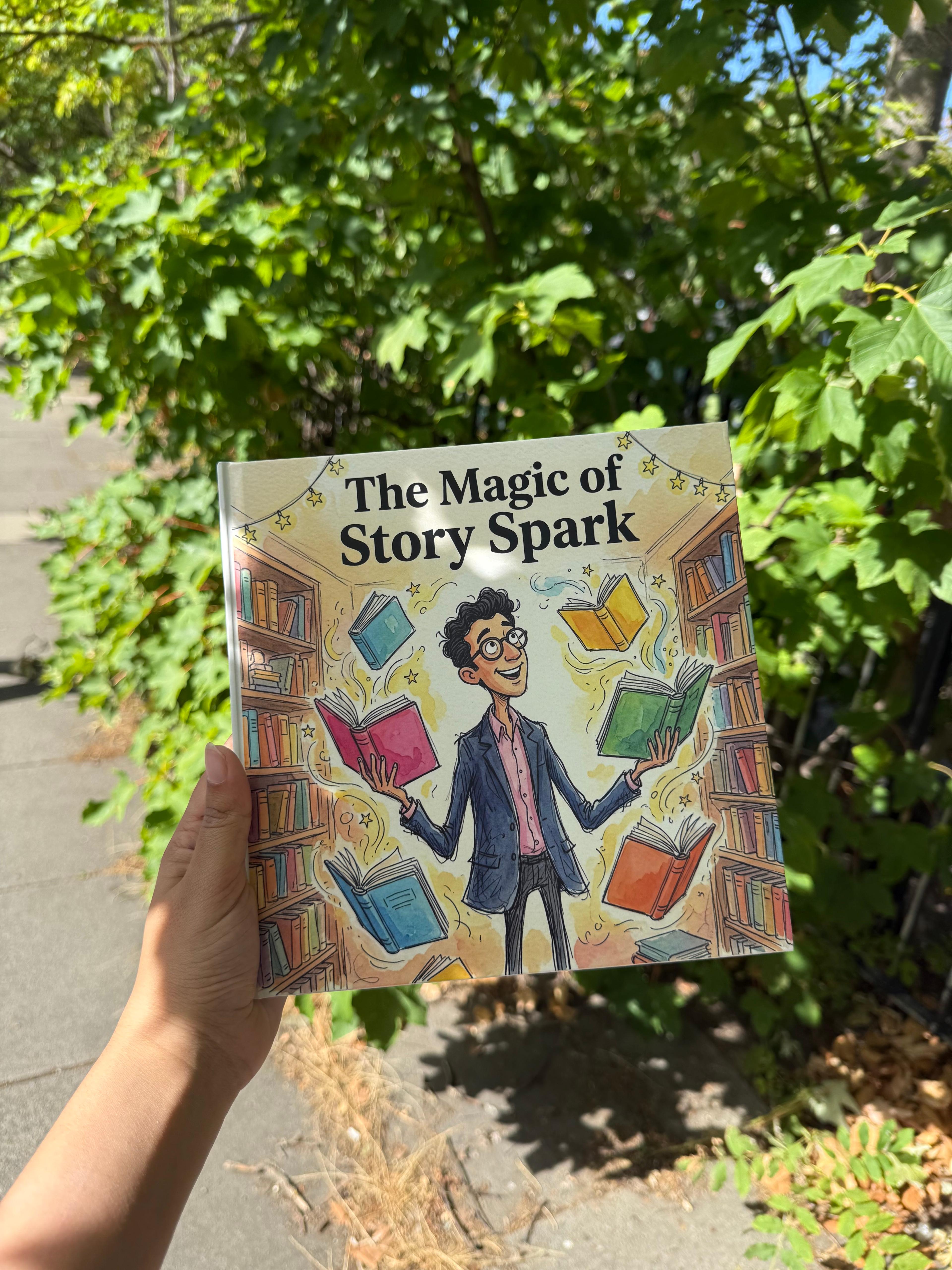
You need an ISBN if you want to sell your book through bookshops, libraries, wholesalers or most online retailers. You do not need one to write, print or share a book privately, to give it as a gift, to sell copies directly to readers yourself, or to publish a Kindle ebook on Amazon. That is the short answer. The longer answer depends on where you live, which formats you publish, which platforms you use, and whether you want your own name or a platform's name listed as the publisher.
ISBNs confuse almost every first-time author, partly because the rules differ between the UK and the US, and partly because so much advice online mixes up ISBNs, copyright, barcodes and legal deposit. This plain-English guide untangles all of it. It explains what an ISBN is, exactly when you need one, how much it costs in the UK and the US, the real difference between free and owned ISBNs, how many you need for each format, and the legal obligations that come with publishing. It also explains where Story Spark fits in, so you can decide what your book actually needs before you spend a penny.
Quick Answers: ISBNs for UK and US Authors
What is an ISBN? An ISBN (International Standard Book Number) is a unique 13-digit number that identifies one specific edition and format of a book, so retailers, libraries and distributors can order and track it.
Do I need an ISBN to self-publish? Only if you want to sell through bookshops, libraries or retailers that require one. Personal copies, gifts, family books, classroom sets and direct sales do not need one.
How much does an ISBN cost in the UK? Nielsen, the UK and Ireland ISBN agency, charges £93 for a single ISBN or £174 for a block of ten, including VAT.
How much does an ISBN cost in the US? Bowker, the US ISBN agency, charges $125 for a single ISBN or $295 for a block of ten.
Does an ISBN protect my copyright? No. An ISBN is a product identifier, not a copyright registration. Copyright exists automatically when you create your work.
Do I need an ISBN to print my book with Story Spark? No. You can create, preview and order premium hardcover copies of your book on Story Spark without an ISBN.
What Is an ISBN, in Plain English?
Think of an ISBN as a barcode-friendly product code for a book. Since 2007, ISBNs have been 13 digits long, and they usually begin with 978 or 979 format. The number is split into parts that identify the prefix, the registration group (broadly, the country or language area), the publisher, the specific title and a final check digit that catches typing errors.
Each ISBN points to a single record in the book trade's databases. That record holds your book's metadata: the title, author, publisher name, format, page count, price, publication date and description. When a bookshop orders your book, a library catalogues it or a wholesaler lists it, they rely on that ISBN and its record.
Three things an ISBN is not are worth knowing early:
- It is not copyright. Your copyright exists the moment you create original work. An ISBN does not create, prove or register it.
- It is not a barcode. The barcode on the back cover is generated from the ISBN, usually as an EAN-13 barcode, but it is a separate graphic.
- It is not a sales channel. Having an ISBN does not put your book in shops. It simply makes your book identifiable so that shops and libraries can order it if they choose to.
Do You Need an ISBN? The Simple Decision Guide
The easiest way to decide is to start with where your readers will get your book.
You Usually Do Not Need an ISBN If:
- You are making a book for yourself or your family, such as a memoir, a family history, a wedding book or a personalized storybook.
- You are giving the book as a gift, for a birthday, Christmas, a new baby or a retirement.
- You are printing copies for a classroom, a club or an event, and handing them out or selling them in person.
- You are selling directly to readers from your own website, at markets, fairs and school events, or through your own social channels.
- You are publishing a Kindle ebook through Amazon KDP. Amazon assigns its own identifier, the ASIN, to Kindle ebooks, so an ISBN is optional.
- You are sharing your stories within a creator platform's own community, such as the Story Spark Storyteller Community.
You Usually Do Need an ISBN If:
- You want your book stocked by bookshops, whether independent shops or chains.
- You want libraries to buy or catalogue your book.
- You are distributing print books through retailers and wholesalers, such as Amazon print, IngramSpark or other print-on-demand distribution.
- You are publishing an ebook to stores that require one, or distributing through aggregators to many stores at once.
- You want your own imprint listed as the publisher in the book trade's databases.
If your plans are a mix, for example family copies now and a retail edition later, you can start without an ISBN and add one when you create the retail edition. Each new edition gets its own ISBN anyway.
Why an ISBN Can Be Worth Having
Even when it is optional, an ISBN brings real benefits for books meant for a wider audience.
Discoverability. Bookshops, libraries and wholesalers search by ISBN. Without one, they often cannot order your book through their normal systems.
Professional credibility. An ISBN registered to your own imprint shows that you are the publisher of record, which matters to bookshop buyers and librarians.
Sales tracking. Industry sales data services track sales by ISBN, which helps you understand where your book sells.
Control of your metadata. When you own the ISBN, you control the publisher name and can update the book's details through the agency.
How to Get an ISBN in the UK
In the UK and Ireland, the official ISBN agency is Nielsen, and ISBNs are bought through the Nielsen ISBN Store. As of late 2026, a single ISBN costs £93 and a block of ten costs £174, with both prices including VAT. Larger blocks of 100 and 1,000 are also available for prolific authors and small presses.
The process is straightforward:
- Register as a publisher on the Nielsen ISBN Store. You can use your own name or an imprint name you choose.
- Buy a single ISBN or a block that matches the number of books and formats you plan to publish.
- Assign each ISBN to a specific edition and format, and record it carefully.
- Add your book's metadata through Nielsen's title editor so that the trade can find it.
- Generate a barcode for the back cover of print editions.
Because a single book can easily need three ISBNs, for a hardcover, a paperback and an ebook, the block of ten is usually much better value than buying singles. Two single ISBNs already cost more than a block of ten.
Be cautious with cheap ISBN resellers. Some offer lower prices but register the reseller, not you, as the publisher of record, or supply numbers that are not ideal for the UK market. If your own imprint matters to you, buy direct from Nielsen.
How to Get an ISBN in the US
In the United States, the official ISBN agency is Bowker, through its MyIdentifiers website. A single ISBN costs $125, a block of ten costs $295 (about $29.50 each), a block of 100 costs $575 and a block of 1,000 costs $1,500 total.
The US process mirrors the UK one: create an account, choose your publisher or imprint name, buy the number of ISBNs you need, assign each to an edition and format, and complete the title record. Bowker also sells barcodes, although many authors generate barcodes through their print platform or free tools.
Some print platforms also sell ISBNs during setup. For example, IngramSpark offers US authors an ISBN they own outright during title setup, which can be cheaper than a Bowker single if you need only one or two. As with any purchase, check whose name will appear as the publisher.
What About Authors in Other Countries?
ISBNs are issued by national agencies, and you buy from the agency in the country where your publishing business is based, not where you will sell. Canadian authors can get ISBNs free through Library and Archives Canada, while Australian authors buy from Thorpe-Bowker. If you live in the UK, you should use Nielsen even if you mainly sell to US readers.
Free ISBNs vs Owned ISBNs: What Is the Difference?
Many platforms offer free ISBNs, and for some authors they are a perfectly good choice. The trade-off is about ownership and flexibility.
Free platform ISBNs. Amazon KDP offers a free ISBN for paperbacks and hardcovers. If you use it, the imprint is shown as "Independently published", and the ISBN can only be used for that edition through KDP. Other platforms that give free ISBNs list their own name as publisher, and those numbers cannot be moved to another printer or distributor either.
Owned ISBNs. When you buy ISBNs from Nielsen or Bowker, your chosen name or imprint is the publisher of record, and you can use the same ISBN for the same edition across several platforms, for example KDP and IngramSpark.
Which should you choose? If you are publishing one book, only on Amazon, and you are happy with "Independently published", a free KDP ISBN for the print edition and no ISBN for the Kindle ebook can work well. If you want bookshops, libraries, wide distribution or your own imprint name on the record, buy your own ISBNs.
How Many ISBNs Do You Need?
The rule is one ISBN per format and per edition. Here is how that works in practice.
Hardcover. Needs its own ISBN if you distribute it through retailers or the book trade.
Paperback. Needs a different ISBN from the hardcover.
Ebook. Usually needs its own ISBN if you distribute it widely, although Kindle ebooks on Amazon can use an ASIN instead. Many authors use one ebook ISBN across all ebook stores.
Audiobook. Depends on the distributor. Some audiobook platforms work without one, while others ask for an ISBN as a separate format.
New editions. A revised edition with substantial changes, a new trim size or a new binding needs a new ISBN. Correcting a few typos usually does not.
Large print, translations and special editions. Each needs its own ISBN.
A typical author publishing a novel as a hardcover, a paperback and an ebook, and selling widely, needs three ISBNs. Add a second book and you need six, which is why the block of ten makes sense for most authors.
ISBNs, Barcodes and Prices on the Back Cover
Print books sold in shops usually carry an EAN-13 barcode on the back cover. It encodes the ISBN so that tills and warehouses can scan it. Some barcodes also include a small price add-on, which is common in the US market. If you add the price to your barcode and later change your price, you will need to update the cover, so many self-publishers use a barcode without a price.
Many print-on-demand platforms add a barcode automatically when you supply an ISBN. If you generate one yourself, make sure it is high resolution and printed at the correct size.
ISBNs and Copyright: Two Different Things
This is the most common misunderstanding in self-publishing, so it is worth being clear.
In the UK, copyright arises automatically when you create an original work. There is no official copyright register to join, and you do not need an ISBN to own your copyright.
In the US, copyright also exists automatically. Registering with the US Copyright Office is optional, but it gives you important legal benefits, including the ability to file an infringement lawsuit. Online registration for a single author's work has cost $45, and the Office proposed a new fee schedule in 2026, so check the current fee before you file.
In both countries, an ISBN does nothing to create or protect your copyright. Put a clear copyright notice on your copyright page, keep your drafts, and register in the US if your book is commercially important to you.
On Story Spark, you own 100 percent of your own words and content. With a Creator subscription, you also own the AI-generated content in your books and have commercial rights to sell them.
Legal Deposit: What UK and US Authors Must Send to Libraries
Publishing comes with a legal duty that many self-published authors never hear about.
UK legal deposit. Under the Legal Deposit Libraries Act 2003, anyone who publishes a book in the UK must send one copy to the British Library, free of charge, within one month of publication. This applies to self-published authors and does not depend on whether your book has an ISBN. Five other legal deposit libraries, including the Bodleian and Cambridge University Library, can also request a copy within 12 months, usually through the Agency for the Legal Deposit Libraries. Private copies made only for family and friends are generally not considered "published", but a book offered for sale to the public is.
US mandatory deposit and the Library of Congress. US copyright law also has a mandatory deposit requirement for works published in the US, and registering your copyright usually satisfies it. Separately, US authors who want libraries to catalogue their book can apply for a Library of Congress Control Number through the Preassigned Control Number (PCN) program before publication. The PCN program is for US-based publishers, and participants must send a copy of the book on publication.
Worked Examples: How Many ISBNs Would You Need?
A UK grandmother writing a family memoir. She writes her life story, adds photographs and orders twelve hardcover copies for her children and grandchildren. The book is not offered for sale to the public, so she needs no ISBN and has no legal deposit duty. Her only costs are the printed copies.
A US novelist publishing on Amazon only. He publishes a Kindle ebook and a paperback through KDP and is happy with "Independently published". He needs no ISBN for the ebook and can use KDP's free ISBN for the paperback, so his ISBN cost is zero.
A UK children's author selling at schools and online. She prints hardcovers to sell at school visits and also wants her book in bookshops and on retailer sites as a paperback and an ebook. She buys a block of ten ISBNs from Nielsen for £174, uses three for the hardcover, paperback and ebook editions she distributes through the trade, keeps seven for future books, and sends a copy to the British Library within a month of publication.
A US author building an imprint. She plans a series of five novels in paperback, hardcover and ebook. That is fifteen ISBNs, so a block of 100 from Bowker at $575 works out cheaper per number than buying two blocks of ten.
Common ISBN Mistakes to Avoid
Buying an ISBN you do not need. If your book is only for family, gifts or direct sales, an ISBN adds cost without benefit.
Reusing one ISBN across formats. Your hardcover, paperback and ebook each need their own number.
Using a free ISBN and then switching printers. Free platform ISBNs are tied to that platform. If you move, you need a new ISBN and a new edition record.
Buying from the wrong country's agency. Buy from the agency where your publishing business is based.
Assuming an ISBN protects your copyright. It does not. Copyright and ISBNs are separate.
Forgetting to record your ISBNs. Keep a simple log of which number belongs to which title, format and edition.
Forgetting legal deposit. UK authors selling to the public should send a copy to the British Library within a month of publication.
How Story Spark Fits In
Story Spark is built for authors at every stage, from a personalized gift to a book you plan to sell widely, and you choose how far to take it.
Create and print without an ISBN. You can write, illustrate, format, preview and order premium hardcovers on Story Spark without needing an ISBN. That makes it ideal for books whose readers you already know: family memoirs, personalized storybooks, gifts, classroom sets and copies for events. Hardcover storybooks start from $29.99, full-length hardcover books from $39.99, and comic books are $29.99, with volume discounts from five copies per title. See the pricing page for full details.
Sell directly. Order author copies at a volume discount and sell them yourself at fairs, markets, school events and talks, where no ISBN is required.
Share with the community. Publish your stories through your Storyteller profile in the Story Spark Storyteller Community, where you can earn a royalty on books sold.
Go wide when you are ready. The Creator plan includes watermark-free PDF and EPUB downloads and commercial rights to sell your books, so you can take your finished files to retailers and distributors and assign your own ISBNs there.
Choose the format that fits your project in the Storybook Creator, the Book Creator or the personalized comic book, and read our complete guide to self-publishing a book in 2027 for the wider process.
Frequently Asked Questions
Can I publish a book without an ISBN?
Yes. You can write, print and share a book without an ISBN, and you can sell it directly to readers. You only need one when a bookshop, library, retailer or distributor requires it.
Do I need an ISBN for a Kindle ebook?
No. Amazon KDP assigns an ASIN to Kindle ebooks, so an ISBN is optional. You may still want one if you also distribute your ebook to other stores.
Can I use a US ISBN if I live in the UK?
You should buy from the agency where your publishing business is based, which for UK authors is Nielsen. A UK ISBN can be used for books sold anywhere in the world.
Is a free ISBN from Amazon bad?
Not necessarily. It is a good option if you only plan to sell your print book through KDP and are happy with "Independently published" as the imprint. If you want your own imprint or wider distribution, buy your own.
Do I need a new ISBN if I fix typos?
Usually not. Minor corrections do not require a new ISBN. A new edition with substantial changes, a new format or a new trim size does.
Does an ISBN make my book appear in bookshops?
No. An ISBN makes your book identifiable and orderable, but bookshops still choose what to stock. Local relationships, events and good reviews help.
Do I need an ISBN for a children's book I am printing for my family?
No. A personalized or family picture book printed for private use does not need an ISBN. Story Spark lets you create and print it as a premium hardcover without one.
Can I add an ISBN later?
Yes. You can publish privately first and create a retail edition with its own ISBN later. On Story Spark, the Creator plan's watermark-free files make it easier to prepare that retail edition.
Key Takeaways
- You need an ISBN to sell through bookshops, libraries and most retailers, but not for personal, gift or direct sales.
- UK authors buy from Nielsen (£93 single, £174 for ten) and US authors from Bowker ($125 single, $295 for ten).
- Each format and edition needs its own ISBN, so a block of ten is usually best value.
- Free platform ISBNs are convenient but tie your book to that platform and list someone else as publisher.
- An ISBN is not copyright, and UK authors must still send a copy to the British Library within a month of publication.
Create Your Book With Story Spark
Whether your book is a one-of-a-kind gift or the first title from your own imprint, Story Spark gives you the tools to write, illustrate and print it as a premium hardcover, with no ISBN needed to get started.
Create your book for free, explore self-publishing with Story Spark, or visit the Story Spark FAQ and the Learn Centre for more guidance.
Related Reading
From the Story Spark Blog
- AI Book Publishing: The Complete Guide
- The Complete Guide to Self-Publishing a Book in 2027
- AI Book Publishing: From Generator to Amazon KDP in 7 Steps
- How to Self-Publish a Children's Book with an AI Book Creator
- How to Publish Your Book and Become an Author
- How to Write a Family History Book
- How to Publish a Comic Book
From the Story Spark Learn Centre
- How to Be a Children's Author
- The Best Book Creators: A Complete Guide
- The Best Platforms for Creating Personalized Hardcover Books
- The Ultimate Gifting Guide to Personalized Books
Written by the Story Spark Team. Story Spark is an AI book creation platform for creating, illustrating and printing your own books, trusted by more than 200,000 authors.