


Self-publishing a book means taking your book from idea to finished copy without a traditional publisher. You keep control of the words, the design, the price and the rights, and you choose where and how readers buy it. In 2027, self-publishing is no longer the alternative route. It is the main route. More books are now self-published every year than are released by traditional publishers, and the tools to write, illustrate, format and print a professional book have never been more accessible.
This guide walks you through the whole process, from shaping your first idea to holding a printed hardcover and selling copies. It covers the latest platform rules, what self-publishing really costs, how AI fits in, and how to make the right choices for storybooks, novels, memoirs, comic books and more. Whether you are publishing your first book or your tenth, you will find a clear, practical path here, along with how Story Spark's self-publishing platform can shorten that path from months to days.
Quick Answers: Self-Publishing a Book in 2027
What is self-publishing? Self-publishing is when the author, rather than a publishing house, manages and funds the creation, production and distribution of a book, and keeps the rights and most of the earnings.
How long does it take to self-publish a book? Writing time varies, but production can now be fast. On Story Spark, many authors complete their first book in a single session, and printed hardcovers are dispatched within five working days of ordering.
How much does it cost to self-publish a book in 2027? It can cost very little. Story Spark's Free plan lets you write, format and preview your book at no cost, and you pay only for printed copies, with hardcover storybooks from $29.99 and full-length hardcover books from $39.99 a book. Professional editing, cover design and ISBNs bought separately add to the total.
Do I need an ISBN? You need an ISBN if you want to sell through bookshops, libraries or most retailers. You do not need one for personal copies, gifts or selling through your own channels.
Can I use AI to self-publish a book? Yes. AI can help with drafting, illustration and formatting. Retailers such as Amazon KDP require you to disclose AI-generated text, images or translations, so check each platform's rules.
Who owns a self-published book? You do. On Story Spark you own 100 percent of your own words and content, and the Creator plan also gives you ownership of AI-generated content and commercial rights to sell your book.
What Self-Publishing Means in 2027
Today, a self-published book can be indistinguishable from one on a bookshop shelf. Print-on-demand means books are printed one at a time as they are ordered, digital tools handle layout automatically, and AI illustration has removed the biggest cost barrier for picture books and comics.
The numbers show how far the shift has gone. According to Bowker data reported by Publishers Weekly in March 2026, more than 3.5 million self-published titles with ISBNs were registered in the United States in 2025, up 38.7 percent on the previous year, compared with 642,242 traditionally published titles. That is more than five self-published books for every traditionally published one, and it does not count the many ebooks that use retailer identifiers instead of ISBNs.
Self-publishing is also more regulated than before, and discoverability matters more in a crowded market. Authors who plan carefully, produce well and market consistently have more opportunity than ever.
Why 2027 Is a Turning Point for Self-Published Authors
Several changes in 2025 and 2026 shape how you should self-publish in 2027.
Amazon KDP raised its ebook royalty ceiling. From 7 July 2026, the price band for KDP's 70 percent ebook royalty option on Amazon.com expanded from $2.99 to $9.99 up to $2.99 to $12.99 a book. This was the first increase in that ceiling in nearly two decades, and it gives authors of longer or premium ebooks more room on price.
Print royalties now have two tiers. Since June 2025, KDP pays 60 percent (minus printing costs) on print books listed at $9.99 or more on Amazon.com, and 50 percent below that price.
KDP limits new titles. Since 21 September 2026, KDP allows two new titles per book format each week, so schedule series launches in advance.
AI disclosure is now standard. KDP requires authors to disclose AI-generated text, images and translations during setup, and other retailers ask similar questions.
Distribution got cheaper on IngramSpark. IngramSpark offers free title setup and, since 1 February 2026, free file revisions, although its market access fee rose to 1.875 percent of list price.
All-in-one platforms matured. Story Spark combines an AI story generator, a book illustrator, an editing suite, print-ready formatting and hardcover printing in one workflow, so you no longer need to juggle separate tools and suppliers.
Self-Publishing vs Traditional vs Hybrid Publishing
Before you start, it helps to understand the three main routes and what each one asks of you.
Traditional publishing usually requires a literary agent, a submission process and an acceptance from a publishing house. The publisher pays for editing, design, printing and distribution, and often pays an advance. In return, it takes most of the rights and most of the revenue, sets the price and the timeline, and makes the final creative decisions. It can take years from manuscript to bookshop, and many strong books are rejected simply because they do not fit a list.
Hybrid publishing sits in the middle. The author pays for some or all of production, and the hybrid publisher provides editorial, design and distribution services. Quality varies widely, so check contracts, rights and sales track records before signing.
Self-publishing puts you in charge of every decision: the story, the illustrations, the cover, the trim size, the price and the distribution. You keep your rights and a much larger share of each sale. The trade-off is that you are responsible for quality and marketing. For a deeper look at how these routes compare, read our guide on how to publish your book and become an author, and if your project is for young readers, see how to get a children's book published.
How to Self-Publish a Book in 2027: A Step-by-Step Guide
Step 1: Define Your Goal and Your Reader
Every good publishing decision flows from two questions. Why are you publishing this book, and who is it for? A grandparent turning family stories into a keepsake, a teacher creating a classroom reader, a parent writing a bedtime story, and a novelist building a career all need different things.
Write your goal in one sentence, such as "I want to print ten hardcover copies of my father's memoir for the family." That sentence tells you which format to choose, whether you need an ISBN and wide distribution, and how much marketing to plan.
Step 2: Choose the Right Format
Format affects everything from writing style to price. The most common self-publishing formats in 2027 are:
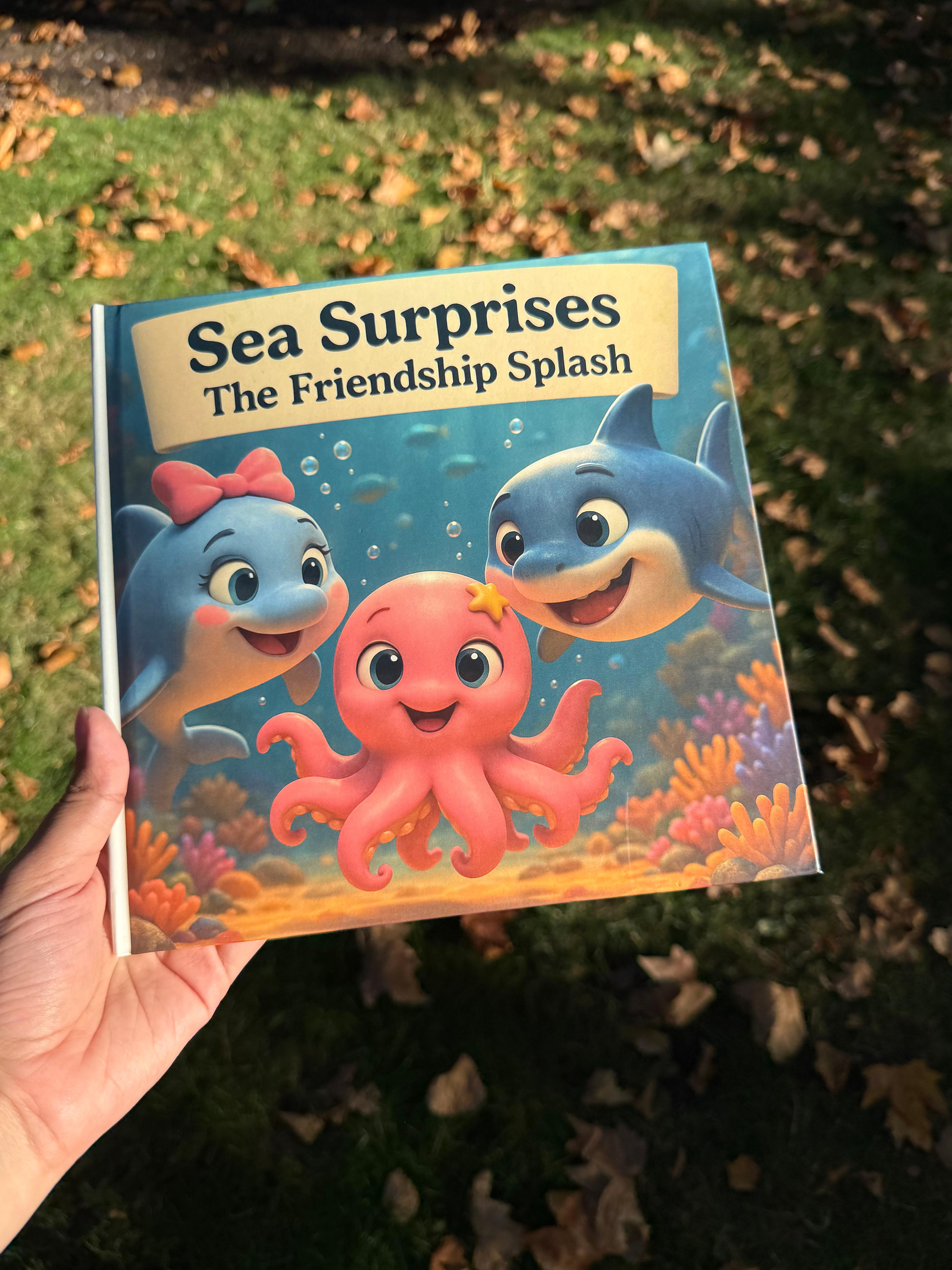
Illustrated storybooks and picture books. Short, image-led books, usually 24 to 64 pages, for children or for gift readers. Story Spark's Storybook Creator produces 21cm by 21cm hardcovers with AI illustration on every page.
Full-length books. Novels, memoirs, family histories, non-fiction guides, poetry collections and educational books. Story Spark's Book Creator prints 16.5cm by 24cm hardcovers of up to 200 pages, organised chapter by chapter.
Comic books and graphic novels. Panel-based storytelling with speech bubbles and dynamic artwork. The personalized comic book format creates a 24-page hardcover adventure.
Interactive books. Formats such as a personalized search-and-find book, where the reader hunts for a character hidden in illustrated scenes.
Ebooks and audiobooks. Digital editions that extend your reach. Story Spark's Creator plan includes watermark-free EPUB and PDF exports and audio narration, so you can create a print edition and a digital edition from the same project.
Match the format to the story early. A simple bedtime idea stretched across 200 pages will stall, and a sweeping memoir squeezed into 24 pages will lose its heart.
Step 3: Write Your First Draft
The hardest part of self-publishing is still finishing the manuscript. Set a realistic routine, such as one chapter a week, and draft first and refine later.
AI can help you get unstuck. On Story Spark you can describe your concept, choose a language and writing style, and let the AI draft your book chapter by chapter, then edit every line until it sounds like you. If you prefer to write everything yourself, the Blank Canvas option gives you a clean editor with professional book formatting built in. Spark, the in-editor writing assistant, can help you rework a sentence or overcome a blank page without taking over your voice. If you want to compare drafting tools, our roundup of the best free AI book writing tools and the best AI tools for writing and printing a novel are useful starting points.
Step 4: Edit, Revise and Proofread
Editing is where good books become great ones. Work in three layers: a structural edit for pacing, characters and order, a line edit for clarity and voice, and a proofread for spelling, grammar and formatting. Read your manuscript aloud, ask beta readers for honest feedback, and consider a professional editor for any book you plan to sell widely. Story Spark's Creator plan includes a built-in proofreading tool to catch errors before you print.
Step 5: Add Illustrations and Images
For picture books, comics and many non-fiction titles, illustrations used to be the biggest cost and the biggest bottleneck. Hiring an illustrator for a full picture book can cost thousands, and finding the right style takes time.
In 2027 you can hire an illustrator, upload your own artwork or photographs, or use AI illustration. On Story Spark's Free plan you can upload your own images. On paid plans you can generate illustrations with AI and use the character creator to build consistent characters from photos or descriptions, so your hero looks the same on page one and page thirty. Consistency is what separates a professional illustrated book from a collection of random pictures.
Step 6: Design a Cover That Sells
Readers do judge a book by its cover, especially as a thumbnail. Your cover should signal the genre instantly, keep the title readable at small sizes, and look at home next to the bestsellers in your category.
Story Spark's editor lets you create an eye-catching front cover, upload your own, or start from a template. Preview it at full size and at thumbnail size before you commit.
Step 7: Format the Interior and Choose a Trim Size
Interior formatting covers margins, bleed, fonts, page numbers and image placement. Get it wrong and a printer may reject your files or trim off part of an illustration.
On Story Spark, print-ready files are created automatically, with bleed, margins and layout all handled for you. You can preview every page exactly as it will appear in print before you order, which removes most of the technical risk that used to trip up first-time authors.
Step 8: Get an ISBN and Protect Your Rights
An ISBN (International Standard Book Number) identifies a specific edition and format of your book. Each format, such as hardcover, paperback and ebook, normally needs its own ISBN.
You need an ISBN to sell through bookshops, libraries and most retailers. If you are printing copies for family, gifts, a classroom or direct sales at events, you may not need one at all.
ISBNs are bought from the national agency where your publishing business is based. As of late 2026, Bowker in the United States charges $125 for one ISBN or $295 for a block of ten, and Nielsen in the UK and Ireland charges £93 for one or £174 for ten, including VAT. In Canada, ISBNs are free through Library and Archives Canada. Some platforms, including KDP, offer free ISBNs, but these usually list the platform as the publisher. If you plan to publish more than one book or format, a block of ten is far better value.
Copyright belongs to you as soon as you create original work, so keep dated drafts. On Story Spark's Creator plan you also own the AI-generated content in your books, with commercial rights to sell them.
Step 9: Decide How You Will Print and Distribute
There are four main distribution paths, and many authors combine them.
Print-on-demand hardcovers direct to you or your readers. Story Spark prints premium hardcovers and dispatches them within five working days, with no minimum order. It delivers to the USA, UK, UAE, Australia, Canada, Saudi Arabia, Portugal, Spain, France, Germany, Italy, Ireland, the Netherlands and Qatar. This is ideal for gifts, events, schools, author copies and direct sales.
Your own audience and community. Story Spark's Storyteller Community library lets you create a Storyteller profile, write an introduction about yourself and publish your stories to a worldwide audience. It is a low-risk way to test storylines and styles and see what resonates, and authors earn a royalty on books sold through the community.
Online retailers. Amazon KDP is the largest marketplace for ebooks and print-on-demand paperbacks, subject to the 2026 rules described above.
Wide distribution to bookshops and libraries. IngramSpark connects your print book to a wholesale network of tens of thousands of retailers and libraries, with free setup and free revisions as of this year. Aggregators such as Draft2Digital distribute ebooks to many stores at once.
Because Story Spark's Creator plan includes watermark-free PDF, EPUB, audio and individual page files, you are never locked in. You can print hardcovers with Story Spark, share them with the community and also distribute your book on other platforms.
Step 10: Price Your Book
Pricing balances what readers expect, what each copy costs to produce, and what you want to earn. Check comparable books, then work out your margin.
For direct hardcover sales, start with your print cost. On Story Spark, hardcover storybooks range from $29.99 for 24 pages to $49.99 for 64 pages, full-length hardcover books range from $39.99 for 50 pages to $54.99 for 200 pages, and comic books are $29.99 per book. Volume discounts of 10 percent for 5 to 10 copies, 20 percent for 11 to 20 copies and 30 percent for 21 or more copies per title make it practical to buy stock for events, schools or a book launch and sell at a profit. Dreamer and Creator subscribers also get free standard shipping on book orders.
For retailer sales, use each platform's official calculator, because royalties depend on list price, format, page count and marketplace.
Step 11: Prepare Your Book's Metadata
Metadata is the information that helps readers and search engines find your book: title, subtitle, description, author bio, categories and keywords. Strong metadata is one of the cheapest ways to improve sales.
Write a description that opens with a hook, explains what the reader will get, and ends with a reason to buy. Choose categories where your book can realistically rank, and use the words readers actually type into a search bar.
Step 12: Launch and Market Your Book
Publishing is a beginning, not an end. A simple launch plan for 2027 could include:
- Build an early audience through social media or a newsletter before launch day.
- Collect early reviews by giving advance copies to readers in your target audience.
- Use your local network of bookshops, libraries, schools and markets.
- Create content such as short videos and read-aloud clips, using Story Spark's audio narration.
- Sell in person with hardcovers bought at volume discounts.
- Write the next book, because readers who enjoy one title look for the next.
How Much Does It Cost to Self-Publish a Book in 2027?
Costs depend on your goal, but here is a realistic breakdown.
Writing, formatting and preview. Free on Story Spark's Free plan, which includes the storybook and book editors, uploading your own images, automatic print-ready files and page-by-page preview.
AI writing and illustration. The Dreamer plan costs $9.99 a month and includes up to 250,000 words and 50 AI images a month, character creation, the Spark writing assistant, PDF and EPUB downloads with a watermark, and free standard shipping. The Creator plan costs $39.99 a month and adds up to 1,000,000 words and 200 images a month, audio narration with two custom voice clones a month, proofreading, watermark-free downloads and commercial rights to sell your books. Annual billing saves 25 percent. See the full details on the pricing page.
Printed copies. From $29.99 per hardcover storybook, $39.99 per full-length hardcover book and $29.99 per comic book, with volume discounts.
Optional extras. Professional editing can cost from a few hundred to a few thousand dollars, a designer cover several hundred, and ISBNs from nothing to $125 for a single Bowker ISBN or £93 for a single Nielsen ISBN.
In short, you can produce a professional book for the price of a subscription and a printed copy, then spend more only where it adds value.
Using AI to Self-Publish Responsibly
AI has transformed self-publishing, but using it well matters. Here is how to approach it in 2027.
Keep your voice at the centre. Use AI to draft, illustrate and format, then edit until the book reflects your ideas and style.
Disclose honestly. KDP and other retailers ask whether your book contains AI-generated text, images or translations. Answer accurately for each title and format.
Check ownership and rights. Not every AI platform gives you rights to what it generates. On Story Spark you own your own content, and the Creator plan gives you ownership of AI-generated content plus commercial rights, which is essential if you plan to sell.
Focus on quality, not volume. One carefully made book will do more for you than ten rushed ones.
For a deeper look at this topic, read our guide to AI book publishing.
Self-Publishing Tips by Book Type
Children's books. Keep text short and rhythmic, make illustrations do half the storytelling, and test the book by reading it aloud to children in your target age group. Story Spark's dedicated page on how to self-publish children's books and the guide on how to be a children's author cover this in more depth.
Novels. Respect genre conventions in story beats and cover style, and consider a series, which performs especially well for self-published novelists.
Memoirs and family histories. A printed hardcover with photographs and a dedication page can become a family heirloom, and Story Spark's Book Creator is commonly used for exactly this.
Non-fiction and educational books. Clear structure and a strong subtitle sell non-fiction. Teachers can create classroom resources through Story Spark for education.
Comic books and graphic novels. Plan your story arc before generating artwork and keep characters visually consistent.
Personalized books and gifts. Some of the most rewarding self-published books are made for one person. Explore personalized gifts for birthdays, holidays and milestones.
Your 2027 Self-Publishing Checklist
- Write your one-sentence publishing goal and define your reader.
- Choose your format: storybook, book, comic book, search-and-find book, ebook or audio.
- Finish your first draft.
- Complete structural editing, line editing and proofreading.
- Add illustrations and create consistent characters.
- Design a cover that fits your genre.
- Format your interior and preview every page.
- Decide whether you need ISBNs and buy them from your national agency if so.
- Order a printed proof copy and check it carefully.
- Choose your distribution: direct hardcover sales, the Story Spark community, online retailers or wide distribution.
- Set your price using real print costs and royalty rates.
- Write your description, categories and keywords.
- Plan your launch, gather reviews and start your next book.
Frequently Asked Questions About Self-Publishing in 2027
Is self-publishing worth it in 2027?
Yes, for most authors. Self-publishing lets you publish on your own timeline, keep your rights and earn a larger share of each sale. With print-on-demand hardcovers, AI tools and built-in communities, the cost and risk of publishing a professional book are lower than ever.
How do I self-publish a book for free?
On Story Spark's Free plan you can write your book, upload your own images, format it automatically and preview every page without paying anything. You pay only when you order a printed copy.
Can I self-publish a hardcover book?
Yes. Every Story Spark book prints as a premium hardcover, including storybooks, full-length books and comic books, and copies are dispatched within five working days.
Can I sell my self-published book on Amazon and elsewhere?
Yes, as long as you own the rights. Story Spark's Creator plan includes watermark-free PDF and EPUB exports and commercial rights, so you can distribute your book on other platforms as well as printing hardcovers with Story Spark.
What are KDP's royalty rates in 2027?
Following the 2026 changes, KDP pays 70 percent on eligible ebooks priced from $2.99 to $12.99 on Amazon.com and 35 percent outside that band, while print books earn 60 percent minus printing at $9.99 or more and 50 percent below. Check KDP's help pages before pricing, as rules change.
Do self-published authors have to disclose AI use?
Many retailers require it. Amazon KDP asks authors to disclose AI-generated text, images and translations for each title. AI-assisted editing of your own writing is treated differently from content the AI created.
Can I self-publish a children's book without an illustrator?
Yes. Story Spark's AI illustration and character creation tools let you produce a fully illustrated picture book with consistent characters, or you can upload your own artwork.
What is the best self-publishing platform for beginners?
The best platform is the one that removes the steps you find hardest. For authors who want writing help, illustration, formatting and a printed hardcover in one place, Story Spark is designed for beginners and experienced authors alike. You can compare options in our complete guide to the best book creators.
Key Takeaways
- Self-publishing now outpaces traditional publishing by more than five to one in the US.
- The 2026 KDP changes to royalties, upload limits and AI disclosure reward careful planning.
- Choosing the right format first saves weeks of rework.
- Editing, a strong cover and page-by-page previews create professional quality.
- Owning your rights, including AI-generated content, keeps every distribution option open.
Start Self-Publishing Your Book With Story Spark
Your book does not need a publisher's permission to exist. Story Spark gives you everything you need to write, illustrate, format and print your book in one place, from a children's storybook to a novel, memoir or comic book, with premium hardcovers delivered to your door and a global community ready to read your work.
Create your book today for free, explore the self-publishing platform, or visit the Story Spark FAQ and the Learn Centre for more guidance. 2027 is the year to hold your book in your hands.
Related Reading
From the Story Spark Blog
- AI Book Publishing: From Generator to Amazon KDP in 7 Steps
- How to Self-Publish a Children's Book with an AI Book Creator
- How to Publish a Comic Book: The Complete Guide
- How to Write a Family History Book
- Best AI for Writing Non-Fiction Books: 6 Tools Tested
- A Checklist for Aspiring Children's Book Writers
- What Is a Book Illustrator? AI and Children's Books
- How to Turn ChatGPT Images Into a Printed Book
From the Story Spark Learn Centre
- Complete AI Book Generator Comparison
- The Best Platforms for Creating Personalized Hardcover Books
- How to Create the Best Story Books
- The Best Storybook Creator Platforms: The Complete Guide
Written by the Story Spark Team. Story Spark is an AI book creation platform for creating, illustrating and printing your own books, trusted by more than 200,000 authors.